


Page 821 - Williams Hematology ( PDFDrive )
P. 821
796            Part VI:  The Erythrocyte                                                                                                             Chapter 50:  Methemoglobinemia and Other Dyshemoglobinemias                   797


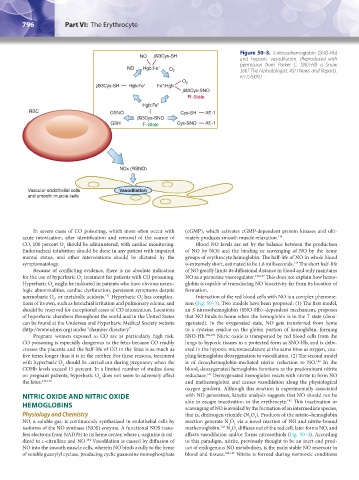
                                                                                        Figure 50–3.  S-nitrosohemoglobin (SNO-Hb)
                                                       NO  b93Cys-SH                    and hypoxic vasodilation.  (Reproduced with
                                                                                        permission  from  Parker  C: SNO-HB a  Snow
                                                   NO   Hgb:Fe"  O 2                    Job? The Hematologist: ASH News and Reports.
                                                                                        6:12;2009.)
                                                                     O 2
                                        b93Cys-SH  Hgb:Fe"  Fe":Hgb
                                                                     b93Cys-SNO
                                                                       R–State
                                                        Hgb:Fe"
                  RBC                        GSNO                   Cys-SH   AE-1
                                                      b93Cys-SNO
                                             GSH        T–State    Cys-SNO   AE-1


                                                NOx (RSNO)


                 Vascular endothelial cells     Vasodilation
                 and smooth muscle cells


                   In severe cases of CO poisoning, which more often occur with   (cGMP), which activates cGMP-dependent protein kinases and ulti-
               acute intoxication, after identification and removal of the source of   mately produces smooth muscle relaxation. 134
               CO, 100 percent O  should be administered, with cardiac monitoring.   Blood NO levels are set by the balance between the production
                             2
               Endotracheal intubation should be done in any patient with impaired   of NO by  NOS  and the binding  or scavenging of NO  by the heme
               mental  status,  and  other  interventions  should  be  dictated  by  the   groups of erythrocyte hemoglobin. The half-life of NO in whole blood
               symptomatology.                                        is extremely short, estimated to be 1.8 milliseconds.  The short half-life
                                                                                                          135
                   Because of conflicting evidence, there is no absolute indication   of NO greatly limits its diffusional distance in blood and only maintains
               for the use of hyperbaric O  treatment for patients with CO poisoning.   NO as a paracrine vasoregulator. 136,137  This does not explain how hemo-
                                   2
               Hyperbaric O  might be indicated in patients who have obvious neuro-  globin is capable of transducing NO bioactivity far from its location of
                         2
               logic abnormalities, cardiac dysfunction, persistent symptoms despite   formation.
               normobaric O , or metabolic acidosis.  Hyperbaric O  has complica-  Interaction of the red blood cells with NO is a complex phenome-
                                           131
                          2
                                                       2
               tions of its own, such as bronchial irritation and pulmonary edema, and   non (Fig. 50–3). Two models have been proposed: (1) The first model,
               should be reserved for exceptional cases of CO intoxication. Locations   an S-nitrosohemoglobin (SNO-Hb)–dependent mechanism, proposes
               of hyperbaric chambers throughout the world and in the United States   that NO binds to heme when the hemoglobin is in the T state (deox-
               can be found at the Undersea and Hyperbaric Medical Society website   ygenated). In the oxygenated state, NO gets transferred from heme
               (http://www.uhms.org) under “chamber directory.”       to a cysteine residue on the globin portion of hemoglobin, forming
                   Pregnant women exposed to CO are at particularly high risk.   SNO-Hb. 138,139  Nitric oxide is transported by red blood cells from the
               CO poisoning is especially dangerous to the fetus because CO readily   lungs to hypoxic tissues in a protected form as SNO-Hb, and is deliv-
               crosses the placenta and the half-life of CO in the fetus is as much as   ered in the hypoxic microvasculature at the same time as oxygen, cou-
               five times longer than it is in the mother. For these reasons, treatment   pling hemoglobin deoxygenation to vasodilation. (2) The second model
               with hyperbaric O  should be carried out during pregnancy when the   is of deoxyhemoglobin-mediated nitrite reduction to NO.  In the
                                                                                                                  140
                             2
               COHb levels exceed 15 percent. In a limited number of studies done   blood, deoxygenated hemoglobin functions as the predominant nitrite
               on pregnant patients, hyperbaric O  does not seem to adversely affect   reductase.  Deoxygenated hemoglobin reacts with nitrite to form NO
                                                                             141
                                         2
               the fetus. 132,133                                     and methemoglobin and causes vasodilation along the physiological
                                                                      oxygen gradient. Although this reaction is experimentally associated
               NITRIC OXIDE AND NITRIC OXIDE                          with NO generation, kinetic analysis suggests that NO should not be
                                                                                                        142
               HEMOGLOBINS                                            able to  escape inactivation  in the erythrocyte.  This inactivation or
                                                                      scavenging of NO is avoided by the formation of an intermediate species,
               Physiology and Chemistry                               that is, dinitrogen trioxide (N O ). Products of the nitrite–hemoglobin
                                                                                           2
                                                                                             3
               NO, a soluble gas, is continuously synthesized in endothelial cells by   reaction generate N O  via a novel reaction of NO and nitrite-bound
                                                                                     2
                                                                                      3
               isoforms of the NO synthase (NOS) enzyme. A functional NOS trans-  methemoglobin.  N O  diffuses out of the red cell, later forms NO, and
                                                                                  143
                                                                                     2
                                                                                       3
               fers electrons from NADPH to its heme center, where l-arginine is oxi-  affects vasodilation and/or forms nitrosothiols (Fig. 50–4). According
               dized to l-citrulline and NO.  Vasodilation is caused by diffusion of   to this paradigm, nitrite, previously thought to be an inert end prod-
                                     134
               NO into the smooth muscle cells, wherein NO binds avidly to the heme   uct of endogenous NO metabolism, is the main stable NO reservoir in
               of soluble guanylyl cyclase, producing cyclic guanosine monophosphate   blood and tissues. 144,145  Nitrite is formed during normoxic conditions
          Kaushansky_chapter 50_p0789-0800.indd   796                                                                   9/17/15   2:39 PM

