


Page 890 - Williams Hematology ( PDFDrive )
P. 890
864  Part VI:  The Erythrocyte                               Chapter 56:  Hypersplenism and Hyposplenism              865


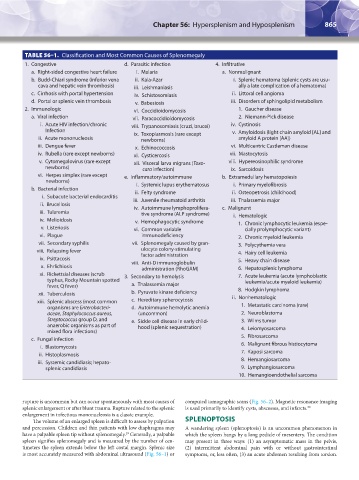
                   TABLE 56–1.  Classification and Most Common Causes of Splenomegaly
                   1.  Congestive                   d.  Parasitic infection        4.  Infiltrative
                     a.  Right-sided congestive heart failure     i.  Malaria        a.  Nonmalignant
                     b.   Budd-Chiari syndrome (inferior vena     ii.  Kala-Azar         i.   Splenic hematoma (splenic cysts are usu-
                       cava and hepatic vein thrombosis)     iii.  Leishmaniasis          ally a late complication of a hematoma)
                     c.  Cirrhosis with portal hypertension     iv.  Schistosomiasis     ii.  Littoral cell angioma
                     d.  Portal or splenic vein thrombosis     v.  Babesiosis           iii.  Disorders of sphingolipid metabolism
                   2.  Immunologic                     vi.  Coccidioidomycosis            1.  Gaucher disease
                     a.  Viral infection               vii.  Paracoccidioidomycosis       2.  Niemann-Pick disease
                        i.   Acute HIV infection/chronic      viii.   Trypanosomiasis (cruzi, brucei)     iv.  Cystinosis
                         Infection                     ix.   Toxoplasmosis (rare except      v.   Amyloidosis (light chain amyloid [AL] and
                       ii.  Acute mononucleosis           newborns)                       amyloid A protein [AA])
                       iii.  Dengue fever               x.  Echinococcosis              vi.  Multicentric Castleman disease
                       iv.  Rubella (rare except newborns)     xi.  Cysticercosis      vii.  Mastocytosis
                       v.   Cytomegalovirus (rare except      xii.   Visceral larva migrans (Toxo-     viii.  Hypereosinophilic syndrome
                         newborns)                        cara infection)               ix.  Sarcoidosis
                       vi.   Herpes simplex (rare except   e.  Inflammatory/autoimmune    b.  Extramedullary hematopoiesis
                          newborns)                     i.  Systemic lupus erythematosus     i.  Primary myelofibrosis
                     b.  Bacterial infection            ii.  Felty syndrome             ii.  Osteopetrosis (childhood)
                         i.  Subacute bacterial endocarditis     iii.  Juvenile rheumatoid arthritis     iii.  Thalassemia major
                         ii.  Brucellosis              iv.   Autoimmune lymphoprolifera-    c.  Malignant
                        iii.  Tularemia                   tive syndrome (ALP syndrome)     i.  Hematologic
                        iv.  Melioidosis                v.  Hemophagocytic syndrome       1.   Chronic lymphocytic leukemia (espe-
                         v.  Listeriosis               vi.   Common variable                cially prolymphocytic variant)
                        vi.  Plague                       immunodeficiency                2.  Chronic myeloid leukemia
                        vii.  Secondary syphilis       vii.   Splenomegaly caused by gran-     3.  Polycythemia vera
                       viii.  Relapsing fever             ulocyte colony-stimulating      4.  Hairy cell leukemia
                        ix.  Psittacosis                  factor administration           5.  Heavy chain disease
                         x.  Ehrlichiosis              viii.   Anti-D immunoglobulin      6.  Hepatosplenic lymphoma
                                                          administration (RhoGAM)
                        xi.   Rickettsial diseases (scrub   3.  Secondary to hemolysis     7.   Acute leukemia (acute lymphoblastic
                          typhus, Rocky Mountain spotted                                    leukemia/acute myeloid leukemia)
                          fever, Q fever)              a.  Thalassemia major              8.  Hodgkin lymphoma
                        xii.  Tuberculosis             b.  Pyruvate kinase deficiency     ii.  Nonhematologic
                        xiii.   Splenic abscess (most common     c.   Hereditary spherocytosis
                          organisms are Enterobacteri-    d.   Autoimmune hemolytic anemia      1.  Metastatic carcinoma (rare)
                          aceae, Staphylococcus aureus,   (uncommon)                       2.  Neuroblastoma
                          Streptococcus group D, and     e.   Sickle cell disease in early child-     3.  Wilms tumor
                          anaerobic organisms as part of   hood (splenic sequestration)     4.  Leiomyosarcoma
                          mixed flora infections)
                     c.  Fungal infection                                                  5.  Fibrosarcoma
                         i.  Blastomycosis                                                 6.  Malignant fibrous histiocytoma
                        ii.  Histoplasmosis                                                7.  Kaposi sarcoma
                        iii.   Systemic candidiasis; hepato-                               8.  Hemangiosarcoma
                          splenic candidiasis                                              9.  Lymphangiosarcoma
                                                                                          10.  Hemangioendothelial sarcoma


                  rupture is uncommon but can occur spontaneously with most causes of   computed tomographic scans (Fig. 56–2). Magnetic resonance imaging
                  splenic enlargement or after blunt trauma. Rupture related to the splenic   is used primarily to identify cysts, abscesses, and infarcts. 30
                  enlargement in infectious mononucleosis is a classic example.
                     The volume of an enlarged spleen is difficult to assess by palpation   SPLENOPTOSIS
                  and percussion. Children and thin patients with low diaphragms may   A wandering spleen (splenoptosis) is an uncommon phenomenon in
                  have a palpable spleen tip without splenomegaly.  Generally, a palpable   which the spleen hangs by a long pedicle of mesentery. The condition
                                                    29
                  spleen signifies splenomegaly and is measured by the number of cen-  may present in three ways: (1) an asymptomatic mass in the pelvis,
                  timeters the spleen extends below the left costal margin. Splenic size   (2) intermittent abdominal pain with or without gastrointestinal
                  is most accurately measured with abdominal ultrasound (Fig. 56–1) or   symptoms, or, less often, (3) an acute abdomen resulting from torsion.


          Kaushansky_chapter 56_p0863-0870.indd   865                                                                   9/17/15   3:05 PM

