


Page 927 - Williams Hematology ( PDFDrive )
P. 927
902            Part VI:  The Erythrocyte                                                                                                                                                    Chapter 58:  The Porphyrias            903


                                                                            210
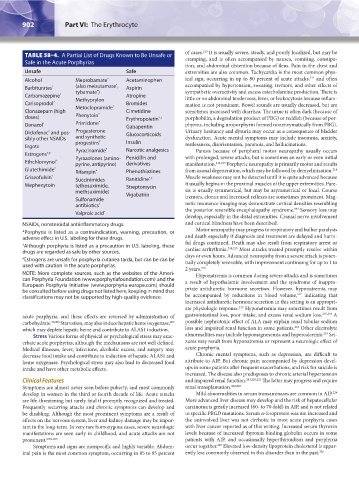
                TABLE 58–4.  A Partial List of Drugs Known to Be Unsafe or   of cases.  It is usually severe, steady, and poorly localized, but may be
                                                                      cramping, and is often accompanied by nausea, vomiting, constipa-
                Safe in the Acute Porphyrias
                                                                      tion, and abdominal distention because of ileus. Pain in the chest and
                Unsafe                            Safe                extremities are also common. Tachycardia is the most common phys-
                                                                                                                211
                Alcohol          Meprobamate   *  Acetaminophen       ical sign, occurring in up to 80 percent of acute attacks,  and often
                                               *
                Barbiturates *   (also mebutamate ,   Aspirin         accompanied by hypertension, sweating, tremors, and other effects of
                                        *
                Carbamazepine *  tybamate )       Atropine            sympathetic overactivity and excess catecholamine production. There is
                                                                      little or no abdominal tenderness, fever, or leukocytosis because inflam-
                Carisoprodol *   Methyprylon  *   Bromides            mation is not prominent. Bowel sounds are usually decreased, but are
                Clonazepam (high   Metoclopramide  Cimetidine         sometimes increased with diarrhea. The urine is often dark (because of
                doses)           Phenytoin *      Erythropoietin *,†  porphobilin, a degradation product of PBG) or reddish (because of por-
                Danazol *        Primidone *      Gabapentin          phyrins, including uroporphyrin formed nonenzymatically from PBG).
                Diclofenac  and pos-  Progesterone   Glucocorticoids  Urinary hesitancy and dysuria may occur as a consequence of bladder
                        *
                sibly other NSAIDs  and synthetic   Insulin           dysfunction. Acute mental symptoms may include insomnia, anxiety,
                                         *
                Ergots           progestins  *    Narcotic analgesics  restlessness, disorientation, paranoia, and hallucinations.
                                                                          Paresis because of peripheral motor neuropathy usually occurs
                Estrogens *,‡    Pyrazinamide                         with prolonged, severe attacks, but is sometimes an early or even initial
                Ethchlorvynol *  Pyrazolones (amino- Penicillin and   manifestation. 212,213  Porphyric neuropathy is primarily motor and results
                                                  derivatives
                                 pyrine, antipyrine)
                Glutethimide *   Rifampin *       Phenothiazines      from axonal degeneration, which may be followed by demyelinization.
                                                                                                                       214
                Griseofulvin *   Succinimides     Ranitidine *,†      Muscle weakness may not be detected until it is quite advanced because
                Mephenytoin      (ethosuximide,   Streptomycin        it usually begins in the proximal muscles of the upper extremities. Pare-
                                 methsuximide)    Vigabatrin          sis is usually symmetrical, but may be asymmetrical or focal. Course
                                 Sulfonamide                          tremors, clonus and increased reflexes are sometimes prominent. Mag-
                                 antibiotics *                        netic resonance imaging may demonstrate cortical densities resembling
                                                                                                           192
                                 Valproic acid *                      the posterior reversible encephalopathy syndrome.  Sensory loss may
                                                                      develop, especially in the distal extremities. Cranial nerve involvement
               NSAIDs, nonsteroidal antiinflammatory drugs.           and cortical blindness have been described.
               *Porphyria is listed as a contraindication, warning, precaution, or   Motor neuropathy may progress to respiratory and bulbar paralysis
               adverse effect in U.S. labeling for these drugs.       and death especially if diagnosis and treatment are delayed and harm-
               † Although porphyria is listed as a precaution in U.S. labeling, these   ful drugs continued. Death may also result from respiratory arrest or
               drugs are regarded as safe by other sources.           cardiac arrhythmia. 214,215  Most attacks treated promptly resolve within
               ‡ Estrogens are unsafe for porphyria cutanea tarda, but can be can be   days or even hours. Advanced neuropathy from a severe attack is poten-
               used with caution in the acute porphyrias.             tially completely reversible, with improvement continuing for up to 1 to
                                                                           216
                                                                      2 years.
               NOTE: More complete sources, such as the websites of the Ameri-  Hyponatremia is common during severe attacks and is sometimes
               can Porphyria Foundation (www.porphyriafoundation.com) and the   a result of hypothalamic involvement and the syndrome of inappro-
               European Porphyria Initiative (www.porphyria-europe.com) should
               be consulted before using drugs not listed here, keeping in mind that   priate antidiuretic hormone secretion. However, hyponatremia may
                                                                                                            217
               classifications may not be supported by high-quality evidence.  be accompanied by reductions in blood volume,  indicating that
                                                                      increased antidiuretic hormone secretion in this setting is an appropri-
                                                                                        215
                                                                      ate physiologic response.  Hyponatremia may sometimes result from
               acute  porphyria,  and  these  effects  are  reversed by  administration  of    gastrointestinal loss, poor intake, and excess renal sodium loss. 215,218  A
               carbohydrate. 30,206  Starvation, may also induce hepatic heme oxygenase,    possible nephrotoxic effect of ALA may explain renal tubular sodium
                                                                 207
                                                                                                           218
               which may deplete hepatic heme and contribute to ALAS1 induction.  loss and impaired renal function in some patients.  Other electrolyte
                                                                                                                    219
                   Stress Various forms of physical or psychological stress may exac-  abnormalities may include hypomagnesemia and hypercalcemia.  Sei-
               erbate acute porphyrias, although the mechanisms are not well defined.   zures may result from hyponatremia or represent a neurologic effect of
               Medical illnesses, fever, infections, alcoholic excess, and surgery may   acute porphyria.
               decrease food intake and contribute to induction of hepatic ALAS1 and   Chronic mental symptoms, such as depression, are difficult to
               heme oxygenase. Psychological stress may also lead to decreased food   attribute to AIP. But chronic pain accompanied by depression devel-
               intake and have other metabolic effects.               ops in some patients after frequent exacerbations, and risk for suicide is
                                                                      increased. The disease also predisposes to chronic arterial hypertension
               Clinical Features                                      and impaired renal function. 203,220,221  The latter may progress and require
               Symptoms are almost never seen before puberty, and most commonly   renal transplantation. 222,223
               develop in women in the third or fourth decade of life. Acute attacks   Mild abnormalities in serum transaminases are common in AIP.
                                                                                                                       224
               are life-threatening but rarely fatal if promptly recognized and treated.   More advanced liver disease may develop and the risk of hepatocellular
               Frequently recurring attacks and chronic symptoms can develop and   carcinoma is greatly increased (60- to 70-fold) in AIP, and is not related
               be disabling. Although the most prominent symptoms are a result of   to specific PBGD mutations. Serum α-fetoprotein was not increased and
               effects on the nervous system, liver and kidney damage may be impor-  the uninvolved liver was not cirrhotic in most acute porphyria cases
               tant in the long-term. In very rare homozygous cases, severe neurologic   with liver cancer reported as of this writing. Increased serum thyroxin
               manifestations are seen early in childhood, and acute attacks are not   levels because of increased thyroxin-binding globulin occurs in some
               prominent. 207a,209                                    patients with AIP, and occasionally hyperthyroidism and porphyria
                   Symptoms and signs are nonspecific and highly variable. Abdom-  occur together.  Elevated low-density lipoprotein cholesterol is appar-
                                                                                 225
               inal pain is the most common symptom, occurring in 85 to 95 percent   ently less commonly observed in this disorder than in the past. 226


          Kaushansky_chapter 58_p0889-0914.indd   902                                                                   9/18/15   5:58 PM

