


Page 20 - Clinical Immunology_ Principles and Practice ( PDFDrive )
P. 20
6            Part one  Principles of Immune Response


                                  V H   V H
                              V L   C µ C µ  V L
                                C L        C L
                                  C µ   C µ
                                               V      V         α      α         α       β
                                  C µ   C µ     α      β         1      2         1      1
                                  C µ   C µ    C α    C β      β m     α 3       α 2     β 2
                                                                2


                                                         Cell membrane
                                    migM          αβTCR            HLA               HLA
                                                                   class I          class II
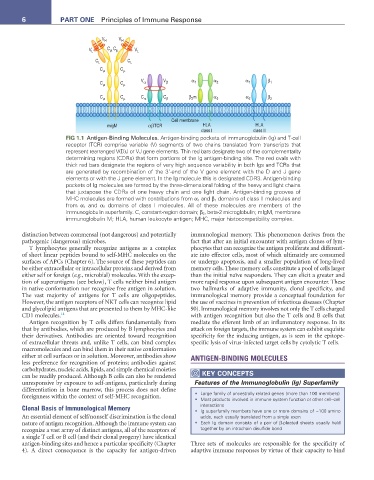
                       FIG 1.1  Antigen-Binding Molecules. Antigen-binding pockets of immunoglobulin (Ig) and T-cell
                       receptor (TCR) comprise variable (V) segments of two chains translated from transcripts that
                       represent rearranged V(D)J or VJ gene elements. Thin red bars designate two of the complementarity
                       determining regions (CDRs) that form portions of the Ig antigen-binding site. The red ovals with
                       thick red bars designate the regions of very high sequence variability in both Igs and TCRs that
                       are generated by recombination of the 3’-end of the V gene element with the D and J gene
                       elements or with the J gene element. In the Ig molecule this is designated CDR3. Antigen-binding
                       pockets of Ig molecules are formed by the three-dimensional folding of the heavy and light chains
                       that juxtapose the CDRs of one heavy chain and one light chain. Antigen-binding grooves of
                       MHC molecules are formed with contributions from α 1  and β 1 domains of class II molecules and
                       from  α 1 and  α 2  domains of class I molecules. All of these molecules are members of the
                       immunoglobulin superfamily. C, constant-region domain; β 2 , beta-2 microglobulin; mIgM, membrane
                       immunoglobulin M; HLA, human leukocyte antigen; MHC, major histocompatibility complex.

        distinction between commensal (not dangerous) and potentially   immunological memory. This phenomenon derives from the
        pathogenic (dangerous) microbes.                       fact that after an initial encounter with antigen clones of lym-
           T lymphocytes generally recognize antigens as a complex     phocytes that can recognize the antigen proliferate and differenti-
        of short linear peptides bound to self-MHC molecules on the     ate into effector cells, most of which ultimately are consumed
        surfaces of APCs (Chapter 6). The source of these peptides can     or undergo apoptosis, and a smaller population of long-lived
        be either extracellular or intracellular proteins and derived from    memory cells. These memory cells constitute a pool of cells larger
        either self or foreign (e.g., microbial) molecules. With the excep-  than the initial naïve responders. They can elicit a greater and
        tion of superantigens (see below), T cells neither bind antigen   more rapid response upon subsequent antigen encounter. These
        in native conformation nor recognize free antigen in solution.   two hallmarks of adaptive immunity, clonal specificity, and
        The vast majority of antigens  for T cells are oligopeptides.   immunological memory provide a conceptual foundation for
        However, the antigen receptors of NKT cells can recognize lipid   the use of vaccines in prevention of infectious diseases (Chapter
        and glycolipid antigens that are presented to them by MHC-like   90). Immunological memory involves not only the T cells charged
        CD1 molecules. 14                                      with antigen recognition but also the T cells and B cells that
           Antigen recognition by T cells differs fundamentally from   mediate the efferent limb of an inflammatory response. In its
        that by antibodies, which are produced by B lymphocytes and   attack on foreign targets, the immune system can exhibit exquisite
        their derivatives.  Antibodies are oriented toward recognition     specificity for the inducing antigen, as is seen in the epitope-
        of extracellular threats and, unlike T cells, can bind complex   specific lysis of virus-infected target cells by cytolytic T cells.
        macromolecules and can bind them in their native conformation
        either at cell surfaces or in solution. Moreover, antibodies show   ANTIGEN-BINDING MOLECULES
        less preference for recognition of proteins; antibodies against
        carbohydrates, nucleic acids, lipids, and simple chemical moieties
        can be readily produced. Although B cells can also be rendered    KeY ConCePtS
        unresponsive by exposure to self-antigens, particularly during   Features of the Immunoglobulin (Ig) Superfamily
        differentiation in bone marrow, this process does not define
        foreignness within the context of self-MHC recognition.  •  Large family of ancestrally related genes (more than 100 members)
                                                                 •  Most products involved in immune system function or other cell–cell
                                                                   interactions
        Clonal Basis of Immunological Memory                     •  Ig superfamily members have one or more domains of ~100 amino
        An essential element of self/nonself discrimination is the clonal   acids, each usually translated from a single exon
        nature of antigen recognition. Although the immune system can   •  Each Ig domain consists of a pair of β-pleated sheets usually held
        recognize a vast array of distinct antigens, all of the receptors of   together by an intrachain disulfide bond
        a single T cell or B cell (and their clonal progeny) have identical
        antigen-binding sites and hence a particular specificity (Chapter   Three  sets of molecules  are responsible  for  the specificity of
        4).  A direct consequence  is  the  capacity  for  antigen-driven   adaptive immune responses by virtue of their capacity to bind

