


Page 370 - Clinical Immunology_ Principles and Practice ( PDFDrive )
P. 370
350          Part two  Host Defense Mechanisms and Inflammation


                           Extracellular                 Eosinophil                   Endothelial
                          matrix molecules            adherence molecules          adherence molecules
                                          Integrins                        Integrins

                                             β )
                         Laminin       VLA-6 (α 6 1                        CD11b/CD18 (Mac-1)  ICAM-1
                                                                                           ICAM-1
                                                                           CD11a/CD18 (LFA-1)  ICAM-2
                                                                                           ICAM-3
                                                                              β
                                       VLA-4 (α β )                         α d 2
                                             4 1
                         Fibronectin                                        VLA-4 (α β )   VCAM-1
                                                                                  4 1
                                              β
                                                                             4 7
                                            α 4 7                           α β            MadCAM
                                    Sialoglycoproteins                     Sialoglycoproteins  Selectins
                                                                           Sialyl-Lewis X  E-selectin
                         Hyaluronic acid   PGP-1                           PSGL-1          P-selectin
                                                            Siglec-8       Selectin
                                                                           L-selectin  GlyCAM-1, CD34
                                                         Sialoglycoconjugates
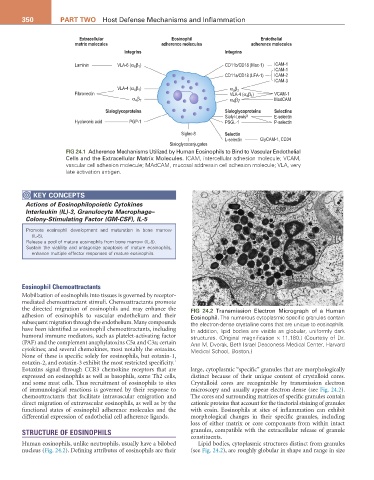
                       FIG 24.1  Adherence Mechanisms Utilized by Human Eosinophils to Bind to Vascular Endothelial
                       Cells and the Extracellular Matrix Molecules. ICAM, intercellular adhesion molecule; VCAM,
                       vascular cell adhesion molecule; MAdCAM, mucosal addressin cell adhesion molecule; VLA, very
                       late activation antigen.


            KEY CoNCEPtS
         Actions of Eosinophilopoietic Cytokines
         Interleukin (IL)-3, Granulocyte Macrophage–
         Colony-Stimulating Factor (GM-CSF), IL-5
          Promote eosinophil development and maturation in bone marrow
           (IL-5).
          Release a pool of mature eosinophils from bone marrow (IL-5).
          Sustain the viability and antagonize apoptosis of mature eosinophils,
           enhance multiple effector responses of mature eosinophils.


        Eosinophil Chemoattractants
        Mobilization of eosinophils into tissues is governed by receptor-
        mediated chemoattractant stimuli. Chemoattractants promote
        the directed migration of eosinophils and may enhance the   FIG 24.2  Transmission Electron Micrograph of a Human
        adhesion of eosinophils to vascular endothelium and their   Eosinophil. The numerous cytoplasmic specific granules contain
        subsequent migration through the endothelium. Many compounds   the electron-dense crystalline cores that are unique to eosinophils.
        have been identified as eosinophil chemoattractants, including   In addition, lipid bodies are visible as globular, uniformly dark
        humoral immune mediators, such as platelet-activating factor   structures. (Original magnification × 11,180.) (Courtesy of Dr.
        (PAF) and the complement anaphylatoxins C5a and C3a; certain   Ann M. Dvorak, Beth Israel Deaconess Medical Center, Harvard
        cytokines; and several chemokines, most notably the eotaxins.   Medical School, Boston.)
        None of these is specific solely for eosinophils, but eotaxin-1,
                                                          1
        eotaxin-2, and eotaxin-3 exhibit the most restricted specificity.
        Eotaxins signal through CCR3 chemokine receptors that are   large, cytoplasmic “specific” granules that are morphologically
        expressed on eosinophils as well as basophils, some Th2 cells,   distinct because of their unique content of crystalloid cores.
        and some mast cells. Thus recruitment of eosinophils to sites   Crystalloid cores are recognizable by transmission electron
        of immunological reactions is governed by their response to   microscopy and usually appear electron dense (see Fig. 24.2).
        chemoattractants that facilitate intravascular emigration and   The cores and surrounding matrices of specific granules contain
        direct migration of extravascular eosinophils, as well as by the   cationic proteins that account for the tinctorial staining of granules
        functional states of eosinophil adherence molecules and the   with eosin. Eosinophils at sites of inflammation can exhibit
        differential expression of endothelial cell adherence ligands.  morphological changes in their specific granules, including
                                                               loss of either matrix or core components from within intact
        STRUCTURE OF EOSINOPHILS                               granules, compatible with the extracellular release of granule
                                                               constituents.
        Human eosinophils, unlike neutrophils, usually have a bilobed   Lipid bodies, cytoplasmic structures distinct from granules
        nucleus (Fig. 24.2). Defining attributes of eosinophils are their   (see Fig. 24.2), are roughly globular in shape and range in size

