


Page 375 - Clinical Immunology_ Principles and Practice ( PDFDrive )
P. 375
CHaPtEr 24  Eosinophils and Eosinophilia              355


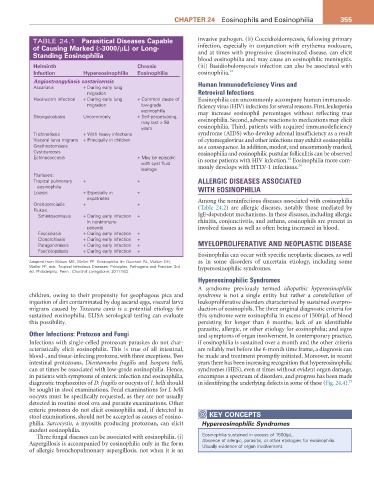
            TABLE 24.1  Parasitical Diseases Capable              invasive pathogen. (ii) Coccidioidomycosis, following primary
            of Causing Marked (>3000/µL) or Long-                 infection, especially in conjunction with erythema nodosum,
            Standing Eosinophilia                                 and at times with progressive disseminated disease, can elicit
                                                                  blood eosinophilia and may cause an eosinophilic meningitis.
            Helminth                          Chronic             (iii) Basidiobolomycosis infection can also be associated with
            Infection       Hypereosinophilia  Eosinophilia       eosinophilia. 24
            Angiostrongyliasis costaricensis
            Ascariasis      + During early lung                   Human Immunodeficiency Virus and
                              migration                           Retroviral Infections
            Hookworm infection  + During early lung   + Common cause of   Eosinophilia can uncommonly accompany human immunode-
                              migration        low-grade          ficiency virus (HIV) infections for several reasons. First, leukopenia
                                               eosinophilia       may increase eosinophil percentages without reflecting true
            Strongyloidiasis  Uncommonly      + Self-perpetuating,
                                               may last > 50      eosinophilia. Second, adverse reactions to medications may elicit
                                               years              eosinophilia. Third, patients with acquired immunodeficiency
            Trichinellosis  + With heavy infections               syndrome (AIDS) who develop adrenal insufficiency as a result
            Visceral larva migrans  + Principally in children     of cytomegalovirus and other infections may exhibit eosinophilia
            Gnathostomiasis                                       as a consequence. In addition, modest, and uncommonly marked,
            Cysticercosis                                         eosinophilia and eosinophilic pustular folliculitis can be observed
            Echinococcosis                    + May be episodic   in some patients with HIV infection.  Eosinophilia more com-
                                                                                               24
                                               with cyst fluid                                     24
                                               leakage            monly develops with HTLV-1 infections.
            Filariases:
            Tropical pulmonary   +            +                   ALLERGIC DISEASES ASSOCIATED
             eosinophilia                                         WITH EOSINOPHILIA
            Loiasis         + Especially in   +
                              expatriates                         Among the noninfectious diseases associated with eosinophilia
            Onchocerciasis  +                 +
            Flukes:                                               (Table  24.2)  are  allergic  diseases, notably  those  mediated  by
              Schistosomiasis  + During early infection   +       IgE-dependent mechanisms. In these diseases, including allergic
                             in nonimmune                         rhinitis, conjunctivitis, and asthma, eosinophils are present in
                             patients                             involved tissues as well as often being increased in blood.
              Fascioliasis  + During early infection  +
              Clonorchiasis  + During early infection  +
              Paragonimiasis  + During early infection  +         MYELOPROLIFERATIVE AND NEOPLASTIC DISEASE
              Fasciolopsiasis  + During early infection  +
                                                                  Eosinophilia can occur with specific neoplastic diseases, as well
           Adapted from Wilson ME, Weller PF. Eosinophilia. In: Guerrant RL, Walker DH,   as  in  some  disorders of  uncertain  etiology,  including  some
           Weller PF, eds. Tropical Infectious Diseases: Principles, Pathogens and Practice, 3rd   hypereosinophilic syndromes.
           ed. Philadelphia, Penn.: Churchill Livingstone; 2011:943.
                                                                  Hypereosinophilic Syndromes
                                                                  A syndrome previously termed  idiopathic hypereosinophilic
           children, owing to their propensity for geophagous pica and   syndrome is not a single entity but rather a constellation of
           ingestion of dirt contaminated by dog ascarid eggs, visceral larva   leukoproliferative disorders characterized by sustained overpro-
           migrans  caused by  Toxocara canis is a  potential etiology for   duction of eosinophils. The three original diagnostic criteria for
           sustained eosinophilia. ELISA serological testing can evaluate   this syndrome were eosinophilia in excess of 1500/µL of blood
           this possibility.                                      persisting for longer than 6 months; lack of an identifiable
                                                                  parasitic, allergic, or other etiology for eosinophilia; and signs
           Other Infections: Protozoa and Fungi                   and symptoms of organ involvement. In contemporary practice,
           Infections with single-celled protozoan parasites do not char-  if eosinophilia is sustained over a month and the other criteria
           acteristically elicit eosinophilia. This is true of all intestinal,   are reliably met before the 6-month time frame, a diagnosis can
           blood-, and tissue-infecting protozoa, with three exceptions. Two   be made and treatment promptly initiated. Moreover, in recent
           intestinal protozoans,  Dientamoeba fragilis and  Isospora belli,   years there has been increasing recognition that hypereosinophilic
           can at times be associated with low-grade eosinophilia. Hence,   syndromes (HES), even at times without evident organ damage,
           in patients with symptoms of enteric infection and eosinophilia,   encompass a spectrum of disorders, and progress has been made
           diagnostic trophozoites of D. fragilis or oocysts of I. belli should   in identifying the underlying defects in some of these (Fig. 24.4). 25
           be sought in stool examinations. Fecal examinations for I. belli
           oocysts must be specifically requested, as they are not usually
           detected in routine stool ova and parasite examinations. Other
           enteric protozoa do not elicit eosinophilia and, if detected in
           stool examinations, should not be accepted as causes of eosino-   KEY CoNCEPtS
           philia.  Sarcocystis, a myositis producing protozoan, can elicit   Hypereosinophilic Syndromes
           modest eosinophilia.
             Three fungal diseases can be associated with eosinophilia. (i)   Eosinophilia sustained in excess of 1500/µL.
           Aspergillosis is accompanied by eosinophilia only in the form   Absence of allergic, parasitic, or other etiologies for eosinophilia.
                                                                   Usually evidence of organ involvement.
           of allergic bronchopulmonary aspergillosis, not when it is an

