


Page 374 - Clinical Immunology_ Principles and Practice ( PDFDrive )
P. 374
354          Part two  Host Defense Mechanisms and Inflammation


                                                               INFECTIOUS DISEASES ASSOCIATED
                                                               WITH EOSINOPHILIA

                                                               Eosinophilia is encountered only with specific infectious diseases.
                                                               With active bacterial or viral infections, eosinopenia is charac-
                                                               teristic. This suppression of blood eosinophils is, in part, caused
                                                               by heightened endogenous corticosteroid production as well as
                                                               by inflammatory mediators released during these infections. This
                                                               suppression of eosinophilia, with either serious bacterial infections
                                                               or marked inflammation, accounts for the absence of otherwise
                                                               expected eosinophilia in some patients with helminth infections,
                                                                                                       24
                                                               including those with hyperinfection strongyloidiasis.  As a general
                                                               clinical guideline, patients with a febrile illness and an increased
                                                               or even normal blood eosinophilia are not likely to have common
                                                               bacterial or viral infections, unless they have adrenal insufficiency
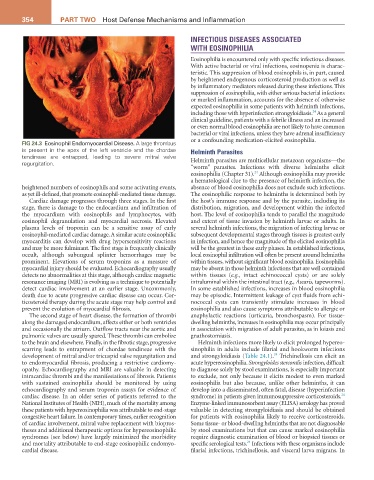
        FIG 24.3  Eosinophil Endomyocardial Disease. A large thrombus   or a confounding medication-elicited eosinophilia.
        is present in the apex of the left ventricle and the chordae   Helminth Parasites
        tendineae are entrapped, leading to severe mitral valve
        regurgitation.                                         Helminth parasites are multicellular metazoan organisms—the
                                                               “worm” parasites. Infections with diverse helminths elicit
                                                                                    24
                                                               eosinophilia (Chapter 31).  Although eosinophilia may provide
                                                               a hematological clue to the presence of helminth infection, the
        heightened numbers of eosinophils and some activating events,   absence of blood eosinophilia does not exclude such infections.
        as yet ill-defined, that promote eosinophil-mediated tissue damage.  The eosinophilic response to helminths is determined both by
           Cardiac damage progresses through three stages. In the first   the host’s immune response and by the parasite, including its
        stage, there is damage to the endocardium and infiltration of   distribution, migration, and development within the infected
        the myocardium with eosinophils and lymphocytes, with   host. The level of eosinophilia tends to parallel the magnitude
        eosinophil degranulation and myocardial necrosis. Elevated   and extent of tissue invasion by helminth larvae or adults. In
        plasma levels of troponin can be a sensitive assay of early   several helminth infections, the migration of infecting larvae or
        eosinophil-mediated cardiac damage. A similar acute eosinophilic   subsequent developmental stages through tissues is greatest early
        myocarditis can develop with drug hypersensitivity reactions   in infection, and hence the magnitude of the elicited eosinophilia
        and may be more fulminant. The first stage is frequently clinically   will be the greatest in these early phases. In established infections,
        occult, although subungual splinter hemorrhages may be   local eosinophil infiltration will often be present around helminths
        prominent. Elevations of serum troponins as a measure of   within tissues, without significant blood eosinophilia. Eosinophilia
        myocardial injury should be evaluated. Echocardiography usually   may be absent in those helminth infections that are well contained
        detects no abnormalities at this stage, although cardiac magnetic   within  tissues  (e.g.,  intact  echinococcal  cysts)  or are  solely
        resonance imaging (MRI) is evolving as a technique to potentially   intraluminal within the intestinal tract (e.g., Ascaris, tapeworms).
        detect cardiac involvement at an earlier stage. Uncommonly,   In some established infections, increases in blood eosinophilia
        death due to acute progressive cardiac disease can occur. Cor-  may be episodic. Intermittent leakage of cyst fluids from echi-
        ticosteroid therapy during the acute stage may help control and   nococcal cysts can transiently stimulate increases in blood
        prevent the evolution of myocardial fibrosis.          eosinophilia and also cause symptoms attributable to allergic or
           The second stage of heart disease, the formation of thrombi   anaphylactic reactions (urticaria, bronchospasm). For tissue-
        along the damaged endocardium, affects either or both ventricles   dwelling helminths, increases in eosinophilia may occur principally
        and occasionally the atrium. Outflow tracts near the aortic and   in association with migration of adult parasites, as in loiasis and
        pulmonic valves are usually spared. These thrombi can embolize   gnathostomiasis.
        to the brain and elsewhere. Finally, in the fibrotic stage, progressive   Helminth infections more likely to elicit prolonged hypereo-
        scarring leads to entrapment of chordae tendineae with the   sinophilia in adults include filarial and hookworm infections
                                                                                           24
        development of mitral and/or tricuspid valve regurgitation and   and strongyloidiasis (Table 24.1).  Trichinellosis can elicit an
        to endomyocardial fibrosis, producing a restrictive cardiomy-  acute hypereosinophilia. Strongyloides stercoralis infection, difficult
        opathy. Echocardiography and MRI are valuable in detecting   to diagnose solely by stool examinations, is especially important
        intracardiac thrombi and the manifestations of fibrosis. Patients   to exclude, not only because it elicits modest to even marked
        with sustained eosinophilia should be monitored by using   eosinophilia but also because, unlike other helminths, it can
        echocardiography and serum troponin assays for evidence of   develop into a disseminated, often fatal, disease (hyperinfection
                                                                                                                 24
        cardiac disease. In an older series of patients referred to the   syndrome) in patients given immunosuppressive corticosteroids.
        National Institutes of Health (NIH), much of the mortality among   Enzyme-linked immunosorbent assay (ELISA) serology has proved
        these patients with hypereosinophilia was attributable to end-stage   valuable in detecting strongyloidiasis and should be obtained
        congestive heart failure. In contemporary times, earlier recognition   for patients with eosinophilia likely to receive corticosteroids.
        of cardiac involvement, mitral valve replacement with biopros-  Some tissue- or blood-dwelling helminths that are not diagnosable
        theses and additional therapeutic options for hypereosinophilic   by stool examinations but that can cause marked eosinophilia
        syndromes (see below) have largely minimized the morbidity   require diagnostic examination of blood or biopsied tissues or
                                                                                  24
        and mortality attributable to end-stage eosinophilic endomyo-  specific serological tests.  Infections with these organisms include
        cardial disease.                                       filarial infections, trichinellosis, and visceral larva migrans. In

