


Page 425 - Clinical Immunology_ Principles and Practice ( PDFDrive )
P. 425
CHaPtEr 28  Host Defenses to Spirochetes              405


                                                                  Treatment
                                                                  During early stages of Lyme disease, such as that during which
                                                                  erythema migrans is present, oral administration of doxycycline
                                                                  (100 mg twice daily) or amoxicillin (500 mg three times a day)
                                                                  for approximately 2 weeks is recommended. Doxycycline has
                                                                  the advantage of being effective against Anaplasma phagocyto-
                                                                  philum, which may also be transmitted by ticks. In areas where
                                                                  B. burgdorferi infection is prevalent, some experts recommend
                                                                  antibiotic  therapy  for  individuals  who  served  as  hosts  to  I.
                                                                  scapularis ticks that were attached longer than 40–48 hours—the
                                                                  time required for transmission of the spirochete. It is extremely
                                                                  difficult, however, to consistently make accurate determinations
                                                                  of the species of tick and the degree of engorgement. Furthermore,
                                                                  randomized double-blind clinical trials involving individuals
                                                                  who were bitten by I. scapularis ticks led to the conclusion that
                                                                  antibiotic treatment of all individuals who had vector ticks
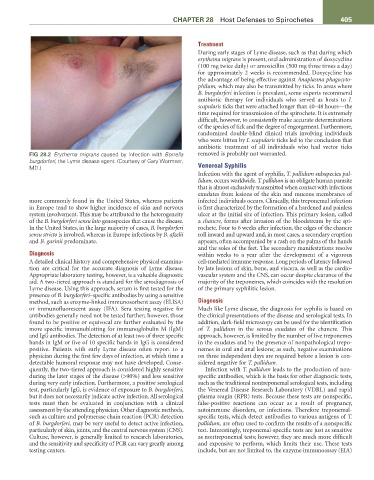
           FIG 28.2  Erythema migrans caused by infection with Borrelia   removed is probably not warranted.
           burgdorferi, the Lyme disease agent. (Courtesy of Gary Wormser,
           MD.)                                                   Venereal Syphilis
                                                                  Infection with the agent of syphilis, T. pallidum subspecies pal-
                                                                  lidum, occurs worldwide. T. pallidum is an obligate human parasite
                                                                  that is almost exclusively transmitted when contact with infectious
                                                                  exudates from lesions of the skin and mucous membranes of
           more commonly found in the United States, whereas patients   infected individuals occurs. Clinically, this treponemal infection
           in Europe tend to show higher incidence of skin and nervous   is first characterized by the formation of a hardened and painless
           system involvement. This may be attributed to the heterogeneity   ulcer at the initial site of infection. This primary lesion, called
           of the B. burgdorferi sensu lato genospecies that cause the disease.   a chancre, forms after invasion of the bloodstream by the spi-
           In the United States, in the large majority of cases, B. burgdorferi   rochete. Four to 6 weeks after infection, the edges of the chancre
           sensu stricto is involved, whereas in Europe infections by B. afzelii   roll inward and upward and, in most cases, a secondary eruption
           and B. garinii predominate.                            appears, often accompanied by a rash on the palms of the hands
                                                                  and the soles of the feet. The secondary manifestations resolve
           Diagnosis                                              within weeks to a year after the development of a vigorous
           A detailed clinical history and comprehensive physical examina-  cell-mediated immune response. Long periods of latency followed
           tion are critical for the accurate diagnosis of Lyme disease.   by late lesions of skin, bone, and viscera, as well as the cardio-
           Appropriate laboratory testing, however, is a valuable diagnostic   vascular system and the CNS, can occur despite clearance of the
           aid. A two-tiered approach is standard for the serodiagnosis of   majority of the treponemes, which coincides with the resolution
           Lyme disease. Using this approach, serum is first tested for the   of the primary syphilitic lesion.
           presence of B. burgdorferi–specific antibodies by using a sensitive
           method, such as enzyme-linked immunosorbent assay (ELISA)   Diagnosis
           or immunofluorescent assay (IFA). Sera testing negative for   Much like Lyme disease, the diagnosis for syphilis is based on
           antibodies generally need not be tested further; however, those   the clinical presentations of the disease and serological tests. In
           found to be positive or equivocal are further evaluated by the   addition, dark-field microscopy can be used for the identification
           more specific immunoblotting for immunoglobulin M (IgM)   of  T. pallidum in the serous exudates of the chancre. This
           and IgG antibodies. The detection of at least two of three specific   approach, however, is limited by the number of live treponemes
           bands in IgM or five of 10 specific bands in IgG is considered   in the exudates and by the presence of nonpathological trepo-
           positive. Patients with early Lyme disease often report to a   nemes in oral and anal lesions; as such, negative examinations
           physician during the first few days of infection, at which time a   on three independent days are required before a lesion is con-
           detectable humoral response may not have developed. Conse-  sidered negative for T. pallidum.
           quently, the two-tiered approach is considered highly sensitive   Infection with T. pallidum leads to the production of non-
           during the later stages of the disease (>90%) and less sensitive   specific antibodies, which is the basis for other diagnostic tests,
           during very early infection. Furthermore, a positive serological   such as the traditional nontreponemal serological tests, including
           test, particularly IgG, is evidence of exposure to B. burgdorferi,   the Venereal Disease Research Laboratory (VDRL) and rapid
           but it does not necessarily indicate active infection. All serological   plasma reagin (RPR) tests. Because these tests are nonspecific,
           tests  must  then  be  evaluated  in  conjunction  with  a  clinical   false-positive reactions can occur as a result of pregnancy,
           assessment by the attending physician. Other diagnostic methods,   autoimmune disorders, or infections. Therefore treponemal-
           such as culture and polymerase chain reaction (PCR) detection   specific tests, which detect antibodies to various antigens of T.
           of B. burgdorferi, may be very useful to detect active infection,   pallidum, are often used to confirm the results of a nonspecific
           particularly of skin, joints, and the central nervous system (CNS).   test. Interestingly, treponemal-specific tests are just as sensitive
           Culture, however, is generally limited to research laboratories,   as nontreponemal tests; however, they are much more difficult
           and the sensitivity and specificity of PCR can vary greatly among   and expensive to perform, which limits their use. These tests
           testing centers.                                       include, but are not limited to, the enzyme immunoassay (EIA)

