


Page 427 - Clinical Immunology_ Principles and Practice ( PDFDrive )
P. 427
CHaPtEr 28  Host Defenses to Spirochetes              407


             Professional antigen-presenting cell                   Little is known about the molecular events or receptors that
                                                                  mediate B. burgdorferi phagocytosis despite the importance of
                 Phagocytic receptor  Endosomal PRRs              this cardinal mechanism of pathogen clearance. MyD88-mediated
                                                                  signals substantially mediate the phagocytosis of B. burgdorferi.
                                             IL-1β     IFNγ       However, MyD88-mediated phagocytosis occurs independently
                                             IL-12
                          TLR 1/2            IL-18                of any known B. burgdorferi-recognizing TLRs. The mechanism
                      MyD88                                       of MyD88-mediated phagocytic uptake is therefore unclear.
                                                                  Furthermore, the analysis of MyD88-deficient macrophages shows
                                                     CD4 +        that although reduced, phagocytosis is not absent in these cells.
                                           TCR       T cell       Therefore the uptake of B. burgdorferi by phagocytic cells seems
                                         Signaling                to be mediated by more than one receptor with MyD88-dependent
                                                                  and MyD88-independent components. Complement receptor 3
                                                                  (CR3) is a  β 2  integrin, which, in cooperation with the GPI-
                                                                  anchored CD14, acts as a phagocytic receptor for B. burgdorferi
                     Type I IFN                                   independently of TLR or MyD88-induced signals.  Phagocytosis
                                                                                                         10
                               Surface PRRs (i.e., integins)      plays a major role in the pathogenesis of Lyme disease, not only
                  TNF
                                                                  through the control of bacterial numbers but also through
                           Endothelial cell                       modulation of the potency and quality of proinflammatory
                                                                  cytokine induction. Indeed, as opposed to MyD88-mediated
                                                                  phagocytosis, which is proinflammatory, the internalization of
                                                                  B. burgdorferi by CR3 tempers the inflammatory response of
                                                                  macrophages. Therefore the presence of alternative phagocytic
                            IL-8, MCP-1, KC                       mechanisms has nonredundant physiological consequences during
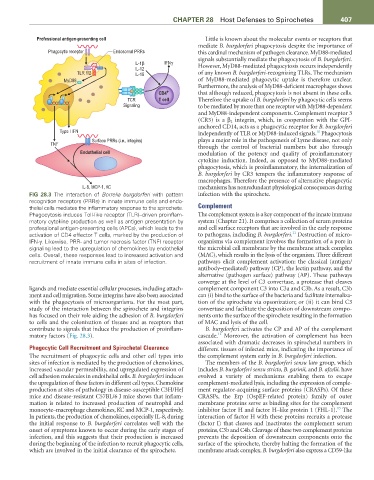
           FIG  28.3  The  interaction  of  Borrelia  burgdorferi  with  pattern   infection with the spirochete.
           recognition receptors (PRRs) in innate immune cells and endo-
           thelial cells mediates the inflammatory response to the spirochete.   Complement
           Phagocytosis induces Toll-like receptor (TLR)–driven proinflam-  The complement system is a key component of the innate immune
           matory cytokine production as well as antigen presentation by   system (Chapter 21). It comprises a collection of serum proteins
           professional antigen-presenting cells (APCs), which leads to the   and cell surface receptors that are involved in the early response
                                                                                                 11
           activation of CD4 effector T cells, marked by the production of   to pathogens, including B. burgdorferi.  Destruction of micro-
           IFN-γ. Likewise, PRR- and tumor necrosis factor (TNF) receptor   organisms via complement involves the formation of a pore in
           signaling lead to the upregulation of chemokines by endothelial   the microbial cell membrane by the membrane attack complex
           cells. Overall, these responses lead to increased activation and   (MAC), which results in the lysis of the organism. Three different
           recruitment of innate immune cells in sites of infection.   pathways elicit complement activation: the classical (antigen/
                                                                  antibody–mediated) pathway (CP), the lectin pathway, and the
                                                                  alternative (pathogen surface) pathway (AP). These pathways
                                                                  converge at the level of C3 convertase, a protease that cleaves
           ligands and mediate essential cellular processes, including attach-  complement component C3 into C3a and C3b. As a result, C3b
           ment and cell migration. Some integrins have also been associated   can (i) bind to the surface of the bacteria and facilitate internaliza-
           with the phagocytosis of microorganisms. For the most part,   tion of the spirochete via opsonization; or (ii) it can bind C3
           study of the interaction between the spirochete and integrins   convertase and facilitate the deposition of downstream compo-
           has focused on their role aiding the adhesion of B. burgdorferi   nents onto the surface of the spirochete resulting in the formation
           to cells and the colonization of tissues and as receptors that   of MAC and lysis of the cell.
           contribute to signals that induce the production of proinflam-  B. burgdorferi activates the CP and AP of the complement
                                                                        12
           matory factors (Fig. 28.3).                            cascade.  Moreover, the activation of complement has been
                                                                  associated with dramatic decreases in spirochetal numbers in
           Phagocytic Cell Recruitment and Spirochetal Clearance  different tissues of infected mice, indicating the importance of
           The recruitment of phagocytic cells and other cell types into   the complement system early in B. burgdorferi infection.
           sites of infection is mediated by the production of chemokines,   The members of the B. burgdorferi sensu lato group, which
           increased vascular permeability, and upregulated expression of   includes B. burgdorferi sensu stricto, B. garinii, and B. afzelii, have
           cell adhesion molecules in endothelial cells. B. burgdorferi induces   evolved a variety of mechanisms enabling them to escape
           the upregulation of these factors in different cell types. Chemokine   complement-mediated lysis, including the expression of comple-
           production at sites of pathology in disease-susceptible C3H/HeJ   ment regulator-acquiring surface proteins (CRASPs). Of these
           mice and disease-resistant C57BL/6 J mice shows that inflam-  CRASPs, the Erp (OspEF-related protein) family of outer
           mation is related to increased production of neutrophil and   membrane proteins serve as binding sites for the complement
                                                                                                               13
           monocyte–macrophage chemokines, KC and MCP-1, respectively.   inhibitor factor H and factor H–like protein 1 (FHL-1).  The
           In patients, the production of chemokines, especially IL-8, during   interaction of factor H with these proteins recruits a protease
           the initial response to  B. burgdorferi correlates well with the   (factor I) that cleaves and inactivates the complement serum
           onset of symptoms known to occur during the early stages of   proteins, C3b and C4b. Cleavage of these two complement proteins
           infection, and this suggests that their production is increased   prevents the deposition of downstream components onto the
           during the beginning of the infection to recruit phagocytic cells,   surface of the spirochete, thereby halting the formation of the
           which are involved in the initial clearance of the spirochete.  membrane attack complex. B. burgdorferi also express a CD59-like

