


Page 434 - Clinical Immunology_ Principles and Practice ( PDFDrive )
P. 434
414          ParT ThrEE  Host Defenses to Infectious Agents


                                      Immunotherapy for  Immunotherapy    Cancer and
                                        autoimmune     for     HIV / AIDS  chemotherapy
                                         diseases     cancer


                                       Parenteral                            Intensive
                                       nutrition                             care unit
                                                                            treatment
                                       Catheterization                   Immunosuppressive
                                                                             therapy
                                       Neonates
                                      and elderly                          Broad-spectrum
                                                                             antibiotics
                                     Organ/bone marrow    Invasive
                                        transplant        fungal
                                                         infections             Surgery

                                   Hematologic                                Inherited
                                    malignancy                             immunodeficiencies
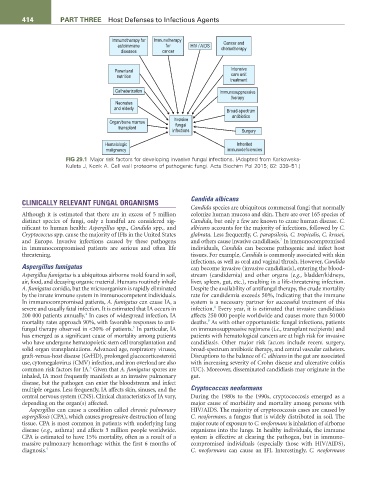
                       FIG 29.1  Major risk factors for developing invasive fungal infections. (Adapted from Karkowska-
                       Kuleta J, Kozik A. Cell wall proteome of pathogenic fungi. Acta Biochim Pol 2015; 62: 339–51.)


        CLINICALLY RELEVANT FUNGAL ORGANISMS                   Candida albicans
                                                               Candida species are ubiquitous commensal fungi that normally
        Although it is estimated that there are in excess of 5 million   colonize human mucosa and skin. There are over 165 species of
        distinct species of fungi, only a handful are considered sig-  Candida, but only a few are known to cause human disease. C.
        nificant to human health: Aspergillus spp., Candida spp., and   albicans accounts for the majority of infections, followed by C.
        Cryptococcus spp. cause the majority of IFIs in the United States   glabrata. Less frequently, C. parapsilosis, C. tropicalis, C. krusei,
                                                                                             7
        and Europe. Invasive infections caused by these pathogens   and others cause invasive candidiasis.  In immunocompromised
        in immunocompromised patients are serious and often life     individuals,  Candida can become pathogenic and infect host
        threatening.                                           tissues. For example, Candida is commonly associated with skin
                                                               infections, as well as oral and vaginal thrush. However, Candida
        Aspergillus fumigatus                                  can become invasive (invasive candidiasis), entering the blood-
        Aspergillus fumigatus is a ubiquitous airborne mold found in soil,   stream (candidemia) and other organs (e.g., bladder/kidneys,
        air, food, and decaying organic material. Humans routinely inhale   liver, spleen, gut, etc.), resulting in a life-threatening infection.
        A. fumigatus conidia, but the microorganism is rapidly eliminated   Despite the availability of antifungal therapy, the crude mortality
        by the innate immune system in immunocompetent individuals.   rate for candidemia exceeds 50%, indicating that the immune
        In immunocompromised patients, A. fumigatus can cause IA, a   system is a necessary partner for successful treatment of this
                                                                       8
        severe and usually fatal infection. It is estimated that IA occurs in   infection.  Every year, it is estimated that invasive candidiasis
                             4
        200 000 patients annually.  In cases of widespread infection, IA   affects 250 000 people worldwide and causes more than 50 000
                                                                     9
        mortality rates approach 90%, with favorable responses to anti-  deaths.  As with other opportunistic fungal infections, patients
                                            5
        fungal therapy observed in <30% of patients.  In particular, IA   on immunosuppressive regimens (i.e., transplant recipients) and
        has emerged as a significant cause of mortality among patients   patients with hematological cancers are at high risk for invasive
        who have undergone hematopoietic stem cell transplantation and   candidiasis. Other major risk factors include recent surgery,
        solid organ transplantations. Advanced age, respiratory viruses,   broad-spectrum antibiotic therapy, and central vascular catheters.
        graft-versus-host disease (GvHD), prolonged glucocorticosteroid   Disruptions to the balance of C. albicans in the gut are associated
        use, cytomegalovirus (CMV) infection, and iron overload are also   with increasing severity of Crohn disease and ulcerative colitis
                              6
        common risk factors for IA.  Given that A. fumigatus spores are   (UC). Moreover, disseminated candidiasis may originate in the
        inhaled, IA most frequently manifests as an invasive pulmonary   gut.
        disease, but the pathogen can enter the bloodstream and infect
        multiple organs. Less frequently, IA affects skin, sinuses, and the   Cryptococcus neoformans
        central nervous system (CNS). Clinical characteristics of IA vary,   During the 1980s to the 1990s, cryptococcosis emerged as a
        depending on the organ(s) affected.                    major cause of morbidity and mortality among persons with
           Aspergillus can cause a condition called chronic pulmonary   HIV/AIDS. The majority of cryptococcosis cases are caused by
        aspergillosis (CPA), which causes progressive destruction of lung   C. neoformans, a fungus that is widely distributed in soil. The
        tissue. CPA is most common in patients with underlying lung   major route of exposure to C. neoformans is inhalation of airborne
        disease (e.g., asthma) and affects 3 million people worldwide.   organisms into the lungs. In healthy individuals, the immune
        CPA is estimated to have 15% mortality, often as a result of a   system is effective at clearing the pathogen, but in immuno-
        massive pulmonary hemorrhage within the first 6 months of   compromised individuals (especially those with HIV/AIDS),
        diagnosis. 4                                           C. neoformans can cause an IFI. Interestingly,  C. neoformans

