


Page 637 - Clinical Immunology_ Principles and Practice ( PDFDrive )
P. 637
612          Part five  Allergic Diseases


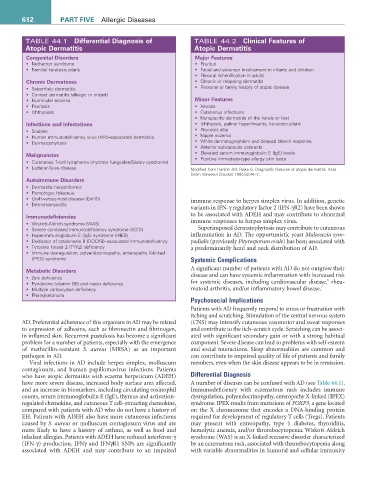
         TABLE 44.1  Differential Diagnosis of                   TABLE 44.2  Clinical features of
         atopic Dermatitis                                       atopic Dermatitis
          Congenital Disorders                                   Major features
          •  Netherton syndrome                                  •  Pruritus
          •  Familial keratosis pilaris                          •  Facial and extensor involvement in infants and children
                                                                 •  Flexural lichenification in adults
          Chronic Dermatoses                                     •  Chronic or relapsing dermatitis
          •  Seborrheic dermatitis                               •  Personal or family history of atopic disease
          •  Contact dermatitis (allergic or irritant)
          •  Nummular eczema                                     Minor features
          •  Psoriasis                                           •  Xerosis
          •  Ichthyoses                                          •  Cutaneous infections
                                                                 •  Nonspecific dermatitis of the hands or feet
          infections and infestations                            •  Ichthyosis, palmar hyperlinearity, keratosis pilaris
          •  Scabies                                             •  Pityriasis alba
          •  Human immunodeficiency virus (HIV)–associated dermatitis  •  Nipple eczema
          •  Dermatophytosis                                     •  White dermatographism and delayed blanch response
                                                                 •  Anterior subcapsular cataracts
          Malignancies                                           •  Elevated serum immunoglobulin E (IgE) levels
                                                                 •  Positive immediate-type allergy skin tests
          •  Cutaneous T-cell lymphoma (mycosis fungoides/Sézary syndrome)
          •  Letterer-Siwe disease                             Modified from Hanifin JM, Rajka G. Diagnostic features of atopic dermatitis. Acta
                                                               Derm Venereol (Stockh) 1980;92:44–7.
          autoimmune Disorders
          •  Dermatitis herpetiformis
          •  Pemphigus foliaceus
          •  Graft-versus-host disease (GvHD)                  immune response to herpes simplex virus. In addition, genetic
          •  Dermatomyositis
                                                               variants in IFN-γ regulatory factor 2 (IFN-γR2) have been shown
          immunodeficiencies                                   to be associated with ADEH and may contribute to abnormal
          •  Wiskott-Aldrich syndrome (WAS)                    immune responses to herpes simplex virus.
          •  Severe combined immunodeficiency syndrome (SCID)     Superimposed dermatophytosis may contribute to cutaneous
          •  Hyperimmunoglobulin E (IgE) syndrome (HIES)       inflammation in AD. The opportunistic yeast Malassezia sym-
          •  Dedicator of cytokinesis 8 (DOCK8)–associated immunodeficiency  podialis (previously Pityrosporum ovale) has been associated with
          •  Tyrosine kinase 2 (TYK2) deficiency               a predominantly head and neck distribution of AD.
          •  Immune dysregulation, polyendocrinopathy, enteropathy X-linked
           (IPEX) syndrome                                     Systemic Complications
          Metabolic Disorders                                  A significant number of patients with AD do not outgrow their
          •  Zinc deficiency                                   disease and can have systemic inflammation with increased risk
                                                                                                            6
          •  Pyridoxine (vitamin B6) and niacin deficiency     for systemic diseases, including cardiovascular disease,  rheu-
                                                                                                          7
          •  Multiple carboxylase deficiency                   matoid arthritis, and/or inflammatory bowel disease.
          •  Phenylketonuria
                                                               Psychosocial Implications
                                                               Patients with AD frequently respond to stress or frustration with
                                                               itching and scratching. Stimulation of the central nervous system
        AD. Preferential adherence of this organism in AD may be related   (CNS) may intensify cutaneous vasomotor and sweat responses
        to expression of adhesins, such as fibronectin and fibrinogen,   and contribute to the itch–scratch cycle. Scratching can be associ-
        in inflamed skin. Recurrent pustulosis has become a significant   ated with significant secondary gain or with a strong habitual
        problem for a number of patients, especially with the emergence   component. Severe disease can lead to problems with self-esteem
        of methicillin-resistant  S. aureus (MRSA) as an important   and social interactions. Sleep abnormalities are common and
        pathogen in AD.                                        can contribute to impaired quality of life of patients and family
           Viral infections in AD include herpes simplex, molluscum   members, even when the skin disease appears to be in remission.
        contagiosum, and human papillomavirus infections. Patients
        who have atopic dermatitis with eczema herpeticum (ADEH)   Differential Diagnosis
        have more severe disease, increased body surface area affected,   A number of diseases can be confused with AD (see Table 44.1).
        and an increase in biomarkers, including circulating eosinophil   Immunodeficiency with eczematous rash includes immune
        counts, serum immunoglobulin E (IgE), thymus and activation-  dysregulation, polyendocrinopathy, enteropathy X-linked (IPEX)
        regulated chemokine, and cutaneous T cell–attracting chemokine,   syndrome. IPEX results from mutations of FOXP3, a gene located
        compared with patients with AD who do not have a history of   on the X chromosome that encodes a DNA-binding protein
        EH. Patients with ADEH also have more cutaneous infections   required for development of regulatory T cells (Tregs). Patients
        caused by S. aureus or molluscum contagiosum virus and are   may present with enteropathy, type 1 diabetes, thyroiditis,
        more likely to have a history of asthma, as well as food and   hemolytic anemia, and/or thrombocytopenia. Wiskott-Aldrich
        inhalant allergies. Patients with ADEH have reduced interferon-γ   syndrome (WAS) is an X-linked recessive disorder characterized
        (IFN-γ) production. IFNγ and IFNγR1 SNPs are significantly   by an eczematous rash, associated with thrombocytopenia along
        associated with  ADEH and may contribute to an impaired   with variable abnormalities in humoral and cellular immunity

