


Page 647 - Clinical Immunology_ Principles and Practice ( PDFDrive )
P. 647
622          Part five  Allergic Diseases


                                                               Symptomatic Therapy
                                                               In addition to avoidance of exposure, appropriate adjunct medical
                                                               treatment can be prescribed. First-line therapy is with topical
                                                               corticosteroids, and second-line treatment includes phototherapy,
                                                               oral retinoids, and immunosuppressant agents. The age of the
                                                               patient and the severity, location, and acuteness of the dermatitis
                                                               affect the selection of topical corticosteroids, which may be
                                                               sufficient for localized lesions. Patients with dermatitis that is
                                                               acute, extensive (particularly if involving >10% of total body
                                                               surface), or severe may benefit from systemic therapy.
                                                                  Contact sensitization to the corticosteroid itself, the vehicle,
                                                               or other ingredients in the topical corticosteroid should be
                                                               suspected if symptoms worsen, initially improve but then worsen
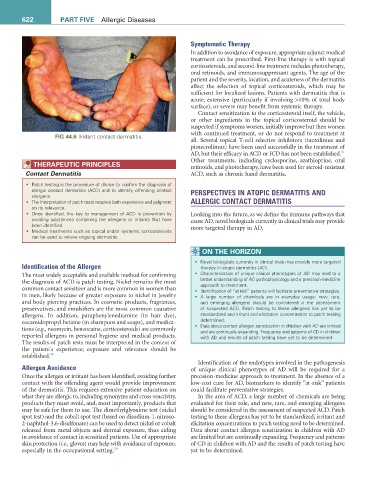
                   fiG 44.6  Irritant contact dermatitis.      with continued treatment, or do not respond to treatment at
                                                               all. Several topical T-cell selective inhibitors (tacrolimus and
                                                               pimecrolimus) have been used successfully in the treatment of
                                                                                                                 51
                                                               AD, but their efficacy in ACD or ICD has not been established.
            tHeraPeUtiC PriNCiPLeS                             Other treatments, including cyclosporine, azathioprine, oral
                                                               retinoids, and phototherapy, have been used for steroid-resistant
         Contact Dermatitis                                    ACD, such as chronic hand dermatitis.
          •  Patch testing is the procedure of choice to confirm the diagnosis of
           allergic contact dermatitis (ACD) and to identify offending contact   PERSPECTIVES IN ATOPIC DERMATITIS AND
           allergens.
          •  The interpretation of patch tests requires both experience and judgment   ALLERGIC CONTACT DERMATITIS
           on its relevance.
          •  Once  identified,  the  key  to  management  of  ACD  is  prevention  by   Looking into the future, as we define the immune pathways that
           avoiding substances containing the allergens or irritants that have   cause AD, novel biologicals currently in clinical trials may provide
           been identified.                                    more targeted therapy in AD.
          •  Medical treatments such as topical and/or systemic corticosteroids
           can be used to relieve ongoing dermatitis.
                                                                   ON tHe HOriZON

                                                                 •  Novel biologicals currently in clinical trials may provide more targeted
        Identification of the Allergen                             therapy in atopic dermatitis (AD).
        The most widely acceptable and available method for confirming   •  Characterization of unique clinical phenotypes of AD may lead to a
        the diagnosis of ACD is patch testing. Nickel remains the most   better understanding of AD pathophysiology and a precision-medicine
                                                                   approach to treatment.
        common contact sensitizer and is more common in women than   •  Identification of “at risk” patients will facilitate preventative strategies.
        in men, likely because of greater exposure to nickel in jewelry   •  A large number of chemicals are in everyday usage: new, rare,
        and body piercing practices. In cosmetic products, fragrances,   and emerging allergens should be considered in the assessment
        preservatives, and emulsifiers are the most common causative   of suspected ACD. Patch testing to these allergens has yet to be
        allergens. In addition, paraphenylenediamine (in hair dye),   standardized and irritant and elicitation concentration to patch testing
        cocamidopropyl betaine (in shampoos and soaps), and medica-  determined.
        tions (e.g., neomycin, benzocaine, corticosteroids) are commonly   •  Data about contact allergen sensitization in children with AD are limited
                                                                   and are continually expanding. Frequency and patterns of CD in children
        reported allergens in personal hygiene and medical products.   with AD and results of patch testing have yet to be determined.
        The results of patch tests must be interpreted in the context of
        the patient’s experience; exposure and relevance should be
        established. 49
                                                                  Identification of the endotypes involved in the pathogenesis
        Allergen Avoidance                                     of unique clinical phenotypes of  AD will be required for a
        Once the allergen or irritant has been identified, avoiding further   precision-medicine approach to treatment. In the absence of a
        contact with the offending agent would provide improvement   low-cost cure for AD, biomarkers to identify “at-risk” patients
        of the dermatitis. This requires extensive patient education on   could facilitate preventative strategies.
        what they are allergic to, including synonyms and cross-reactivity,   In the area of ACD, a large number of chemicals are being
        products they must avoid, and, most importantly, products that   evaluated for their role, and new, rare, and emerging allergens
        may be safe for them to use. The dimethylglyoxime test (nickel   should be considered in the assessment of suspected ACD. Patch
        spot test) and the cobalt spot test (based on disodium-1-nitroso-  testing to these allergens has yet to be standardized; irritant and
        2-naphthol-3,6-disulfonate) can be used to detect nickel or cobalt   elicitation concentrations to patch testing need to be determined.
        released from metal objects and dermal exposure, thus aiding   Data about contact allergen sensitization in children with AD
        in avoidance of contact in sensitized patients. Use of appropriate   are limited but are continually expanding. Frequency and patterns
        skin protection (i.e., gloves) may help with avoidance of exposure,   of CD in children with AD and the results of patch testing have
        especially in the occupational setting. 50             yet to be determined.

