


Page 669 - Clinical Immunology_ Principles and Practice ( PDFDrive )
P. 669
642          ParT fivE  Allergic Diseases


                     Normal conjunctiva                              Seasonal allergic conjunctivitis  Histamine, LTs,
                                                                                                       cytokines

                                                       Intraepithelial                                 Mast cell
                       Mast cells                      lymphocytes                    ↑Neutrophils    degranulation
            Tear film
           Epithelium

                                      Blood
                                      vessel                                        Blood vessel

             Stroma


           Endothelium


                     Vernal keratoconjunctivitis                     Atopic keratoconjunctivitis
                                         Secrete eotaxin to  ECP, EDN,
                              ↑TH 2      attract eosinophils  EPO, ↑ TH 2                 ↑TH 1
                      Thickened                                           Uneven
                     epithelial layer  T cells  Mast cells  ↑Eosinophils                  T cells     Eosinophils
            Tear film                                                   epithelial layer

           Epithelium


             Stroma


           Endothelium
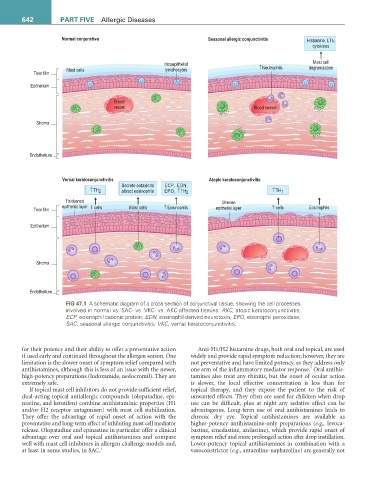
                       fiG 47.1  A schematic diagram of a cross-section of conjunctival tissue, showing the cell processes
                       involved in normal vs. SAC- vs. VKC- vs. AKC-affected tissues. AKC, atopic keratoconjunctivitis;
                       ECP, eosinophil cationic protein; EDN, eosinophil-derived neurotoxin; EPO, eosinophil peroxidase;
                       SAC, seasonal allergic conjunctivitis; VKC, vernal keratoconjunctivitis.


        for their potency and their ability to offer a preventative action   Anti-H1/H2 histamine drugs, both oral and topical, are used
        if used early and continued throughout the allergen season. One   widely and provide rapid symptom reduction; however, they are
        limitation is the slower onset of symptom relief compared with   not preventative and have limited potency, as they address only
                                                                                                       5
        antihistamines, although this is less of an issue with the newer,   one arm of the inflammatory mediator response.  Oral antihis-
        high-potency preparations (lodoxamide, nedocromil). They are   tamines also treat any rhinitis, but the onset of ocular action
        extremely safe.                                        is slower, the local  effective concentration is  less than  for
           If topical mast cell inhibitors do not provide sufficient relief,   topical therapy, and they expose the patient to the risk of
        dual-acting topical antiallergic compounds (olopatadine, epi-  unwanted effects. They often are used for children when drop
        nastine, and ketotifen) combine antihistaminic properties (H1   use can be difficult, plus at night any sedative effect can be
        and/or H2 receptor antagonism) with mast cell stabilization.   advantageous. Long-term use of oral antihistamines leads to
        They offer the advantage of rapid onset of action with the   chronic dry eye. Topical antihistamines are available as
        preventative and long-term effect of inhibiting mast cell mediator   higher-potency antihistamine-only preparations (e.g., levoca-
        release. Olopatadine and epinastine in particular offer a clinical   bastine, emedastine, azelastine), which provide rapid onset of
        advantage over oral and topical antihistamines and compare   symptom relief and more prolonged action after drop instillation.
        well with mast cell inhibitors in allergen challenge models and,   Lower-potency topical antihistamines in combination with a
        at least in some studies, in SAC. 4                    vasoconstrictor (e.g., antazoline-naphazoline) are generally not

