


Page 720 - Clinical Immunology_ Principles and Practice ( PDFDrive )
P. 720
CHaPtEr 51  Systemic Lupus Erythematosus                 693


                                                                  wrists. The majority of AVN is associated with previous administra-
                                                                  tion of high doses of corticosteroids (>30 mg/day); associations
                                                                  with vitamin D deficiency, minority ethnicity, hypertension, and
                                                                  renal disease have also been reported. Bone biopsy in lupus patients
                                                                  affected by AVN does not reveal unique findings.
                                                                  Mucocutaneous Manifestations
                                                                  Skin
                                                                  The skin is commonly affected in SLE, with a wide variety of
                                                                  lesions from malar erythema to severe bullous lupus and scarring
                                                                  discoid lesions (DLE). SLE-associated cutaneous lesions are
                                                                  generally categorized as acute cutaneous lupus erythematosus,
                                                                  subacute cutaneous lupus erythematosus (SCLE), and chronic
                                                                  cutaneous lupus erythematosus (CCLE). Known triggers for
                                                                  cutaneous SLE include ultraviolet (UV) light, infections, and
                                                                  drug reactions. Many lupus rashes arise in sun-exposed areas,
                                                                  and  sun  exposure can  precipitate  flares  of systemic  disease.
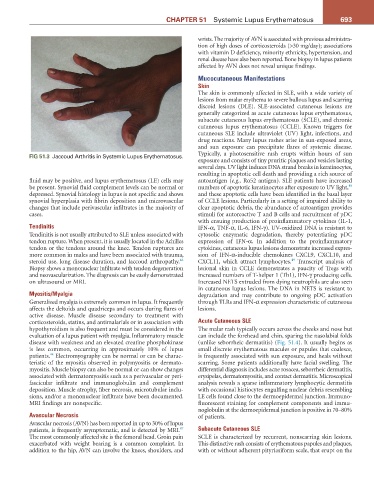
           FIG 51.3  Jaccoud Arthritis in Systemic Lupus Erythematosus.   Typically, a photosensitive rash erupts within hours of sun
                                                                  exposure and consists of tiny pruritic plaques and vesicles lasting
                                                                  several days. UV light induces DNA strand breaks in keratinocytes,
                                                                  resulting in apoptotic cell death and providing a rich source of
           fluid may be positive, and lupus erythematosus (LE) cells may   autoantigen (e.g., Ro52 antigen). SLE patients have increased
                                                                                                                   48
           be present. Synovial fluid complement levels can be normal or   numbers of apoptotic keratinocytes after exposure to UV light,
           depressed. Synovial histology in lupus is not specific and shows   and these apoptotic cells have been identified in the basal layer
           synovial hyperplasia with fibrin deposition and microvascular   of CCLE lesions. Particularly in a setting of impaired ability to
           changes that include perivascular infiltrates in the majority of   clear apoptotic debris, the abundance of autoantigen provides
           cases.                                                 stimuli for autoreactive T and B cells and recruitment of pDC
                                                                  with ensuing production of proinflammatory cytokines (IL-1,
           Tendinitis                                             IFN-α, TNF-α, IL-6, IFN-γ). UV-oxidized DNA is resistant to
           Tendinitis is not usually attributed to SLE unless associated with   cytosolic enzymatic degradation, thereby potentiating pDC
           tendon rupture. When present, it is usually located in the Achilles   expression of IFN-α. In addition to the proinflammatory
           tendon or the tendons around the knee. Tendon ruptures are   cytokines, cutaneous lupus lesions demonstrate increased expres-
           more common in males and have been associated with trauma,   sion of IFN-α-inducible chemokines CXCL9, CXCL10, and
                                                            46
                                                                                                49
           steroid use, long disease duration, and Jaccoud arthropathy.    CXCL11, which attract lymphocytes.  Transcript analysis of
           Biopsy shows a mononuclear infiltrate with tendon degeneration   lesional skin in CCLE demonstrates a paucity of Tregs with
           and neovascularization. The diagnosis can be easily demonstrated   increased numbers of T-helper 1 (Th1), IFN-γ producing cells.
           on ultrasound or MRI.                                  Increased NETS extruded from dying neutrophils are also seen
                                                                  in cutaneous lupus lesions. The DNA in NETS is resistant to
           Myositis/Myalgia                                       degradation and may contribute to ongoing pDC activation
           Generalized myalgia is extremely common in lupus. It frequently   through TLRs and IFN-α expression characteristic of cutaneous
           affects the deltoids and quadriceps and occurs during flares of   lesions.
           active disease. Muscle disease secondary to treatment with
           corticosteroids, statins, and antimalarials or in association with   Acute Cutaneous SLE
           hypothyroidism is also frequent and must be considered in the   The malar rash typically occurs across the cheeks and nose but
           evaluation of a lupus patient with myalgia. Inflammatory muscle   can include the forehead and chin, sparing the nasolabial folds
           disease with weakness and an elevated creatine phosphokinase   (unlike seborrheic dermatitis) (Fig. 51.4). It usually begins as
           is less common, occurring in approximately 10% of lupus   small discrete erythematous macules or papules that coalesce,
                 44
           patients.  Electromyography can be normal or can be charac-  is frequently associated with sun exposure, and heals without
           teristic of the myositis observed in polymyositis or dermato-  scarring. Some patients additionally have facial swelling. The
           myositis. Muscle biopsy can also be normal or can show changes   differential diagnosis includes acne rosacea, seborrheic dermatitis,
           associated with dermatomyositis such as a perivascular or peri-  erysipelas, dermatomyositis, and contact dermatitis. Microscopical
           fascicular infiltrate and immunoglobulin and complement   analysis reveals a sparse inflammatory lymphocytic dermatitis
           deposition. Muscle atrophy, fiber necrosis, microtubular inclu-  with occasional histiocytes engulfing nuclear debris resembling
           sions, and/or a mononuclear infiltrate have been documented.   LE cells found close to the dermoepidermal junction. Immuno-
           MRI findings are nonspecific.                          fluorescent staining for complement components and immu-
                                                                  noglobulin at the dermoepidermal junction is positive in 70–80%
           Avascular Necrosis                                     of patients.
           Avascular necrosis (AVN) has been reported in up to 30% of lupus
                                                            47
           patients, is frequently asymptomatic, and is detected by MRI.    Subacute Cutaneous SLE
           The most commonly affected site is the femoral head. Groin pain   SCLE is characterized by recurrent, nonscarring skin lesions.
           exacerbated with weight bearing is a common complaint. In   This distinctive rash consists of erythematous papules and plaques,
           addition to the hip, AVN can involve the knees, shoulders, and   with or without adherent pityriasiform scale, that erupt on the

