


Page 721 - Clinical Immunology_ Principles and Practice ( PDFDrive )
P. 721
694          Part SIX  Systemic Immune Diseases


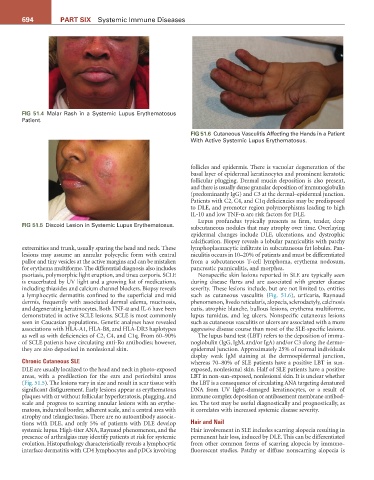
        FIG 51.4  Malar Rash in a Systemic Lupus Erythematosus
        Patient.
                                                               FIG 51.6  Cutaneous Vasculitis Affecting the Hands in a Patient
                                                               With Active Systemic Lupus Erythematosus.


                                                               follicles and epidermis. There is vacuolar degeneration of the
                                                               basal layer of epidermal keratinocytes and prominent keratotic
                                                               follicular plugging. Dermal  mucin deposition is also present,
                                                               and there is usually dense granular deposition of immunoglobulin
                                                               (predominantly IgG) and C3 at the dermal–epidermal junction.
                                                               Patients with C2, C4, and C1q deficiencies may be predisposed
                                                               to DLE, and promoter region polymorphisms leading to high
                                                               IL-10 and low TNF-α are risk factors for DLE.
                                                                  Lupus profundus typically presents as firm, tender, deep
        FIG 51.5  Discoid Lesion in Systemic Lupus Erythematosus.
                                                               subcutaneous nodules that may atrophy over time. Overlaying
                                                               epidermal changes include DLE, ulcerations, and dystrophic
                                                               calcification. Biopsy reveals a lobular panniculitis with patchy
        extremities and trunk, usually sparing the head and neck. These   lymphoplasmacytic infiltrate in subcutaneous fat lobules. Pan-
        lesions may assume an annular polycyclic form with central   niculitis occurs in 10–20% of patients and must be differentiated
        pallor and tiny vesicles at the active margins and can be mistaken   from a subcutaneous T-cell lymphoma, erythema nodosum,
        for erythema multiforme. The differential diagnosis also includes   pancreatic panniculitis, and morphea.
        psoriasis, polymorphic light eruption, and tinea corporis. SCLE   Nonspecific skin lesions reported in SLE are typically seen
        is exacerbated by UV light and a growing list of medications,   during disease flares and are associated with greater disease
        including thiazides and calcium channel blockers. Biopsy reveals   severity. These lesions include, but are not limited to, entities
        a lymphocytic dermatitis confined to the superficial and mid   such as cutaneous vasculitis (Fig. 51.6), urticaria, Raynaud
        dermis, frequently with associated dermal edema, mucinosis,   phenomenon, livedo reticularis, alopecia, sclerodactyly, calcinosis
        and degenerating keratinocytes. Both TNF-α and IL-6 have been   cutis, atrophie blanche, bullous lesions, erythema multiforme,
        demonstrated in active SCLE lesions. SCLE is most commonly   lupus tumidus, and leg ulcers. Nonspecific cutaneous lesions
        seen in Caucasian populations. Genetic analyses have revealed   such as cutaneous vasculitis or ulcers are associated with a more
        associations with HLA-A1, HLA-B8, and HLA-DR3 haplotypes   aggressive disease course than most of the SLE-specific lesions.
        as well as with deficiencies of C2, C4, and C1q. From 60–90%   The lupus band test (LBT) refers to the deposition of immu-
        of SCLE patients have circulating anti-Ro antibodies; however,   noglobulin (IgG, IgM, and/or IgA) and/or C3 along the dermo-
        they are also deposited in nonlesional skin.           epidermal junction. Approximately 25% of normal individuals
                                                               display weak IgM staining at the dermoepidermal junction,
        Chronic Cutaneous SLE                                  whereas 70–80% of SLE patients have a positive LBT in sun-
        DLE are usually localized to the head and neck in photo-exposed   exposed, nonlesional skin. Half of SLE patients have a positive
        areas,  with  a  predilection  for  the  ears  and  periorbital  areas    LBT in non-sun-exposed, nonlesional skin. It is unclear whether
        (Fig. 51.5). The lesions vary in size and result in scar tissue with   the LBT is a consequence of circulating ANA targeting denatured
        significant disfigurement. Early lesions appear as erythematous   DNA from UV light–damaged keratinocytes, or a result of
        plaques with or without follicular hyperkeratosis, plugging, and   immune complex deposition or antibasement membrane antibod-
        scale and progress to scarring annular lesions with an erythe-  ies. The test may be useful diagnostically and prognostically, as
        matous, indurated border, adherent scale, and a central area with   it correlates with increased systemic disease severity.
        atrophy and telangiectasias. There are no autoantibody associa-
        tions with DLE, and only 5% of patients with DLE develop   Hair and Nail
        systemic lupus. High-titer ANA, Raynaud phenomenon, and the   Hair involvement in SLE includes scarring alopecia resulting in
        presence of arthralgias may identify patients at risk for systemic   permanent hair loss, induced by DLE. This can be differentiated
        evolution. Histopathology characteristically reveals a lymphocytic   from other common forms of scarring alopecia by immuno-
        interface dermatitis with CD4 lymphocytes and pDCs involving   fluorescent studies. Patchy or diffuse nonscarring alopecia is

