


Page 715 - Clinical Immunology_ Principles and Practice ( PDFDrive )
P. 715
688          Part SIX  Systemic Immune Diseases


           Progression of autoimmunity                         may dictate autospecificity (as above) but is less important in
                                                               determining risk of disease.
                                             Benign
                                           autoreactivity
                                                               Genes Associated With Impaired Clearance
             Susceptible  +  Environmental                     of Apoptotic Debris
               host         triggers
                                                               Patients with severe deficiencies of C2, C4, and C1q display disease
                                                                                                         11
                                      Pathogenic autoantibodies  risks of 10%, 75%, and 90%, respectively, for SLE.  Reduced
                                         epitope spreading,    uptake of apoptotic cells has been implicated in disease initiation
                                       heavy chain class switching  in murine models of SLE and is seen histopathologically in lymph
                                                                                  12
                                                               nodes of lupus patients.  Though rare, individuals homozygous
                                                               for null alleles of C2, C4, and C1q are at significantly increased
                                       Antibody/immune complex  risk. Polymorphisms of mannose-binding lectin (MBL) and
                                         deposition in tissue
                                                               C-reactive protein (CRP)—acute-phase reactants that facilitate
                                                               opsonization and phagocytosis of immune complexes, apoptotic
                                                               debris, and microbes—also associate with SLE susceptibility;
                  Clinical disease      Cellular infiltration and  MBL haplotypes appear to be more important in Chinese and
                                         inflammatory response
                                                               Spanish populations than in Caucasians. TREX1 encodes a 3′
                                                               repair exonuclease that monitors DNA synthesis; TREX1 defi-
                                         Tissue destruction,   ciency leads to accumulation of endogenous DNA and is associated
                                             fibrosis          with increased expression of IFN and autoimmunity. ITGAM
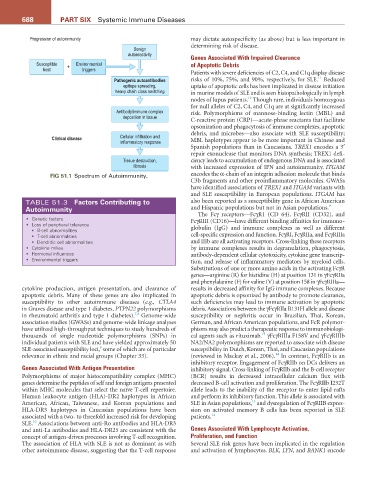
                 FIG 51.1  Spectrum of Autoimmunity.           encodes the α-chain of an integrin adhesion molecule that binds
                                                               C3b fragments and other proinflammatory molecules. GWASs
                                                               have identified associations of TREX1 and ITGAM variants with
                                                               and SLE susceptibility in European populations.  ITGAM has
         TABLE 51.3  Factors Contributing to                   also been reported as a susceptibility gene in African American
                                                                                                             9
         autoimmunity                                          and Hispanic populations but not in Asian populations.
                                                                  The Fcγ receptors—FcγR1 (CD 64), FcγRII (CD32), and
          •  Genetic factors                                   FcγRIII (CD16)—have different binding affinities for immuno-
          •  Loss of peripheral tolerance
           •  B-cell abnormalities                             globulin (IgG) and immune complexes as well as different
           •  T-cell abnormalities                             cell-specific expression and function. FcγRI, FcγRIIa, and FcγRIIIa
           •  Dendritic cell abnormalities                     and IIIb are all activating receptors. Cross-linking these receptors
          •  Cytokine milieu                                   by immune complexes results in degranulation, phagocytosis,
          •  Hormonal influences                               antibody-dependent cellular cytotoxicity, cytokine gene transcrip-
          •  Environmental triggers                            tion, and release of inflammatory mediators by myeloid cells.
                                                               Substitutions of one or more amino acids in the activating FcγR
                                                               genes—arginine (R) for histidine (H) at position 131 in γFcγRIIa
                                                               and phenylalanine (F) for valine (V) at position 158 in γFcγRIIIa—
        cytokine production, antigen presentation, and clearance of   results in decreased affinity for IgG immune complexes. Because
        apoptotic debris. Many of these genes are also implicated in   apoptotic debris is opsonized by antibody to promote clearance,
        susceptibility to other autoimmune diseases (e.g., CTLA4    such deficiencies may lead to immune activation by apoptotic
        in Graves disease and type 1 diabetes, PTPN22 polymorphisms   debris. Associations between the γFcγRIIa R131H allele and disease
                                             7,8
        in rheumatoid arthritis and type 1 diabetes).  Genome-wide   susceptibility or nephritis occur in Brazilian, Thai, Korean,
        association studies (GWASs) and genome-wide linkage analyses   German, and African American populations, and FcR polymor-
        have utilized high-throughput techniques to study hundreds of   phisms may also predict a therapeutic response to immunobiologi-
                                                                                       13
        thousands of single nucleotide polymorphisms (SNPs) in   cal agents such as rituximab.  γFcγRIIIa F158V and γFcγRIIIb
        individual patients with SLE and have yielded approximately 50   NA2/NA2 polymorphisms are reported to associate with disease
                                  9
        SLE-associated susceptibility loci,  some of which are of particular   susceptibility in Dutch, Korean, Thai, and Caucasian populations
                                                                                           14
        relevance in ethnic and racial groups (Chapter 33).    (reviewed in Mackay et al., 2006).  In contrast, FcγRIIb is an
                                                               inhibitory receptor. Engagement of FcγRIIb on DCs delivers an
        Genes Associated With Antigen Presentation             inhibitory signal. Cross-linking of FcγRIIb and the B-cell receptor
        Polymorphisms of major histocompatibility complex (MHC)   (BCR)  results  in  decreased  intracellular  calcium  flux  with
        genes determine the peptides of self and foreign antigens presented   decreased B-cell activation and proliferation. The FcγRIIb I232T
        within MHC molecules that select the naïve T-cell repertoire.   allele leads to the inability of the receptor to enter lipid rafts
        Human  leukocyte  antigen  (HLA)-DR2  haplotypes  in African   and perform its inhibitory function. This allele is associated with
                                                                                   15
        American,  African, Taiwanese, and Korean populations and   SLE in Asian populations,  and dysregulation of FcγRIIB expres-
        HLA-DR3 haplotypes in Caucasian populations have been   sion on activated memory B cells has been reported in SLE
        associated with a two- to threefold increased risk for developing   patients. 14
            10
        SLE.  Associations between anti-Ro antibodies and HLA-DR3
        and anti-La antibodies and HLA-DR25 are consistent with the   Genes Associated With Lymphocyte Activation,
        concept of antigen-driven processes involving T-cell recognition.   Proliferation, and Function
        The association of HLA with SLE is not as dominant as with   Several SLE risk genes have been implicated in the regulation
        other autoimmune disease, suggesting that the T-cell response   and activation of lymphocytes. BLK, LYN, and BANK1 encode

