


Page 740 - Clinical Immunology_ Principles and Practice ( PDFDrive )
P. 740
712          Part SIX  Systemic Immune Diseases


                      Acute                           Phasic                            Chronic
          Counter-regulatory networks  TLR inhibitors  IL-4, IL-10, TGFβ, IL-13, L-11, IL-2  IL-1Ra, sTNF-R, IL-10, IL-18bp,  OPG, adiponectin


                                   Tissue damage,           IL-12, IL-23  IL-2, deficiency
                      LTβR
                                    TLR ligands             IL-15, IL-18    +IL-6
                               TLR    IFNs +                TGFβ                          CD28 null
                                     survival                     T reg                       TCRζ dim
                                      factors               IL-10
                                                          IL-2    BlyS         T reg                Adipo
          IL-1, TNF, IL-6, IL-22,                      TCR        April
        PGE , bFGF, PDGF, EGF,  CXCL5/8/9/10/12/13,           TGFβ                      T eff
           2
         VEGF, TGFβ COX, LOX  CCL2/3/5/20/21, CX3CL1  CD28  IL-10
                                                             CD40                 Mφ                  Adipokines
                                                    T eff          B                      IL-17+
                                                         CD40L                            RANKL      Oncostatin M
                                                                                     TNF        TNF  MMP
               Transmigration of monocytes                                           M-CSF      IL-1  ADAM
               PMN, mast cells, and NK cells                                         OPG        PGE 2  ADAM-TS
                                              Early    Late     IL-6      IL-1, IL-6, TNF
                                              IL-2, IL-4,  IFNγ  IL-10    IL-15, IL-32
                activation of endothelium,    IL-13, TGFβ  IL-17  chemokines  GM-CSF
                 ↑ adhesion molecules         IL-15    RANTES   AutoAb    oncostatin M
                                              GM-CSF   TNF                M-CSF, VEGF  Osteoclasts  Chondrocyte
                                                        LTα/β             Chemokines
                                                       IL-10              adipokines  features of inflammation and repair
                                                                          HMGB1           tissue response
                                                                          IL-10

                     Initiation                     Antigen Mode                     Inflammation Mode
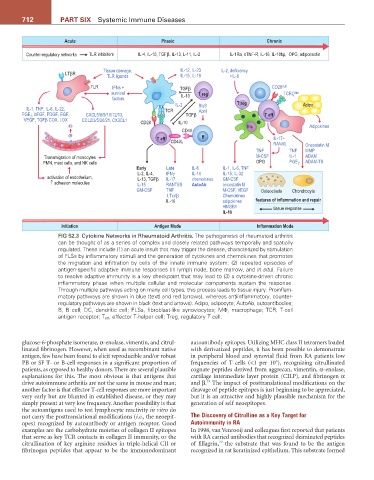
                    FIG 52.3  Cytokine Networks in Rheumatoid Arthritis. The pathogenesis of rheumatoid arthritis
                    can be thought of as a series of complex and closely related pathways temporally and spatially
                    regulated. These include (1) an acute insult that may trigger the disease, characterized by stimulation
                    of FLSs by inflammatory stimuli and the generation of cytokines and chemokines that promotes
                    the migration and infiltration by cells of the innate immune system; (2) repeated episodes of
                    antigen-specific adaptive immune responses (in lymph node, bone marrow, and in situ). Failure
                    to resolve adaptive immunity is a key checkpoint that may lead to (3) a cytokine-driven chronic
                    inflammatory phase when multiple cellular and molecular components sustain the response.
                    Through multiple pathways acting on many cell types, this process leads to tissue injury. Proinflam-
                    matory pathways are shown in blue (text) and red (arrows), whereas antiinflammatory, counter-
                    regulatory pathways are shown in black (text and arrows). Adipo, adipocyte; AutoAb, autoantibodies;
                    B, B cell; DC, dendritic cell; FLSs, fibroblast-like synoviocytes; MΦ, macrophage; TCR, T-cell
                    antigen receptor; T eff , effector T-helper cell; Treg, regulatory T cell.


        glucose-6-phosphate isomerase, α-enolase, vimentin, and citrul-  autoantibody epitopes. Utilizing MHC class II tetramers loaded
        linated fibrinogen. However, when used as recombinant native   with derivatized peptides, it has been possible to demonstrate
        antigen, few have been found to elicit reproducible and/or robust   in peripheral blood and synovial fluid from RA patients low
                                                                                           6
        PB or SF T- or B-cell responses in a significant proportion of   frequencies of T cells (<1 per 10 ), recognizing citrullinated
        patients, as opposed to healthy donors. There are several plausible   cognate peptides derived from aggrecan, vimentin, α-enolase,
        explanations for this. The most obvious is that antigens that   cartilage intermediate layer protein (CILP), and fibrinogen α
                                                                     29
        drive autoimmune arthritis are not the same in mouse and man;   and β.  The impact of posttranslational modifications on the
        another factor is that effector T-cell responses are more important   cleavage of peptide epitopes is just beginning to be appreciated,
        very early but are blunted in established disease, or they may   but it is an attractive and highly plausible mechanism for the
        simply present at very low frequency. Another possibility is that   generation of self neoepitopes.
        the autoantigens used to test lymphocyte reactivity in vitro do
        not carry the posttranslational modifications (i.e., the neoepit-  The Discovery of Citrulline as a Key Target for
        opes) recognized by autoantibody or antigen receptor. Good   Autoimmunity in RA
        examples are the carbohydrate moieties of collagen II epitopes   In 1998, van Venrooij and colleagues first reported that patients
        that serve as key TCR contacts in collagen II immunity, or the   with RA carried antibodies that recognized deiminated peptides
                                                                         30
        citrullination of key arginine residues in triple-helical CII or   of fillagrin,  the substrate that was found to be the antigen
        fibrinogen peptides that appear to be the immunodominant   recognized in rat keratinized epithelium. This substrate formed

