


Page 757 - Clinical Immunology_ Principles and Practice ( PDFDrive )
P. 757
CHaPtEr 53  Juvenile Idiopathic Arthritis            729


                                14
           on a set schedule as well.  Failure to do so and missed eye   TREATMENT
           involvement may lead to the occurrence of cataracts, glaucoma,
           impaired vision, and even blindness.                   Overview
                                                                  Despite significant advances in the understanding of the patho-
               KEY CONCEPts                                       genesis of JIA, there are currently no curative treatments. JIA
            Temporomandibular Joint (TMJ) Arthritis               frequently persists into adulthood and may result in significant
                                                                  morbidity, including physical disability. The objective of treatment
            •  TMJ arthritis is extremely common, present in up to 80% of children   is to prevent disability and preserve normal growth and develop-
              with juvenile idiopathic arthritis (JIA). It is typically asymptomatic and   ment while providing relief of symptoms and improved quality
              thus requires early screening with magnetic resonance imaging (MRI)   of life by controlling the inflammatory process. 1
              with contrast.                                        Over the past 15 years, remarkable advances have been made
            •  TMJ arthritis is often active despite therapy with disease-modifying   1
              antirheumatic drugs (DMARDs) and biologicals (e.g., methotrexate   in the treatment of JIA.  Chief among these advances was the
              plus tumor necrosis factor [TNF] inhibitors) and thus treatment with   advent  of  targeted  biological  therapeutic  agents  (Table  53.2)
              intraarticular long-acting corticosteroids or TNF inhibitors may help   (Chapter 89). These agents have been shown to be quite beneficial
              prevent mandibular growth damage and associated micrognathia and   against active disease and are generally well tolerated.  The early
                                                                                                            1
              facial dysmorphology.                               initiation of biological therapeutic agents may, in fact, alter and
                                                                                                1
                                                                  improve the subsequent disease course.  These new breakthroughs
             Another frequently asymptomatic complication of JIA is TMJ   have prompted pediatric rheumatologists to “invert the treatment
           arthritis. TMJ arthritis in children with JIA has been recognized   pyramid,” that is, to rapidly incorporate more effective therapeutic
           increasingly in recent years as a joint inflammation leading to   agents instead of slowly progressing to them in a stepwise fashion. 1
                                                            2
           silent destruction and facial deformity despite systemic therapy.
           TMJ arthritis is quite common, with 40–80% of all patients with    tHEraPEUtiC PriNCiPLEs
                           2
           JIA patients affected.  The overall true prevalence is likely closer   Early Aggressive Therapy
           to the higher range, since not all children with JIA receive TMJ
           MRI screening, which frequently reveals synovial thickening (Fig.   •  Accumulating evidence suggests that early aggressive therapy that
           53.3) at disease onset, and premicrognathic arthritis may be   includes targeted biological agents near the time of clinical diagnosis
           missed. 2,22  The highest rates of TMJ arthritis have been found   (during the “window of opportunity”) may improve the future disease
           in the extended oligoarticular JIA and RF-negative polyarticular   course.
           JIA groups, as well as in children with upper extremity and neck
                                         2
           involvement, as well as an elevated ESR.  Currently, intraarticular   In response to the growing number of treatment options for
           corticosteroid injection seems to be beneficial in certain cases,   JIA and the advent of the biological therapeutics, the American
           whereas TMJ arthritis often develops despite systemic use of   College of Rheumatology (ACR) issued Recommendations for
                                                                                          24
                                       2
           methotrexate and TNF inhibitors.  TMJ arthritis needs to be   the Treatment of JIA in 2011.  These recommendations were
           recognized early in children with JIA so that it can be treated   developed by using a rigorous methodology to produce evidence-
           prior to growth disturbance.                           based and consensus-based guidance that reflected the current
                                                                  state of the field. The guidelines were updated in 2013 to include
                                                                  advances in the treatment of sJIA. 25
                                                                    With new and effective therapies continuing to be introduced
                                                                  to the therapeutic armamentarium, treatment goals have become
                                                                  elevated and more stringent. The current goal is to achieve a
                                                                                              26
                                                                  status of clinically inactive disease,  that is, the absence of any
                                                                  significant signs or symptoms of active arthritis. Although cur-
                                                                  rently this is not possible for all children, until that becomes a
                                                                  reality, curative therapy for JIA (achievement of inactive disease
                                                                  status) for as many children as possible remains the goal.
                                                                    Recent advances in the treatment of adults with inflammatory
                                                                  arthritis have elucidated some differences in the effectiveness of
                                                                  specific biological agents for specific forms of arthritis. For
                                                                  example, many non-TNF inhibitor biologicals, such as abatacept,
                                                                  rituximab, and tocilizumab, are highly effective in the treatment
                                                                  of RA but are far less effective in the treatment of ankylosing
                                                                  spondylitis. In contrast, some of the more recently introduced
                                                                  biological agents, such as the IL-17 inhibitor secukinumab, appear
                                                                  effective against ankylosing spondylitis but are likely less effective
                                                                  for RA. 27
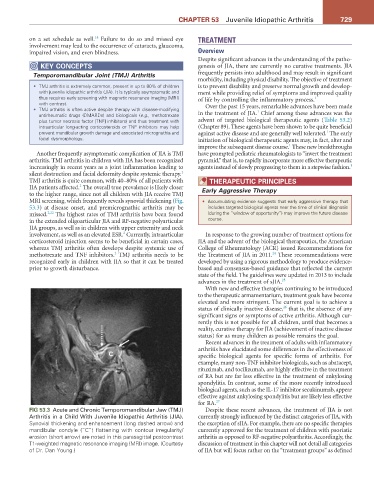
           FiG 53.3  Acute and Chronic Temporomandibular Jaw (TMJ)   Despite these recent advances, the treatment of JIA is not
           Arthritis in a Child With Juvenile Idiopathic Arthritis (JIA).   currently strongly influenced by the distinct categories of JIA, with
           Synovial thickening and enhancement (long dashed arrow) and   the exception of sJIA. For example, there are no specific therapies
           mandibular  condyle  (“C”)  flattening  with  contour irregularity/  currently approved for the treatment of children with psoriatic
           erosion (short arrow) are noted in this parasagittal postcontrast   arthritis as opposed to RF-negative polyarthritis. Accordingly, the
           T1-weighted magnetic resonance imaging (MRI) image. (Courtesy   discussion of treatment in this chapter will not detail all categories
           of Dr. Dan Young.)                                     of JIA but will focus rather on the “treatment groups” as defined

