


Page 752 - Clinical Immunology_ Principles and Practice ( PDFDrive )
P. 752
724          Part six  Systemic Immune Diseases


         TABLE 53.1  Clinical and Laboratory Features of the Juvenile idiopathic arthritis
         (Jia) Categories

                                                                    Jia
          Classifications  Former Juvenile rheumatoid arthritis (Jra)   spondyloarthropathy
                                                  +
                                     −
          JIA categories/  Systemic  RF  polyarticular  RF  polyarticular  Oligoarticular   Psoriatic (early   Enthesitis-related arthritis (ERA)
           features                                           (persistent &   and late onset)  (including ankylosing spondylitis (AS)
                                                              extended)               and inflammatory bowel disease [IBD])
          Human leukocyte   DRB1*11  DRB1*08    DRB1*04      A2         DRB1*01      B27
           antigen (HLA)
          Gender         Equal      F≫M         F≫M          F≫M        F>M          M≫F
          Age at onset   Peak 2 years  Dual peaks  Teenage   1–3 years  Dual peaks   Teenage
          Antinuclear antibody   Rare  Yes      Yes          Yes        Yes          Rare
           (ANA)
          Uveitis        Rare       Yes         Yes          Yes        Yes          Non-silent
          Temporomandibular   Yes   Yes         Yes          Yes        Yes          Yes
           joint (TMJ)
          Enthesitis     No         No          No           No         Older age    Yes
          Arthritis      Erosive    Symmetric   Erosive      Mixed      Dactylitis   Axial


                                                               in the development of sJIA are additional arguments to consider
                                                               sJIA as autoinflammatory rather than autoimmune.
                                                                  In contrast, enthesitis-related arthritis (ERA) and psoriatic
                                                               JIA share one of the strongest known MHC associations, HLA-B27,
                                                               for any described autoimmune disorder. HLA-B27 is present in
                                                               70–90% of Caucasian children with ERA. Inheritance of ERA
                                                               follows an autosomal dominant pattern and is the only JIA
                                                               category likely to have similarly afflicted first-degree relatives.
                                                               The pathophysiological explanation for the association of
                                                               HLA-B27 remains unknown, but hypotheses vary from molecular
                                                               mimicry of pathogens presented by HLA-B27 (Chapter 50) to
                                                                                         8
                                                               the unfolded protein response.  The remaining JIA categories
                                                               have all been linked to various other MHC proteins to lesser
                                                               degrees (see Table 53.1).
                                                               Non-HLA Associations
                                                               Genes outside of the MHC have also been linked to developing
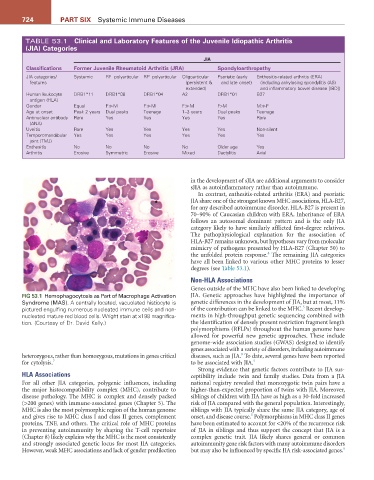
        FiG 53.1  Hemophagocytosis as Part of Macrophage Activation   JIA. Genetic approaches have highlighted the importance of
        Syndrome (MAS). A centrally located, vacuolated histiocyte is   genetic differences in the development of JIA, but at most, 11%
                                                                                                    5
        pictured engulfing numerous nucleated immune cells and non-  of the contribution can be linked to the MHC.  Recent develop-
        nucleated mature red blood cells. Wright stain at ×198 magnifica-  ments in high-throughput genetic sequencing combined with
        tion. (Courtesy of Dr. David Kelly.)                   the identification of densely present restriction fragment length
                                                               polymorphisms (RFLPs) throughout the human genome have
                                                               allowed for powerful new genetic approaches. These include
                                                               genome-wide association studies (GWAS) designed to identify
                                                               genes associated with a variety of disorders, including autoimmune
                                                                                9
        heterozygous, rather than homozygous, mutations in genes critical   diseases, such as JIA.  To date, several genes have been reported
        for cytolysis. 7                                       to be associated with JIA. 5
                                                                  Strong evidence that genetic factors contribute to JIA sus-
        HLA Associations                                       ceptibility include twin and family studies. Data from a JIA
        For  all  other  JIA  categories,  polygenic  influences,  including   national registry revealed that monozygotic twin pairs have a
        the major histocompatibility complex (MHC), contribute to   higher-than-expected proportion of twins with JIA. Moreover,
        disease pathology. The MHC is complex and densely packed   siblings of children with JIA have as high as a 30-fold increased
        (>200 genes) with immune-associated genes (Chapter 5). The   risk of JIA compared with the general population. Interestingly,
        MHC is also the most polymorphic region of the human genome   siblings with JIA typically share the same JIA category, age of
                                                                                   5
        and gives rise to MHC class I and class II genes, complement   onset, and disease course.  Polymorphisms in MHC class II genes
        proteins, TNF, and others. The critical role of MHC proteins   have been estimated to account for <20% of the recurrence risk
        in preventing autoimmunity by shaping the T-cell repertoire   of JIA in siblings and thus support the concept that JIA is a
        (Chapter 8) likely explains why the MHC is the most consistently   complex genetic trait. JIA likely shares general or common
        and strongly associated genetic locus for most JIA categories.   autoimmunity gene risk factors with many autoimmune disorders
        However, weak MHC associations and lack of gender predilection   but may also be influenced by specific JIA risk-associated genes. 9

