


Page 890 - Clinical Immunology_ Principles and Practice ( PDFDrive )
P. 890
CHaPtEr 63  Bullous Diseases of the Skin and Mucous Membranes                   861


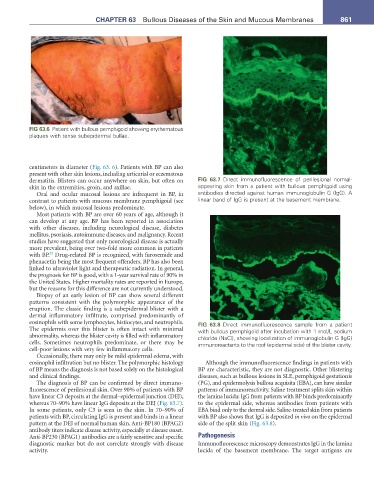
           FIG 63.6  Patient with bullous pemphigoid showing erythematous
           plaques with tense subepidermal bullae.


           centimeters in diameter (Fig. 63. 6). Patients with BP can also
           present with other skin lesions, including urticarial or eczematous
           dermatitis. Blisters can occur anywhere on skin, but often on   FIG 63.7  Direct immunofluorescence of perilesional normal-
           skin in the extremities, groin, and axillae.           appearing skin from a patient with bullous pemphigoid using
             Oral  and ocular  mucosal lesions  are infrequent  in BP, in   antibodies directed against human immunoglobulin G (IgG). A
           contrast to patients with mucous membrane pemphigoid (see   linear band of IgG is present at the basement membrane.
           below), in which mucosal lesions predominate.
             Most patients with BP are over 60 years of age, although it
           can develop at any age. BP has been reported in association
           with other diseases, including neurological disease, diabetes
           mellitus, psoriasis, autoimmune diseases, and malignancy. Recent
           studies have suggested that only neurological disease is actually
           more prevalent, being over two-fold more common in patients
                 25
           with BP.  Drug-related BP is recognized, with furosemide and
           phenacetin being the most frequent offenders. BP has also been
           linked to ultraviolet light and therapeutic radiation. In general,
           the prognosis for BP is good, with a 1-year survival rate of 90% in
           the United States. Higher mortality rates are reported in Europe,
           but the reasons for this difference are not currently understood.
             Biopsy of an early lesion of BP can show several different
           patterns consistent with the polymorphic appearance of the
           eruption. The classic finding is a subepidermal blister with a
           dermal inflammatory infiltrate, comprised predominantly of
           eosinophils with some lymphocytes, histiocytes, and neutrophils.   FIG 63.8  Direct immunofluorescence sample from a patient
           The  epidermis  over  this  blister  is  often  intact  with  minimal   with bullous pemphigoid after incubation with 1 mol/L sodium
           abnormality, whereas the blister cavity is filled with inflammatory   chloride (NaCl), showing localization of immunoglobulin G (IgG)
           cells. Sometimes neutrophils predominate, or there may be   immunoreactants to the roof (epidermal side) of the blister cavity.
           cell-poor lesions with very few inflammatory cells.
             Occasionally, there may only be mild epidermal edema, with
           eosinophil infiltration but no blister. The polymorphic histology   Although the immunofluorescence findings in patients with
           of BP means the diagnosis is not based solely on the histological   BP are characteristic, they are not diagnostic. Other blistering
           and clinical findings.                                 diseases, such as bullous lesions in SLE, pemphigoid gestationis
             The diagnosis of BP can be confirmed by direct immuno-  (PG), and epidermolysis bullosa acquisita (EBA), can have similar
           fluorescence of perilesional skin. Over 90% of patients with BP   patterns of immunoreactivity. Saline treatment splits skin within
           have linear C3 deposits at the dermal–epidermal junction (DEJ),   the lamina lucida: IgG from patients with BP binds predominantly
           whereas 70–90% have linear IgG deposits at the DEJ (Fig. 63.7).   to the epidermal side, whereas antibodies from patients with
           In some patients, only C3 is seen in the skin. In 70–90% of   EBA bind only to the dermal side. Saline-treated skin from patients
           patients with BP, circulating IgG is present and binds in a linear   with BP also shows that IgG is deposited in vivo on the epidermal
           pattern at the DEJ of normal human skin. Anti-BP180 (BPAG2)   side of the split skin (Fig. 63.8).
           antibody titers indicate disease activity, especially at disease onset.
           Anti-BP230 (BPAG1) antibodies are a fairly sensitive and specific   Pathogenesis
           diagnostic marker but do not correlate strongly with disease   Immunofluorescence microscopy demonstrates IgG in the lamina
           activity.                                              lucida of the basement membrane. The target antigens are

