


Page 1286 - Hall et al (2015) Principles of Critical Care-McGraw-Hill
P. 1286
CHAPTER 95: Toxicities of Chemotherapy  893


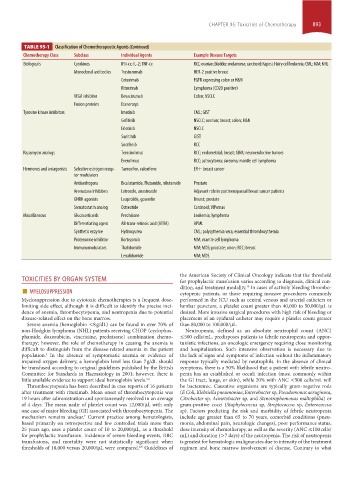
                      TABLE 95-1    Classification of Chemotherapeutic Agents (Continued)
                    Chemotherapy Class  Subclass      Individual Agents       Example Disease Targets
                    Biologicals      Cytokines        IFN-α; IL-2; TNF-α      RCC; ovarian; bladder; melanoma; carcinoid; Kaposi; Hairy cell leukemia; CML; MM; NHL
                                     Monoclonal antibodies  Trastuzumab       HER-2 positive breast
                                                      Cetuximab               EGFR expressing colon or H&N
                                                      Rituximab               Lymphoma (CD20 positive)
                                     VEGF inhibitor   Bevacizumab             Colon; NSCLC
                                     Fusion proteins  Etanercept
                    Tyrosine kinase inhibitors        Imatinib                CML; GIST
                                                      Gefitinib               NSCLC; ovarian; breast; colon; H&N
                                                      Erlotinib               NSCLC
                                                      Sunitinib               GIST
                                                      Sorafenib               RCC
                    Rapamycin analogs                 Temsirolimus            RCC; endometrial; breast; GBM; neuroendocrine tumors
                                                      Everolimus              RCC; astrocytoma; sarcoma; mantle cell lymphoma
                    Hormones and antagonists  Selective estrogen recep-  Tamoxifen, raloxifene  ER+ breast cancer
                                     tor modulators
                                     Antiandrogens    Bicalutamide, Flutamide, nilutamide  Prostate
                                     Aromatase inhibitors  Letrozole, anastrozole   Adjuvant role in postmenopausal breast cancer patients
                                     GNRH agonists    Leuprolide, goserelin   Breast; prostate
                                     Somatostatin analog  Octreotide          Carcinoid; VIPomas
                    Miscellaneous    Glucocorticoids  Prednisone              Leukemia; lymphoma
                                     Differentiating agent  All-trans-retinoic acid (ATRA)  APML
                                     Synthetic enzyme  Hydroxyurea            CML; polycythemia vera; essential thrombocythemia
                                     Proteasome inhibitor  Bortezomib         MM; mantle cell lymphoma
                                     Immunomodulators  Thalidomide            MM; MDS; prostate; colon; RCC; breast
                                                      Lenalidomide            MM; MDS


                                                                          the American Society of Clinical Oncology indicate that the threshold
                    TOXICITIES BY ORGAN SYSTEM                            for prophylactic transfusion varies according to diagnosis, clinical con-
                        ■  MYELOSUPPRESSION                               dition, and treatment modality.  In cases of actively bleeding thrombo-
                                                                                                10
                                                                          cytopenic patients, or those requiring invasive procedures commonly
                    Myelosuppression due to cytotoxic chemotherapies is a frequent dose-  performed in the ICU such as central venous and arterial catheters or
                    limiting side effect, although it is difficult to identify the precise inci-  lumbar puncture, a platelet count greater than 40,000 to 50,000/µL is
                    dence of anemia, thrombocytopenia, and neutropenia due to potential   desired. More invasive surgical procedures with high risk of bleeding or
                    disease-related effect on the bone marrow.            placement of an epidural catheter may require a platelet count greater
                     Severe anemia (hemoglobin <8 g/dL) can be found in over 70% of   than 80,000 to 100,000/µL.
                    non-Hodgkin lymphoma (NHL) patients receiving CHOP (cyclophos-  Neutropenia, defined as an absolute neutrophil count (ANC)
                    phamide, doxorubicin, vincristine, prednisone) combination chemo-  ≤500 cells/mL, predisposes patients to febrile neutropenia and oppor-
                    therapy; however, the role of chemotherapy in causing the anemia is   tunistic infections, an oncologic emergency requiring close monitoring
                    difficult to distinguish from the disease-related anemia in the patient   and hospitalization. Such intensive observation is necessary due to
                    population.  In the absence of symptomatic anemia or evidence of   the lack of signs and symptoms of infection without the inflammatory
                            4
                    impaired oxygen delivery, a hemoglobin level less than 7 g/dL should   response typically mediated by neutrophils. In the absence of clinical
                    be transfused according to original guidelines published by the British   symptoms, there is a 50% likelihood that a patient with febrile neutro-
                    Committee for  Standards in  Haematology in  2001; however, there  is   penia has an established or occult infection (most commonly within
                    little available evidence to support ideal hemoglobin levels. 5,6  the GI tract, lungs, or skin), while 20% with ANC <500 cells/mL will
                     Thrombocytopenia has been described in case reports of 16 patients   be bacteremic. Causative organisms are typically gram-negative rods
                    after treatment with rituximab. Mean onset of thrombocytopenia was   (E Coli, Klebsiella pneumoniae, Enterobacter sp, Pseudomonas aeruginosa,
                    19 hours after administration and spontaneously resolved in an average   Citrobacter sp, Acinetobacter sp, and Stenotrophomonas maltophilia) or
                    of 4 days. The mean nadir of platelet count was 12,000/µL with only   gram-positive cocci (Staphylococcus sp,  Streptococcus sp,  Enterococcus
                    one case of major bleeding (GI) associated with thrombocytopenia. The   sp). Factors predicting the risk and morbidity of febrile neutropenia
                    mechanism remains unclear.  Current practice among hematologists,   include age greater than 65 to 70 years, comorbid conditions (pneu-
                                         7
                    based primarily on retrospective and few controlled trials more than    monia, abdominal pain, neurologic changes), poor performance status,
                    25 years ago, uses a platelet count of 10 to 20,000/µL, as a threshold   dose intensity of chemotherapy, as well as the severity (ANC ≤100 cells/
                    for prophylactic transfusion. Incidence of severe bleeding events, RBC   mL) and duration (>7 days) of the neutropenia. The risk of neutropenia
                    transfusions, and mortality were not statistically significant when   is greatest for hematologic malignancies due to intensity of the treatment
                    thresholds of 10,000 versus 20,000/µL were compared.  Guidelines of   regimen and  bone  marrow involvement of  disease.  Contrary  to  what
                                                            8,9


            section07.indd   893                                                                                       1/21/2015   7:43:06 AM

