


Page 1367 - Hall et al (2015) Principles of Critical Care-McGraw-Hill
P. 1367
940     PART 8: Renal and Metabolic Disorders


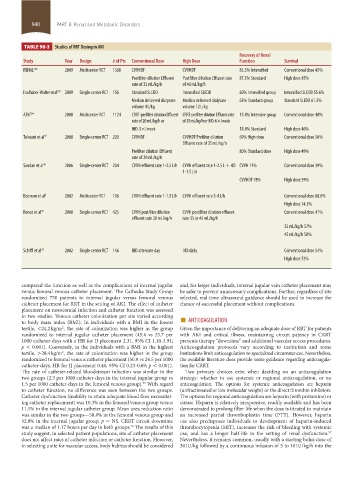
                   TABLE 98-3    Studies of RRT Dosing in AKI
                                                                                           Recovery of Renal
                  Study         Year  Design    # of Pts  Conventional Dose  High Dose     Function        Survival
                  RENAL 102     2009  Multicenter RCT  1508  CVVHDF     CVVHDF             85.5% Intensified  Conventional dose 45%
                                                       Postfilter dilution Effluent   Postfilter dilution Effluent rate   87.3% Standard  High dose 45%
                                                       rate of 25 mL/kg/h  of 40 mL/kg/h
                  Faulhaber-Walter et al 103  2009  Single-center RCT 156  Standard SLEDD  Intensified SLEDD  60% Intensified group  Intensified SLEDD 55.6%
                                                       Median delivered dialysate   Median delivered dialysate    63% Standard group  Standard SLEDD 61.3%
                                                       volume 4 L/kg    volume 12 L/kg
                  ATN 104       2008  Multicenter RCT  1124  CRRT-prefilter dilution Effluent  CRRT-prefilter dilution Effluent rate  15.4% Intensive group  Conventional dose 48%
                                                       rate of 20 mL/kg/h or  of 35 mL/kg/h or IHD-6×/week
                                                       IHD-3×/week                         18.4% Standard  High dose 46%
                  Tolwani et al 47  2008  Single-center RCT 200  CVVHDF  CVVHDF Prefilter dilution   69% High dose  Conventional dose 56%
                                                                        Effluent rate of 35 mL/kg/h
                                                       Prefilter dilution Effluent         80% Standard dose  High dose 49%
                                                       rate of 20 mL/kg/h
                  Saudan et al 46  2006  Single-center RCT 204  CVVH effluent rate 1-2.5 L/h CVVH effluent rate 1-2.5 L + HD  CVVH 71%  Conventional dose 39%
                                                                        1-1.5 L/h
                                                                                           CVVHDF 78%      High dose 59%


                  Bouman et al 4  2002  Multicenter RCT   106  CVVH effluent rate 1-1.5 L/h CVVH effluent rate 3-4 L/h  Conventional dose 68.6%
                                                                                                           High dose 74.3%
                  Ronco et al 45  2000  Single-center RCT 425  CVVH postfilter dilution    CVVH postfilter dilution effluent   Conventional dose 41%
                                                       effluent rate 20 mL/kg/h  rate 35 or 45 mL/kg/h
                                                                                                           35 mL/kg/h 57%
                                                                                                           45 mL/kg/h 58%

                  Schiffl et al 44  2002  Single-center RCT 146  IHD alternate day  IHD daily              Conventional dose 54%
                                                                                                           High dose 72%


                 compared the function as well as the complications of internal jugular   and, for larger individuals, internal jugular vein catheter placement may
                 versus femoral venous catheter placement. The Cathedia Study Group   be safer to prevent unnecessary complications. Further, regardless of site
                 randomized 750 patients to internal jugular versus femoral venous   selected, real-time ultrasound guidance should be used to increase the
                 catheter placement for RRT in the setting of AKI. The effect of catheter   chance of successful placement without complications.
                 placement on nosocomial infection and catheter function was assessed
                 to body mass index (BMI). In individuals with a BMI in the lowest   ■  ANTICOAGULATION
                 in two studies. Venous catheter colonization per site varied according
                 tertile,  <24.2 kg/m , the rate of colonization was higher in the group   Given the importance of delivering an adequate dose of RRT for patients
                               2
                 randomized to internal jugular catheter placement  (45.4 vs  23.7 per   with AKI and critical illness, maintaining circuit patency in CRRT
                 1000 catheter-days with a HR for IJ placement 2.31, 95% CI 1.10-3.91;   prevents therapy “downtime” and additional vascular access procedures.
                 p < 0.001). Conversely, in the individuals with a BMI in the highest   Anticoagulation protocols vary according to institution and some
                 tertile,  >28.4 kg/m , the rate of colonization was higher in the group   institutions limit anticoagulation to specialized circumstances. Nevertheless,
                               2
                 randomized to femoral venous catheter placement (50.9 vs 24.5 per 1000   the available literature does provide some guidance regarding anticoagula-
                 catheter-days, HR for IJ placement 0.40, 95% CI 0.23-0.69; p < 0.001).   tion for CRRT.
                 The rate of catheter-related bloodstream infection was similar in the   Two primary choices exist when deciding on an anticoagulation
                 two groups (2.3 per 1000 catheter-days in the internal jugular group vs   strategy: whether to use systemic or regional anticoagulation, or no
                 1.5 per 1000 catheter-days in the femoral venous group).  With regard   anticoagulation. The options for systemic anticoagulation are heparin
                                                          55
                 to catheter function, no difference was seen between the two groups.   (unfractionated or low molecular weight) or the direct thrombin inhibitors.
                 Catheter dysfunction (inability to attain adequate blood flow necessitat-  The options for regional anticoagulation are heparin (with protamine) or
                 ing catheter replacement) was 10.3% in the femoral venous group versus   citrate. Heparin is relatively inexpensive, readily available and has been
                 11.1% in the internal jugular catheter group. Mean urea reduction ratio   demonstrated to prolong filter life when the dose is titrated to maintain
                 was similar in the two groups—50.8% in the femoral venous group and   an  increased  partial  thromboplastin  time  (PTT).  However,  heparin
                 52.8% in the internal jugular group, p = NS. CRRT circuit downtime   use also predisposes individuals to development of heparin-induced
                 was a median of 1.17 hours per day in both groups.  The results of this   thrombocytopenia (HIT), increases the risk of bleeding with systemic
                                                      56
                 study suggest, in selected patient populations, site of catheter placement   use, and has a longer half-life in the setting of renal dysfunction.
                                                                                                                          57
                 does not affect rates of catheter infection or catheter function. However,   Nevertheless, it remains common, usually with a starting bolus dose of
                 in selecting a site for vascular access, body habitus should be considered   30 IU/kg followed by a continuous infusion of 5 to 10 IU/kg/h into the


            section08.indd   940                                                                                       1/14/2015   8:28:01 AM

