


Page 1476 - Hall et al (2015) Principles of Critical Care-McGraw-Hill
P. 1476
CHAPTER 105: Gastrointestinal Hemorrhage  1015


                                                              Suspected nonvariceal hemorrhage


                                                           Resucitation, multiple organ support
                                                           Correct coagulopathy/thrombocytopenia
                                                           Consider endotracheal intubation in the presence
                                                              of active hematemesis
                                                           IV PPI as adjunct to upper endoscopy


                                                                  Urgent upper GI endoscopy


                                   Visualization of nonvariceal bleeding source          Nonvisualization of bleeding source


                                Bleeding ployp, AVM, mass,                                  Angiography with possible
                                Mallory-Weiss tear, Dieulafoy                               angiographic therapy
                                lesion, other                Ulcer        Diffuse gastritis


                                 Thermal/injection therapy           Supportive care; consider  Consider surgery for
                                                                     angiographic therapy if bleeding  permanent hemostasis
                                                                     is severe


                                    Active bleeding      Visible vessel     Adherent clot     Clean base/flat spot


                                                                           Injection, cold
                                                                           guillotining of clot,  No endoscopic
                                                                           thermal therapy for
                                   Thermal + injection                     bleeding or visible  therapy, ulcer Rx
                                   therapy              Thermal therapy    vessel


                                        Controlled bleeding:
                                        -  Observe for rebleeding
                                        -  Secondary prophylaxis:  Uncontrolled bleeding/
                                             -  Po PPI            rebleeding:
                                             -  H Pylori Rx for + Clo test   -  Angiographic therapy
                                             -  Avoidance of NSAIDs   -  Surgical therapy
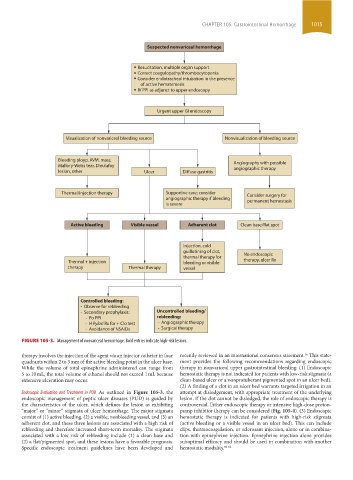
                    FIGURE 105-3.  Management of nonvariceal hemorrhage. Bold entries indicate high-risk lesions.


                                                                                                                    16
                    therapy involves the injection of the agent via an injector catheter in four   recently reviewed in an international consensus statement.  This state-
                    quadrants within 2 to 3 mm of the active bleeding point in the ulcer base.   ment provides the following recommendations regarding endoscopic
                    While the volume of total epinephrine administered can range from    therapy in nonvariceal upper gastrointestinal bleeding: (1) Endoscopic
                    5 to 10 mL, the total volume of ethanol should not exceed 1 mL because   hemostatic therapy is not indicated for patients with low-risk stigmata (a
                    extensive ulceration may occur.                       clean-based ulcer or a nonprotuberant pigmented spot in an ulcer bed).
                                                                          (2) A finding of a clot in an ulcer bed warrants targeted irrigation in an
                    Endoscopic Evaluation and Treatment in PUD  As outlined in  Figure 105-3, the   attempt at dislodgement, with appropriate treatment of the underlying
                    endoscopic management of peptic ulcer diseases (PUD) is guided by   lesion. If the clot cannot be dislodged, the role of endoscopic therapy is
                    the characteristics of the ulcer, which defines the lesion as exhibiting   controversial. Either endoscopic therapy or intensive high-dose proton-
                    “major” or “minor” stigmata of ulcer hemorrhage. The major stigmata   pump inhibitor therapy can be considered (Fig. 105-4). (3) Endoscopic
                    consist of (1) active bleeding, (2) a visible, nonbleeding vessel, and (3) an    hemostatic therapy is indicated for patients with high-risk stigmata
                    adherent clot, and these three lesions are associated with a high risk of   (active bleeding or a visible vessel in an ulcer bed). This can include
                    rebleeding and therefore increased short-term mortality. The stigmata   clips, thermocoagulation, or sclerosant injection, alone or in combina-
                    associated with a low risk of rebleeding include (1) a clean base and   tion with epinephrine injection. Epinephrine injection alone provides
                    (2) a flat/pigmented spot, and these lesions have a favorable prognosis.   suboptimal efficacy and should be used in combination with another
                    Specific endoscopic treatment guidelines have been developed and   hemostatic modality. 60-62


            section09.indd   1015                                                                                      1/14/2015   9:27:12 AM

