


Page 1726 - Hall et al (2015) Principles of Critical Care-McGraw-Hill
P. 1726
CHAPTER 124: Toxicology in Adults  1195


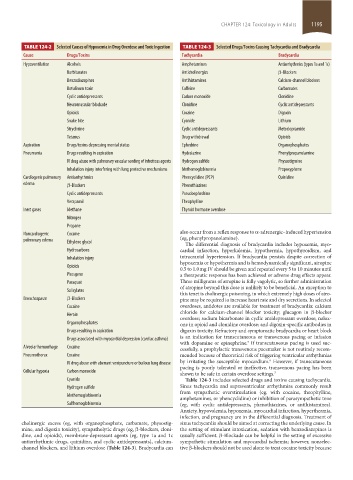
                      TABLE 124-2    Selected Causes of Hypoxemia in Drug Overdose and Toxic Ingestion    TABLE 124-3    Selected Drugs/Toxins Causing Tachycardia and Bradycardia
                    Cause          Drugs/Toxins                           Tachycardia                      Bradycardia
                    Hypoventilation  Alcohols                             Amphetamines                     Antiarrhythmics (types 1a and 1c)
                                   Barbiturates                           Anticholinergics                 β-Blockers
                                   Benzodiazepines                        Antihistamines                   Calcium-channel blockers
                                   Botulinum toxin                        Caffeine                         Carbamates
                                   Cyclic antidepressants                 Carbon monoxide                  Clonidine
                                   Neuromuscular blockade                 Clonidine                        Cyclic antidepressants
                                   Opioids                                Cocaine                          Digoxin
                                   Snake bite                             Cyanide                          Lithium
                                   Strychnine                             Cyclic antidepressants           Metoclopramide
                                   Tetanus                                Drug withdrawal                  Opioids
                    Aspiration     Drugs/toxins depressing mental status  Ephedrine                        Organophosphates
                    Pneumonia      Drugs resulting in aspiration          Hydralazine                      Phenylpropanolamine
                                   IV drug abuse with pulmonary vascular seeding of infectious agents  Hydrogen sulfide  Physostigmine
                                   Inhalation injury interfering with lung protective mechanisms  Methemoglobinemia  Propoxyphene
                    Cardiogenic pulmonary  Antiarrhythmics                Phencyclidine (PCP)              Quinidine
                    edema          β-Blockers                             Phenothiazines
                                   Cyclic antidepressants                 Pseudoephedrine
                                   Verapamil                              Theophylline
                    Inert gases    Methane                                Thyroid hormone overdose
                                   Nitrogen
                                   Propane
                    Noncardiogenic    Cocaine                             also occur from a reflex response to α-adrenergic–induced hypertension
                    pulmonary edema  Ethylene glycol                      (eg, phenylpropanolamine).
                                                                           The differential diagnosis of bradycardia includes hypoxemia, myo-
                                   Hydrocarbons                           cardial infarction, hyperkalemia, hypothermia, hypothyroidism, and
                                   Inhalation injury                      intracranial hypertension. If bradycardia persists despite correction of
                                                                          hypoxemia or hypothermia and is hemodynamically significant, atropine
                                   Opioids
                                                                          0.5 to 1.0 mg IV should be given and repeated every 5 to 10 minutes until
                                   Phosgene                               a therapeutic response has been achieved or adverse drug effects appear.
                                   Paraquat                               Three milligrams of atropine is fully vagolytic, so further administration
                                                                          of atropine beyond this dose is unlikely to be beneficial. An exception to
                                   Salicylates
                                                                          this tenet is cholinergic poisoning, in which extremely high doses of atro-
                    Bronchospasm   β-Blockers                             pine may be required to increase heart rate and dry secretions. In selected
                                   Cocaine                                overdoses, antidotes are available for treatment of bradycardia: calcium
                                                                          chloride for calcium-channel blocker toxicity; glucagon in  β-blocker
                                   Heroin
                                                                          overdose; sodium bicarbonate in cyclic antidepressant overdose; nalox-
                                   Organophosphates                       one in opioid and clonidine overdose; and digoxin-specific antibodies in
                                   Drugs resulting in aspiration          digoxin toxicity. Refractory and symptomatic bradycardia or heart block
                                   Drugs associated with myocardial depression (cardiac asthma)  is an indication for transcutaneous or transvenous pacing or infusion
                                                                          with dopamine or epinephrine.  If transcutaneous pacing is used suc-
                                                                                                 5
                    Alveolar hemorrhage  Cocaine                          cessfully, a prophylactic transvenous pacemaker is not routinely recom-
                    Pneumothorax   Cocaine                                mended because of theoretical risk of triggering ventricular arrhythmias
                                                                                                        6
                                   IV drug abuse with aberrant venipuncture or bullous lung disease  by irritating the susceptible myocardium.  However, if transcutaneous
                                                                          pacing is poorly tolerated or ineffective, transvenous pacing has been
                    Cellular hypoxia  Carbon monoxide
                                                                          shown to be safe in certain overdose settings. 7
                                   Cyanide                                 Table 124-3 includes selected drugs and toxins causing tachycardia.
                                   Hydrogen sulfide                       Sinus tachycardia and supraventricular arrhythmias commonly result
                                                                          from sympathetic overstimulation (eg, with cocaine, theophylline,
                                   Methemoglobinemia
                                                                          amphetamines, or phencyclidine) or inhibition of parasympathetic tone
                                   Sulfhemoglobinemia                     (eg, with cyclic antidepressants, phenothiazines, or antihistamines).
                                                                          Anxiety, hypovolemia, hypoxemia, myocardial infarction, hyperthermia,
                                                                          infection, and pregnancy are in the differential diagnosis. Treatment of
                    cholinergic excess (eg, with organophosphate, carbamate, physostig-  sinus tachycardia should be aimed at correcting the underlying cause. In
                    mine, and digoxin toxicity), sympatholytic drugs (eg, β-blockers, cloni-  the setting of stimulant intoxication, sedation with benzodiazepines is
                    dine, and opioids), membrane-depressant agents (eg, type 1a and 1c   usually sufficient. β-Blockade can be helpful in the setting of excessive
                    antiarrhythmic drugs, quinidine, and cyclic antidepressants), calcium-  sympathetic stimulation and myocardial ischemia; however, nonselec-
                    channel blockers, and lithium overdose (Table 124-3). Bradycardia can   tive β-blockers should not be used alone to treat cocaine toxicity because


            section11.indd   1195                                                                                      1/19/2015   10:51:55 AM

