


Page 1731 - Hall et al (2015) Principles of Critical Care-McGraw-Hill
P. 1731
1200     PART 11: Special Problems in Critical Care


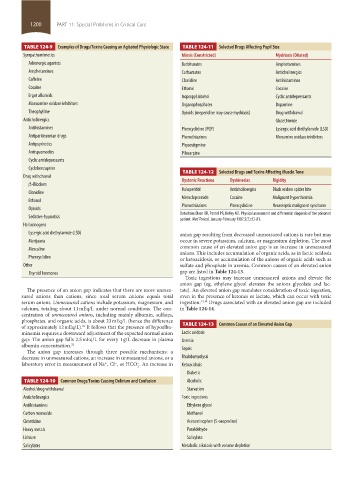
                   TABLE 124-9    Examples of Drugs/Toxins Causing an Agitated Physiologic State    TABLE 124-11    Selected Drugs Affecting Pupil Size
                  Sympathomimetics                                      Miosis (Constricted)            Mydriasis (Dilated)
                    Adrenergic agonists                                 Barbiturates                    Amphetamines
                    Amphetamines                                        Carbamates                      Anticholinergics
                    Caffeine                                            Clonidine                       Antihistamines
                    Cocaine                                             Ethanol                         Cocaine
                    Ergot alkaloids                                     Isopropyl alcohol               Cyclic antidepressants
                    Monoamine oxidase inhibitors                        Organophosphates                Dopamine
                    Theophylline                                        Opioids (meperidine may cause mydriasis)  Drug withdrawal
                  Anticholinergics                                                                      Glutethimide
                    Antihistamines                                      Phencyclidine (PCP)             Lysergic acid diethylamide (LSD)
                    Antiparkinsonian drugs                              Phenothiazines                  Monamine oxidase inhibitors
                    Antipsychotics                                      Physostigmine
                    Antispasmodics                                      Pilocarpine
                    Cyclic antidepressants
                    Cyclobenzaprine
                                                                         TABLE 124-12    Selected Drugs and Toxins Affecting Muscle Tone
                  Drug withdrawal
                                                                        Dystonic Reactions  Dyskinesias  Rigidity
                    β-Blockers
                                                                        Haloperidol     Anticholinergics  Black widow spider bite
                    Clonidine
                    Ethanol                                             Metoclopramide  Cocaine        Malignant hyperthermia
                                                                        Phenothiazines  Phencyclidine  Neuroleptic malignant syndrome
                    Opioids
                                                                       Data from Olson KR, Pentel PR, Kelley MT. Physical assessment and differential diagnosis of the poisoned
                    Sedative-hypnotics
                                                                       patient. Med Toxicol. January-February 1987;2(1):52-81.
                  Hallucinogens
                    Lysergic acid diethylamide (LSD)                   anion gap resulting from decreased unmeasured cations is rare but may
                    Marijuana                                          occur in severe potassium, calcium, or magnesium depletion. The most
                    Mescaline                                          common cause of an elevated anion gap is an increase in unmeasured
                                                                       anions. This includes accumulation of organic acids, as in lactic acidosis
                    Phencyclidine                                      or ketoacidosis, or accumulation of the anions of organic acids such as
                  Other                                                sulfate and phosphate in uremia. Common causes of an elevated anion
                    Thyroid hormones                                   gap are listed in Table 124-13.
                                                                         Toxic ingestions may increase unmeasured anions and elevate the
                                                                       anion gap (eg, ethylene glycol elevates the anions  glycolate and lac-
                   The presence of an anion gap indicates that there are more unmea-  tate). An elevated anion gap mandates consideration of toxic ingestion,
                 sured anions than cations, since total serum cations equals total   even in the presence of ketones or lactate, which can occur with toxic
                 serum anions. Unmeasured cations include potassium, magnesium, and    ingestion. 33,34  Drugs associated with an elevated anion gap are included
                 calcium, totaling about 11 mEq/L under normal conditions. The con-  in Table 124-14.
                 centration of  unmeasured anions, including mainly albumin, sulfates,
                 phosphates, and organic acids, is about 23 mEq/L (hence the difference
                 of approximately 12 mEq/L).  It follows that the presence of hypoalbu-    TABLE 124-13    Common Causes of an Elevated Anion Gap
                                      31
                 minemia requires a downward adjustment of the expected normal anion   Lactic acidosis
                 gap: The anion gap falls 2.5 mEq/L for every 1 g/L decrease in plasma   Uremia
                 albumin concentration. 32                              Sepsis
                   The  anion gap  increases through  three possible  mechanisms:  a
                 decrease in unmeasured cations, an increase in unmeasured anions, or a   Rhabdomyolysis
                 laboratory error in measurement of Na , Cl , or HCO . An increase in   Ketoacidosis
                                                 −
                                                         −
                                              +
                                                         3
                                                                          Diabetic
                   TABLE 124-10    Common Drugs/Toxins Causing Delirium and Confusion    Alcoholic
                  Alcohol/drug withdrawal                                 Starvation
                  Anticholinergics                                      Toxic ingestions
                  Antihistamines                                          Ethylene glycol
                  Carbon monoxide                                         Methanol
                  Cimetidine                                              Acetaminophen (5-oxoproline)
                  Heavy metals                                            Paraldehyde
                  Lithium                                                 Salicylate
                  Salicylates                                           Metabolic alkalosis with volume depletion


            section11.indd   1200                                                                                      1/19/2015   10:51:57 AM

