


Page 1730 - Hall et al (2015) Principles of Critical Care-McGraw-Hill
P. 1730
CHAPTER 124: Toxicology in Adults  1199


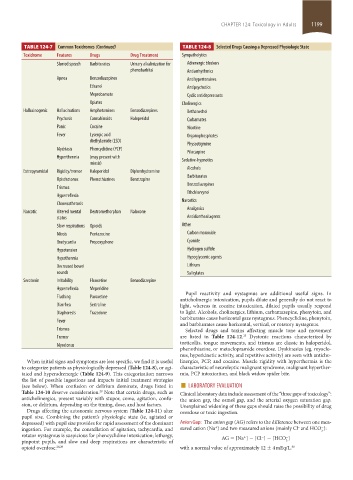
                      TABLE 124-7    Common Toxidromes (Continued)          TABLE 124-8    Selected Drugs Causing a Depressed Physiologic State
                    Toxidrome   Features   Drugs         Drug Treatment   Sympatholytics
                                Slurred speech  Barbiturates  Urinary alkalinization for     Adrenergic blockers
                                                         phenobarbital      Antiarrhythmics
                                Apnea      Benzodiazepines                  Antihypertensives
                                           Ethanol                          Antipsychotics
                                           Meprobamate                      Cyclic antidepressants
                                           Opiates                        Cholinergics
                    Hallucinogenic  Hallucinations  Amphetamines  Benzodiazepines    Bethanechol
                                Psychosis  Cannabinoids  Haloperidol        Carbamates
                                Panic      Cocaine                          Nicotine
                                Fever      Lysergic acid                    Organophosphates
                                             diethylamide (LSD)
                                                                            Physostigmine
                                Mydriasis  Phencyclidine (PCP)
                                                                            Pilocarpine
                                Hyperthermia  (may present with           Sedative-hypnotics
                                           miosis)
                                                                            Alcohols
                    Extrapyramidal  Rigidity/tremor  Haloperidol  Diphenhydramine
                                                                            Barbiturates
                                Opisthotonos  Phenothiazines  Benztropine
                                                                            Benzodiazepines
                                Trismus
                                                                            Ethchlorvynol
                                Hyperreflexia
                                                                          Narcotics
                                Choreoathetosis
                                                                            Analgesics
                    Narcotic    Altered mental   Dextromethorphan  Naloxone
                                status                                      Antidiarrheal agents
                                Slow respirations Opioids                 Other
                                Miosis     Pentazocine                      Carbon monoxide
                                Bradycardia  Propoxyphene                   Cyanide
                                Hypotension                                 Hydrogen sulfide
                                Hypothermia                                 Hypoglycemic agents
                                Decreased bowel                             Lithium
                                sounds                                      Salicylates
                    Serotonin   Irritability  Fluoxetine  Benzodiazepine
                                Hyperreflexia  Meperidine
                                                                           Pupil reactivity and nystagmus are additional useful signs. In
                                Flushing   Paroxetine
                                                                          anticholinergic intoxication, pupils dilate and generally do not react to
                                Diarrhea   Sertraline                     light, whereas in cocaine intoxication, dilated pupils usually respond
                                Diaphoresis  Trazodone                    to light. Alcohols, cholinergics, lithium, carbamazepine, phenytoin, and
                                                                          barbiturates cause horizontal gaze nystagmus. Phencyclidine, phenytoin,
                                Fever
                                                                          and barbiturates cause horizontal, vertical, or rotatory nystagmus.
                                Trismus                                    Selected drugs and toxins affecting muscle tone and movement
                                                                                               25
                                Tremor                                    are listed in  Table 124-12.  Dystonic reactions characterized by
                                                                            torticollis, tongue movements, and trismus are classic in haloperidol,
                                Myoclonus
                                                                            phenothiazine, or metoclopramide overdose. Dyskinesias (eg, myoclo-
                                                                          nus,  hyperkinetic activity, and repetitive activity) are seen with anticho-
                     When initial signs and symptoms are less specific, we find it is useful   linergics, PCP, and cocaine. Muscle rigidity with hyperthermia is the
                    to categorize patients as physiologically depressed (Table 124-8), or agi-  characteristic of neuroleptic malignant syndrome, malignant hyperther-
                    tated and hyperadrenergic (Table 124-9). This categorization narrows   mia, PCP intoxication, and black widow spider bite.
                    the list of possible ingestions and impacts initial treatment strategies     ■
                    (see  below).  When confusion or  delirium  dominate,  drugs  listed in     LABORATORY EVALUATION
                    Table 124-10 deserve consideration.  Note that certain drugs, such as   Clinical laboratory data include assessment of the “three gaps of toxicology”:
                                              28
                    anticholinergics, present variably with stupor, coma, agitation, confu-  the anion gap, the osmol gap, and the arterial oxygen saturation gap.
                    sion, or delirium, depending on the timing, dose, and host factors.  Unexplained widening of these gaps should raise the possibility of drug
                     Drugs affecting the autonomic nervous system (Table 124-11) alter   overdose or toxic ingestion.
                    pupil  size.  Combining  the  patient’s  physiologic  state  (ie,  agitated  or
                    depressed) with pupil size provides for rapid assessment of the dominant   Anion Gap:  The anion gap (AG) refers to the difference between one mea-
                                                                                     +
                                                                                                                          −
                                                                                                                  –
                    ingestion. For example, the constellation of agitation, tachycardia, and   sured cation (Na ) and two measured anions (mainly Cl  and HCO ):
                                                                                                                          3
                    rotator nystagmus is suspicious for phencyclidine intoxication; lethargy,   AG = [Na ] − [Cl ] − [HCO ]
                                                                                                              −
                                                                                                     −
                                                                                               +
                    pinpoint pupils, and slow and deep respirations are characteristic of                     3
                    opioid overdose. 28,29                                with a normal value of approximately 12 ± 4 mEq/L. 30


            section11.indd   1199                                                                                      1/19/2015   10:51:56 AM

