


Page 170 - Review of Medical Microbiology and Immunology ( PDFDrive )
P. 170
mebooksfree.com
mebooksfree.com
mebooksfree.com
mebooksfree.com
mebooksfree.com
mebooksfree.com
mebooksfree.com mebooksfree.com mebooksfree.com CHAPTER 18 Gram-Negative Rods Related to the Enteric Tract 159 mebooksfree.com
mebooksfree.com
mebooksfree.com
Treatment
Vibrio parahaemolyticus and V. vulnificus are marine
organisms; they live primarily in the ocean, especially in
The main treatment for shigellosis is fluid and electrolyte
warm salt water. They are halophilic (i.e., they require a
replacement. In mild cases, no antibiotics are indicated. In
high NaCl concentration to grow).
severe cases, a fluoroquinolone (e.g., ciprofloxacin) is the
drug of choice, but the incidence of plasmids conveying
multiple drug resistance is high enough that antibiotic
sensitivity tests must be performed. Trimethoprim-
Pathogenesis & Epidemiology
sulfamethoxazole is an alternative choice. Antiperistaltic
Vibrio cholerae is transmitted by fecal contamination of
drugs are contraindicated in shigellosis, because they pro- 1. Vibrio cholerae
mebooksfree.com
mebooksfree.com mebooksfree.com mebooksfree.com The main animal reservoirs are marine shellfish, such as mebooksfree.com
mebooksfree.com
water and food, primarily from human sources. Human
long the fever, diarrhea, and excretion of the organism.
carriers are frequently asymptomatic and include individu-
als who are either in the incubation period or convalescing.
Prevention
Prevention of shigellosis is dependent on interruption of
shrimp and oysters. Ingestion of these without adequate
fecal–oral transmission by proper sewage disposal, chlori-
cooking can transmit the disease.
nation of water, and personal hygiene (handwashing by
A major epidemic of cholera, which spanned the 1960s
food handlers). There is no vaccine, and prophylactic anti-
and 1970s, began in Southeast Asia and spread over three
biotics are not recommended.
continents to areas of Africa, Europe, and the rest of Asia.
spread to many countries in Central and South America.
VIBRIO
The organism isolated most frequently was the El Tor bio-
type of O1 V. cholerae, usually of the Ogawa serotype. The
Diseases Another epidemic of cholera began in Peru in 1991 and has
factors that predispose to epidemics are poor sanitation,
mebooksfree.com
mebooksfree.com
mebooksfree.com mebooksfree.com mebooksfree.com the disease because there were many asymptomatic carri- mebooksfree.com
Vibrio cholerae, the major pathogen in this genus, is the
malnutrition, overcrowding, and inadequate medical ser-
cause of cholera. Vibrio parahaemolyticus causes diarrhea
vices. Quarantine measures failed to prevent the spread of
associated with eating raw or improperly cooked seafood.
Vibrio vulnificus causes cellulitis and sepsis. Important fea-
ers. In 1992, V. cholerae serogroup O139 emerged and
tures of pathogenesis by V. cholerae, C. jejuni, and Helico-
caused a widespread epidemic of cholera in India and
bacter pylori are described in Table 18–10.
Bangladesh.
The pathogenesis of cholera is dependent on coloni-
Important Properties
zation of the small intestine by the organism and secre-
Vibrios are curved, comma-shaped, gram-negative rods
numbers of bacteria must be ingested because the organ-
(see Figure 18–2). V. cholerae is divided into two groups
ism is particularly sensitive to stomach acid. Persons
according to the nature of its O cell wall antigen. Members
with little or no stomach acid, such as those taking ant-
of the O1 group cause epidemic disease, whereas non-O1 tion of enterotoxin. For colonization to occur, large
acids or those who have had gastrectomy, are much more
organisms either cause sporadic disease or are nonpatho-
mebooksfree.com
mebooksfree.com
mebooksfree.com mebooksfree.com mebooksfree.com related to secretion of the bacterial enzyme mucinase, mebooksfree.com
susceptible. Adherence to the cells of the brush border of
gens. The O1 organisms have two biotypes, called classic
the gut, which is a requirement for colonization, is
and El Tor, and three serotypes, called Ogawa, Inaba, and
Hikojima. (Biotypes are based on differences in biochemi-
which dissolves the protective glycoprotein coating over
cal reactions, whereas serotypes are based on antigenic
the intestinal cells.
differences.) These features are used to characterize isolates
After adhering, the organism multiplies and secretes an
in epidemiologic investigations. Serogroup O139 organ-
enterotoxin called choleragen (cholera toxin). This exo-
isms, which caused a major epidemic in 1992, are identified
toxin can reproduce the symptoms of cholera even in the
by their reaction to antisera to the O139 polysaccharide
absence of the Vibrio organisms. The mode of action of
antigens (O antigen).
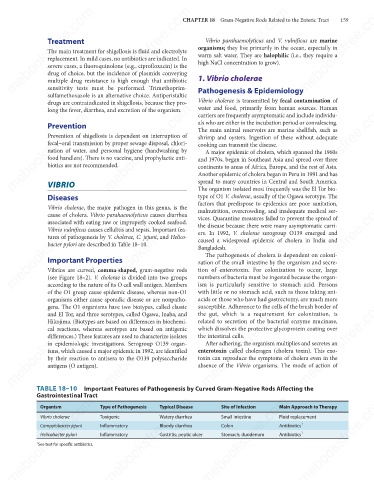
TABLE 18–10 Important Features of Pathogenesis by Curved Gram-Negative Rods Affecting the
Gastrointestinal Tract Type of Pathogenesis Typical Disease Site of Infection Main Approach to Therapy
mebooksfree.com mebooksfree.com Inflammatory Bloody diarrhea mebooksfree.com Antibiotics 1 1 mebooksfree.com mebooksfree.com
mebooksfree.com
Organism
Small intestine
Fluid replacement
Toxigenic
Watery diarrhea
Vibrio cholerae
Colon
Campylobacter jejuni
Antibiotics
Inflammatory
Helicobacter pylori
Stomach; duodenum
Gastritis; peptic ulcer
1
See text for specific antibiotics.
mebooksfree.com mebooksfree.com mebooksfree.com mebooksfree.com mebooksfree.com mebooksfree.com

