


Page 425 - Review of Medical Microbiology and Immunology ( PDFDrive )
P. 425
mebooksfree.com
mebooksfree.com
mebooksfree.com
mebooksfree.com
mebooksfree.com
mebooksfree.com mebooksfree.com mebooksfree.com mebooksfree.com H A P mebooksfree.com mebooksfree.com
mebooksfree.com
Opportunistic Mycoses 50
T
C
E
R
mebooksfree.com
mebooksfree.com mebooksfree.com mebooksfree.com Penicillium marneffei mebooksfree.com mebooksfree.com
CHAPTER C ONTENT S
Introduction
Candida
Pseudallescheria boydii
Cryptococcus
Fusarium solani
Aspergillus
Self-Assessment Questions
Mucor & Rhizopus
Summaries of Organisms
Practice Questions: USMLE & Course Examinations
Pneumocystis
FUNGI OF MINOR IMPORTANCE
mebooksfree.com
mebooksfree.com
mebooksfree.com mebooksfree.com mebooksfree.com disseminated infections such as right-sided endocarditis mebooksfree.com
INTRODUCTION
(especially in intravenous drug users), bloodstream infec-
Opportunistic fungi fail to induce disease in most immu-
tions (candidemia), and endophthalmitis. Infections related
nocompetent persons but can do so in those with impaired
to indwelling intravenous and urinary catheters are also
host defenses. There are five genera of medically important
important. Candida glabrata is the second most common
fungi: Candida, Cryptococcus, Aspergillus, Mucor, and Rhi-
cause of disseminated candidal infections and is more drug
zopus. Important features of the opportunistic fungal dis-
resistant than C. albicans.
eases are described in Table 50–1.
Properties
CANDIDA
Candida albicans is an oval yeast with a single bud
(Figures 50–1 and 50–2). It is part of the normal flora of
Diseases
(also hyphae) mebooksfree.com
mebooksfree.com mebooksfree.com Geographic Important Clinical Findings Laboratory Diagnosis mebooksfree.com mebooksfree.com
mebooksfree.com
mucous membranes of the upper respiratory, gastrointesti-
Candida albicans, the most important species of Candida,
nal, and female genital tracts. In tissues it appears most
causes thrush, vaginitis, esophagitis, diaper rash, and
often as yeasts or as pseudohyphae (Figures 50–1 and 50–3).
chronic mucocutaneous candidiasis. It also causes
Pseudohyphae are elongated yeasts that visually resemble
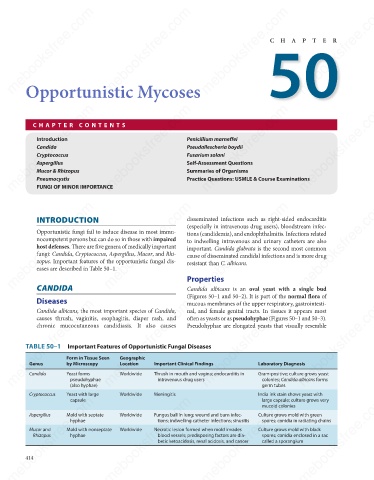
TABLE 50–1 Important Features of Opportunistic Fungal Diseases
Form in Tissue Seen
Location
by Microscopy
Genus
Candida
colonies; Candida albicans forms
intravenous drug users
pseudohyphae
germ tubes
Cryptococcus Yeast forms Worldwide Thrush in mouth and vagina; endocarditis in Gram-positive; culture grows yeast
Yeast with large
India ink stain shows yeast with
Meningitis
Worldwide
mebooksfree.com mebooksfree.com mebooksfree.com mebooksfree.com mebooksfree.com mebooksfree.com
large capsule; culture grows very
capsule
mucoid colonies
Worldwide
Culture grows mold with green
Aspergillus
Mold with septate
Fungus ball in lung; wound and burn infec-
spores; conidia in radiating chains
hyphae
tions; indwelling catheter infections; sinusitis
Mold with nonseptate
Worldwide
Necrotic lesion formed when mold invades
Mucor and
Culture grows mold with black
hyphae
Rhizopus
spores; conidia enclosed in a sac
blood vessels; predisposing factors are dia-
betic ketoacidosis, renal acidosis, and cancer
called a sporangium
414
mebooksfree.com mebooksfree.com mebooksfree.com mebooksfree.com mebooksfree.com mebooksfree.com

