


Page 569 - Review of Medical Microbiology and Immunology ( PDFDrive )
P. 569
mebooksfree.com
mebooksfree.com
mebooksfree.com
mebooksfree.com
mebooksfree.com
mebooksfree.com mebooksfree.com Typical Time of Onset Clinical Manifestation or Disease mebooksfree.com mebooksfree.com
mebooksfree.com
mebooksfree.com
mebooksfree.com
PART VII Immunology
558
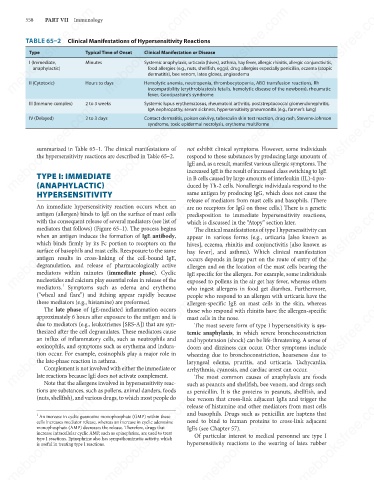
TABLE 65–2 Clinical Manifestations of Hypersensitivity Reactions
Type
I (Immediate,
Minutes
Systemic anaphylaxis, urticaria (hives), asthma, hay fever, allergic rhinitis, allergic conjunctivitis,
food allergies (e.g., nuts, shellfish, eggs), drug allergies especially penicillin, eczema (atopic
anaphylactic)
dermatitis), bee venom, latex gloves, angioedema
Hemolytic anemia, neutropenia, thrombocytopenia, ABO transfusion reactions, Rh
Hours to days
II (Cytotoxic)
incompatibility (erythroblastosis fetalis, hemolytic disease of the newborn), rheumatic
fever, Goodpasture’s syndrome
Systemic lupus erythematosus, rheumatoid arthritis, poststreptococcal glomerulonephritis,
III (Immune complex)
mebooksfree.com
mebooksfree.com mebooksfree.com 2 to 3 weeks mebooksfree.com not exhibit clinical symptoms. However, some individuals mebooksfree.com
mebooksfree.com
IgA nephropathy, serum sickness, hypersensitivity pneumonitis (e.g., farmer’s lung)
Contact dermatitis, poison oak/ivy, tuberculin skin test reaction, drug rash, Stevens-Johnson
IV (Delayed)
2 to 3 days
syndrome, toxic epidermal necrolysis, erythema multiforme
summarized in Table 65–1. The clinical manifestations of
the hypersensitivity reactions are described in Table 65–2.
respond to those substances by producing large amounts of
IgE and, as a result, manifest various allergic symptoms. The
increased IgE is the result of increased class switching to IgE
TYPE I: IMMEDIATE
(ANAPHYLACTIC)
duced by Th-2 cells. Nonallergic individuals respond to the
same antigen by producing IgG, which does not cause the
HYPERSENSITIVITY in B cells caused by large amounts of interleukin (IL)-4 pro-
release of mediators from mast cells and basophils. (There
mebooksfree.com mebooksfree.com mebooksfree.com which is discussed in the “Atopy” section later. mebooksfree.com mebooksfree.com
mebooksfree.com
An immediate hypersensitivity reaction occurs when an
are no receptors for IgG on those cells.) There is a genetic
antigen (allergen) binds to IgE on the surface of mast cells
predisposition to immediate hypersensitivity reactions,
with the consequent release of several mediators (see list of
mediators that follows) (Figure 65–1). The process begins
The clinical manifestations of type I hypersensitivity can
when an antigen induces the formation of IgE antibody,
appear in various forms (e.g., urticaria [also known as
which binds firmly by its Fc portion to receptors on the
hives], eczema, rhinitis and conjunctivitis [also known as
surface of basophils and mast cells. Reexposure to the same
hay fever], and asthma). Which clinical manifestation
antigen results in cross-linking of the cell-bound IgE,
occurs depends in large part on the route of entry of the
degranulation, and release of pharmacologically active
allergen and on the location of the mast cells bearing the
mediators within minutes (immediate phase). Cyclic
nucleotides and calcium play essential roles in release of the
exposed to pollens in the air get hay fever, whereas others
1
mediators. Symptoms such as edema and erythema
who ingest allergens in food get diarrhea. Furthermore,
(“wheal and flare”) and itching appear rapidly because IgE specific for the allergen. For example, some individuals
people who respond to an allergen with urticaria have the
mebooksfree.com mebooksfree.com mebooksfree.com temic anaphylaxis, in which severe bronchoconstriction mebooksfree.com
mebooksfree.com
mebooksfree.com
these mediators (e.g., histamine) are preformed.
allergen-specific IgE on mast cells in the skin, whereas
The late phase of IgE-mediated inflammation occurs
those who respond with rhinitis have the allergen-specific
approximately 6 hours after exposure to the antigen and is
mast cells in the nose.
due to mediators (e.g., leukotrienes [SRS-A]) that are syn-
The most severe form of type I hypersensitivity is sys-
thesized after the cell degranulates. These mediators cause
an influx of inflammatory cells, such as neutrophils and
and hypotension (shock) can be life-threatening. A sense of
eosinophils, and symptoms such as erythema and indura-
doom and dizziness can occur. Other symptoms include
tion occur. For example, eosinophils play a major role in
wheezing due to bronchoconstriction, hoarseness due to
the late-phase reaction in asthma.
laryngeal edema, pruritis, and urticaria. Tachycardia,
Complement is not involved with either the immediate or
late reactions because IgE does not activate complement.
The most common causes of anaphylaxis are foods
Note that the allergens involved in hypersensitivity reac-
such as peanuts and shellfish, bee venom, and drugs such
tions are substances, such as pollens, animal danders, foods arrhythmia, cyanosis, and cardiac arrest can occur.
as penicillin. It is the proteins in peanuts, shellfish, and
(nuts, shellfish), and various drugs, to which most people do
bee venom that cross-link adjacent IgEs and trigger the
mebooksfree.com mebooksfree.com mebooksfree.com need to bind to human proteins to cross-link adjacent mebooksfree.com
mebooksfree.com
mebooksfree.com
release of histamine and other mediators from mast cells
and basophils. Drugs such as penicillin are haptens that
1
An increase in cyclic guanosine monophosphate (GMP) within these
cells increases mediator release, whereas an increase in cyclic adenosine
monophosphate (AMP) decreases the release. Therefore, drugs that
IgEs (see Chapter 57).
increase intracellular cyclic AMP, such as epinephrine, are used to treat
Of particular interest to medical personnel are type I
type I reactions. Epinephrine also has sympathomimetic activity, which
hypersensitivity reactions to the wearing of latex rubber
is useful in treating type I reactions.
mebooksfree.com mebooksfree.com mebooksfree.com mebooksfree.com mebooksfree.com mebooksfree.com

