


Page 8 - Ranger SPM 2022 - Science
P. 8
Science SPM  Chapter 1 Safety Measures in the Laboratory

                   1.2    Disposal of Waste


               Waste  that Can be Disposed of into  Sinks  and Waste  that Cannot be Disposed
             Penerbitan Pelangi Sdn Bhd. All Rights Reserved.
               of into Sinks
                1.  There are two  types  of laboratory  waste:
                    (a)  substances that can be disposed of into  sinks
                    (b)  substances that cannot  be disposed of into  sinks
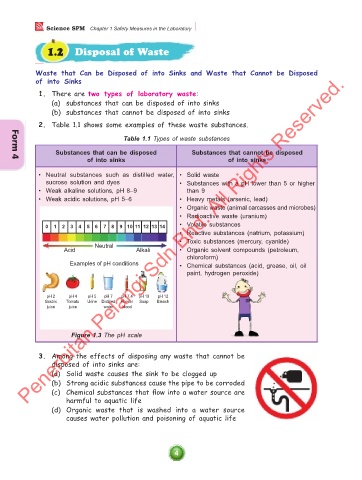
                2.  Table 1.1  shows some examples of these waste substances.

                                        Table 1.1 Types of waste substances
                     Substances that can be disposed      Substances that cannot be disposed
                              of into sinks                         of into sinks
         Form 4
                •  Neutral  substances  such  as  distilled  water,  •  Solid waste
                  sucrose solution and dyes            •  Substances with a pH lower than 5 or higher
                •  Weak alkaline solutions, pH 8–9       than 9
                •  Weak acidic solutions, pH 5–6       •  Heavy metals (arsenic, lead)
                                                       •  Organic waste (animal carcasses and microbes)
                                                       •  Radioactive waste (uranium)
                  0  1 2 3  4  5  6  7  8 9  10  11  12  13  14  •  Volatile substances
                                                       •  Reactive substances (natrium, potassium)
                                                       •  Toxic substances (mercury, cyanide)
                                Neutral
                       Acid                Alkali      •  Organic solvent compounds (petroleum,
                                                         chloroform)
                         Examples of pH conditions     •  Chemical substances (acid, grease, oil, oil
                                                         paint, hydrogen peroxide)


                  pH 2  pH 4  pH 5  pH 7  pH 7.4  pH 10  pH 12
                  Gastric  Tomato  Urine  Distilled  Human  Soap  Bleach
                  juice  juice    water  blood


                         Figure 1.3 The pH scale

                3.  Among the effects of disposing any waste that cannot be
                    disposed of into  sinks are:
                    (a)  Solid  waste causes the sink  to be clogged up
                    (b)  Strong acidic substances cause the pipe to be corroded
                    (c)  Chemical substances that flow into a water source are
                        harmful to aquatic life
                    (d)  Organic waste that is washed into a water source
                        causes water pollution and poisoning  of aquatic life


                                                      4


         F4 Chapter 1.indd   4                                                                3/21/22   3:02 PM

