


Page 19 - TI Journal 18-1
P. 19
CSF SUPPRESSION METHODS FOR DTI                           13


          of b values that exclude the b~0 data. It also enables   the combined model in both tracts. Furthermore,
          tensor fitting using a reduced number of encoding   reducing TR alone did not significantly impact SLF
          directions at each b value, thus shortening the scan   measurements, suggesting a greater effect of b~0 data
          time.                                        on CSF PVEs in white matter.
            Recently, Baron and Beaulieu (8) independently     The significance of the above two methods that
          reported a similar approach to improve the accuracy   omit the acquisition or analysis of b~0 is very high.
          of DTI tractography using a non-zero b-minimum   CSF contamination significantly reduces the accuracy
          (b min = 425 s/mm ) and a relatively short TR (TR =   of DTI measurements and DTI-based tractography.
                        2
          3.0 s). This study compared the effects of both param-  Artificially low FA values in voxels adjacent to CSF
          eters on fiber tracking. Specifically, they determined   can bias DTI measurements or cause tractography
          the effects on pathway volume and diffusion scalar   to fail in these regions due to FA falling below the
          metrics in pathways vulnerable to CSF PVEs (such   tracking threshold (8). DTI measurements and
          as the fornix) and also tracts that are less sensitive   tractography of white matter fiber bundles, such as
          to CSF (such as the superior longitudinal fascicu-  the fornix, cingulum, uncinate fasciculus, and cor-
          lus, SLF). The combination of a short TR and b min =   pus callosum, may be particularly sensitive to CSF
          425 s/mm  resulted in more than a 50% increase in   PVEs given their anatomical proximity to CSF spaces.
                  2
          pathway volume for the crura and body of the fornix,   Abnormalities in each of these structures have been
          and a 14% increase in SLF volume. As a result, 30%   identified in normal aging and in various neurolog-
          higher FA and 36% lower MD were observed in the   ical conditions (e.g., dementia, multiple sclerosis,
          crura. These results are consistent with the trends   schizophrenia, etc.) (31,43,96), and accurate DTI
          that would be expected if CSF contamination of tis-  measurements are critical for understanding the im-
          sue voxels were reduced. Percentage increases were   plications of these structural alterations. The fornix
          not reported using a non-zero b-minimum alone   is of particular interest in studies of neurodegener-
          without a short TR. DTI accuracy was also improved   ative and neuropsychiatric disease, as it is a major
          for the body of the fornix and the SLF, though these   white matter projection from the hippocampus that
          improvements were less robust. Interestingly, us-  directly passes through the ventricles. As such, it is
          ing a non-zero b-minimum without adjusting TR   highly susceptible to CSF contamination and requires
          produced nearly equivalent volumetric increases as   a corrective technique to remove CSF signal. Few


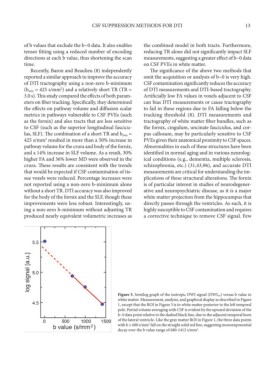
                                              Figure 3. Semilog graph of the isotropic DWI signal (DWIiso) versus b value in
                                              white matter. Measurement, analysis, and graphical display as described in Figure
                                              1, except that the ROI in Figure 3 is in white matter posterior to the left temporal
                                              pole. Partial volume averaging with CSF is evident by the upward deviation of the
                                              b~0 data point relative to the dashed black line, due to the adjacent temporal horn
                                              of the lateral ventricle. Like the gray matter ROI in Figure 1, the three data points
                                                         2
                                              with b ≥ 680 s/mm  fall on the straight solid red line, suggesting monoexponential
                                              decay over the b value range of 680-1412 s/mm . 2

