


Page 71 - TI Journal 18-1
P. 71
IMAGING THE PERIVASCULAR SPACE                            65


          of the glymphatic flow. Nevertheless, both systems   flow, which has been implicated in the removal of
          require proficient passage along perivascular spaces.  Aβ (4,10,11,28,29,53), a protein well-known for its
                                                        role in AD (72). ISF bulk flow pathways are thought
          Perivascular and Glymphatic Clearance         to originate in the walls of cerebral vessels, running
            As mentioned above, previous studies derived   along the basement membrane of capillaries and
          mostly from a single group of researchers have   arteries that drive ISF toward CSF compartments.
          shown that ISF can move along the perivascular     While the removal of ISF along periarterial path-
          spaces of arteries in the opposite direction of blood   ways provides one mechanism for solute and waste


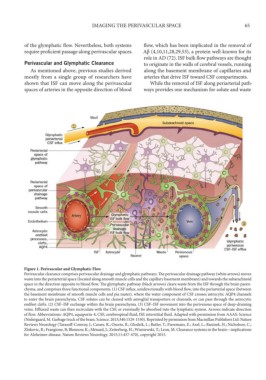
          Figure 1. Perivascular and Glymphatic Flow
          Perivascular clearance comprises perivascular drainage and glymphatic pathways. The perivascular drainage pathway (white arrows) moves
          waste into the periarterial space (located along smooth muscle cells and the capillary basement membrane) and towards the subarachnoid
          space in the direction opposite to blood flow. The glymphatic pathway (black arrows) clears waste from the ISF through the brain paren-
          chyma, and comprises three functional components. (1) CSF influx, unidirectionally with blood flow, into the periarterial space (between
          the basement membrane of smooth muscle cells and pia mater), where the water component of CSF crosses astrocytic AQP4 channels
          to enter the brain parenchyma. CSF solutes can be cleared with astroglial transporters or channels, or can pass through the astrocytic
          endfeet clefts. (2) CSF–ISF exchange within the brain parenchyma. (3) CSF–ISF movement into the perivenous space of deep-draining
          veins. Effluxed waste can then recirculate with the CSF, or eventually be absorbed into the lymphatic system. Arrows indicate direction
          of flow. Abbreviations: AQP4, aquaporin-4; CSF, cerebrospinal fluid; ISF, interstitial fluid. Adapted with permission from AAAS: Science
          (Nedergaard, M. Garbage truck of the brain. Science. 2013;340:1529-1530). Reprinted by permission from Macmillan Publishers Ltd: Nature
          Reviews Neurology (Tarasoff-Conway, J.; Carare, R.; Osorio, R.; Glodzik, L.; Butler, T.; Fieremans, E.; Axel, L.; Rusinek, H.; Nicholson, C.;
          Zlokovic, B.; Frangione, B; Blennow, K.; Ménard, J.; Zetterberg, H.; Wisniewski, T.; Leon, M. Clearance systems in the brain—implications
          for Alzheimer disease. Nature Reviews Neurology. 2015;11:457-470), copyright 2015.

