


Page 105 - leadership-experience-2008
P. 105
CikguOnline
      CikguOnline
            86                                                                PART 2: RESEARCH PERSPECTIVES ON LEADERSHIP

                                     Exhibit 3.10 Substitutes and Neutralizers for Leadership

                                                                         Task-Oriented   People-Oriented
                                     Variable                            Leadership      Leadership
                                     Organizational   Group cohesiveness   Substitutes for   Substitutes for
                                     variables:      Formalization       Substitutes for   No effect on
                                                     Inflexibility       Neutralizes     No effect on
                                                     Low positional power   Neutralizes   Neutralizes
                                                     Physical separation   Neutralizes   Neutralizes
                                     Task            Highly structured task   Substitutes for   No effect on
                                     characteristics:   Automatic feedback   Substitutes for   No effect on
                                                     Intrinsic satisfaction   No effect on   Substitutes for
                                     Follower        Professionalism     Substitutes for   Substitutes for
                                     characteristics:   Training/experience   Substitutes for   No effect on
                                                     Low value of rewards   Neutralizes   Neutralizes


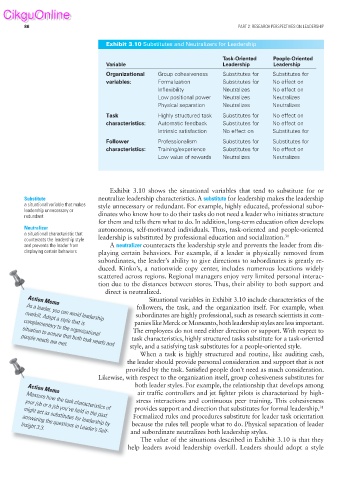
                                       Exhibit 3.10 shows the situational variables that tend to substitute for or
            Substitute             neutralize leadership characteristics. A substitute for leadership makes the leadership
            Substitute
            a situational variable that makes
            a situational variable that makes   style unnecessary or redundant. For example, highly educated, professional subor-
            leadership unnecessary or
            leadership unnecessary or
            redundant
            redundant              dinates who know how to do their tasks do not need a leader who initiates structure
                                   for them and tells them what to do. In addition, long-term education often develops
            Neutralizer            autonomous, self-motivated individuals. Thus, task-oriented and people-oriented
            Neutralizer
            a situational characteristic that
            a situational characteristic that                                                30
            counteracts the leadership style
            counteracts the leadership style   leadership is substituted by professional education and socialization.
            and prevents the leader from
            and prevents the leader from   A neutralizer counteracts the leadership style and prevents the leader from dis-
            displaying certain behaviors
            displaying certain behaviors  playing certain behaviors. For example, if a leader is physically removed from
                                   subordinates, the leader’s ability to give directions to subordinates is greatly re-
                                   duced. Kinko’s, a nationwide copy center, includes numerous locations widely
                                   scattered across regions. Regional managers enjoy very limited personal interac-
                                   tion due to the distances between stores. Thus, their ability to both support and
                                     direct is neutralized.
                                                   Situational variables in Exhibit 3.10 include characteristics of the
             Action Memo
                                               followers, the task, and the organization itself. For example, when
                                              subordinates are highly professional, such as research scientists in com-
             As a leader, you can avoid leadership
                                              panies like Merck or Monsanto, both leadership styles are less important.
            overkill. Adopt a style that is
                                              The employees do not need either direction or support. With respect to
            complementary to the organizational
                                             task characteristics, highly structured tasks substitute for a task-oriented
           people needs are met.
            situation to ensure that both task needs and
                                             style, and a satisfying task substitutes for a people-oriented style.
                                                When a task is highly structured and routine, like auditing cash,
                                            the leader should provide personal consideration and support that is not
                                           provided by the task. Satisfied people don’t need as much consideration.

                                   Likewise, with respect to the organization itself, group cohesiveness substitutes for
                                              both leader styles. For example, the relationship that develops among
             Action Memo


                                               air traffic controllers and jet fighter pilots is characterized by high-
                                               stress interactions and continuous peer training. This cohesiveness
                                              provides support and direction that substitutes for formal leadership. 31
             Measure how the task characteristics of
                                              Formalized rules and procedures substitute for leader task orientation
            your job or a job you’ve held in the past
                                             because the rules tell people what to do. Physical separation of leader
            might act as substitutes for leadership by
           Insight 3.3.
                                             and subordinate neutralizes both leadership styles.
            answering the questions in Leader’s Self-
                                                The value of the situations described in Exhibit 3.10 is that they
                                            help leaders avoid leadership overkill. Leaders should adopt a style

