


Page 102 - leadership-experience-2008
P. 102
CikguOnline
         CikguOnline
               CHAPTER 3: CONTINGENCY APPROACHES                                                          83

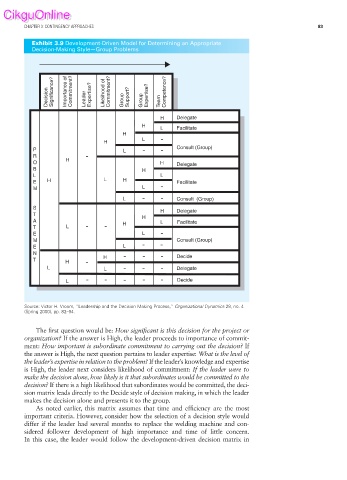
                  Exhibit 3.9 Development-Driven Model for Determining an Appropriate
                  Decision-Making Style—Group Problems


                      Decision  Significance?  Importance of  Commitment?  Leader  Expertise?  Likelihood of   Commitment?  Group  Support?  Group  Expertise?  Team   Competence?


                                                         H    Delegate
                                                    H
                                                         L    Facilitate
                                              H
                                                    L
                                        H
                  P                           L               Consult (Group)
                  R
                  O         H                            H    Delegate
                  B                                 H
                  L                                      L
                  E   H                 L     H               Facilitate
                  M                                 L
                                              L               Consult  (Group)
                  S                                      H    Delegate
                  T                                 H
                  A                           H          L     Facilitate
                  T         L
                  E                                 L
                  M                                           Consult (Group)
                  E                           L
                  N
                                        H                     Decide
                  T         H
                      L                 L                     Delegate

                            L                                  Decide


               Source: Victor H. Vroom, “Leadership and the Decision Making Process,” Organizational Dynamics 28, no. 4
               (Spring 2000), pp. 82–94.


                   The first question would be: How significant is this decision for the project or
               organization? If the answer is High, the leader proceeds to importance of commit-
               ment: How important is subordinate commitment to carrying out the decision? If
               the answer is High, the next question pertains to leader expertise: What is the level of
               the leader’s expertise in relation to the problem? If the leader’s knowledge and  expertise
               is High, the leader next considers likelihood of commitment: If the leader were to
               make the decision alone, how likely is it that subordinates would be committed to the
               decision? If there is a high likelihood that subordinates would be committed, the deci-
               sion matrix leads directly to the Decide style of decision making, in which the leader
               makes the decision alone and presents it to the group.

                   As noted earlier, this matrix assumes that time and efficiency are the most
               important criteria. However, consider how the selection of a decision style would
               differ if the leader had several months to replace the welding machine and con-
               sidered follower development of high importance and time of little concern.
               In this case, the leader would follow the development-driven decision matrix in

