


Page 165 - leadership-experience-2008
P. 165
CikguOnline
      CikguOnline
            146                                                                  PART 3: THE PERSONAL SIDE OF LEADERSHIP

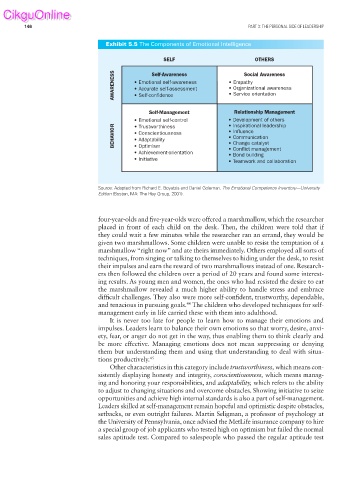
                                     Exhibit 5.5 The Components of Emotional Intelligence

                                                       SELF                        OTHERS
                                        AWARENESS  • Emotional self-awareness  • Empathy
                                                                                Social Awareness
                                                   Self-Awareness
                                                                           • Organizational awareness
                                              • Accurate self-assessment
                                                                           • Service orientation
                                              • Self-confidence
                                                   Self-Management           Relationship Management
                                              • Emotional self-control     • Development of others
                                                                           • Inspirational leadership
                                        BEHAVIOR  • Conscientiousness      • Influence
                                              • Trustworthiness
                                                                           • Communication
                                              • Adaptability
                                                                           • Change catalyst
                                              • Optimism
                                              • Achievement-orientation    • Conflict management
                                                                           • Bond building
                                              • Initiative
                                                                           • Teamwork and collaboration
                                   Source: Adapted from Richard E. Boyatzis and Daniel Goleman, The Emotional Competence Inventory—University
                                   Edition (Boston, MA: The Hay Group, 2001).


                                   four-year-olds and five-year-olds were offered a marshmallow, which the  researcher

                                   placed in front of each child on the desk. Then, the children were told that if
                                   they could wait a few minutes while the researcher ran an errand, they would be
                                   given two marshmallows. Some children were unable to resist the temptation of a
                                   marshmallow “right now” and ate theirs immediately. Others employed all sorts of
                                   techniques, from singing or talking to themselves to hiding under the desk, to resist
                                   their impulses and earn the reward of two marshmallows instead of one. Research-
                                   ers then followed the children over a period of 20 years and found some interest-
                                   ing results. As young men and women, the ones who had resisted the desire to eat
                                   the marshmallow revealed a much higher ability to handle stress and embrace
                                   difficult challenges. They also were more self-confident, trustworthy, dependable,


                                   and  tenacious in pursuing goals.  The children who developed techniques for self-
                                                              44
                                   management early in life carried these with them into adulthood.
                                       It is never too late for people to learn how to manage their emotions and
                                     impulses. Leaders learn to balance their own emotions so that worry, desire, anxi-
                                   ety, fear, or anger do not get in the way, thus enabling them to think clearly and
                                   be more effective. Managing emotions does not mean suppressing or denying
                                   them but understanding them and using that understanding to deal with situa-
                                   tions productively.
                                                   45
                                       Other characteristics in this category include trustworthiness, which means con-
                                   sistently displaying honesty and integrity, conscientiousness, which means manag-
                                   ing and honoring your responsibilities, and adaptability, which refers to the ability
                                   to adjust to changing situations and overcome obstacles. Showing initiative to seize
                                   opportunities and achieve high internal standards is also a part of self- management.
                                   Leaders skilled at self-management remain hopeful and optimistic despite obstacles,
                                   setbacks, or even outright failures. Martin Seligman, a professor of psychology at
                                   the University of Pennsylvania, once advised the MetLife insurance company to hire
                                   a special group of job applicants who tested high on optimism but failed the normal
                                   sales aptitude test. Compared to salespeople who passed the regular aptitude test

