


Page 193 - leadership-experience-2008
P. 193
CikguOnline
      CikguOnline
            174                                                                  PART 3: THE PERSONAL SIDE OF LEADERSHIP

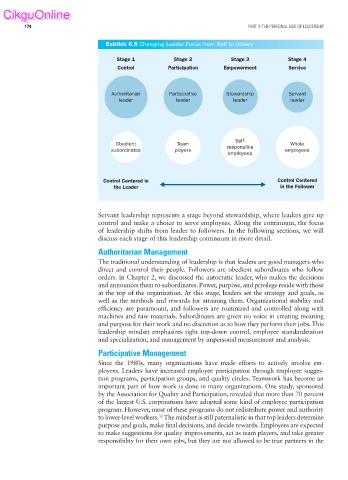
                                     Exhibit 6.5 Changing Leader Focus from Self to Others

                                         Stage 1          Stage 2           Stage 3           Stage 4
                                         Control         Participation    Empowerment         Service


                                       Authoritarian     Participative    Stewardship         Servant
                                         leader            leader            leader           leader


                                                                             Self-
                                        Obedient           Team                               Whole
                                                                           responsible
                                       subordinates        players                           employees
                                                                           employees

                                     Control Centered in                                  Control Centered
                                        the Leader                                         in the Follower


                                   Servant leadership represents a stage beyond stewardship, where leaders give up
                                   control and make a choice to serve employees. Along the continuum, the focus
                                   of leadership shifts from leader to followers. In the following sections, we will
                                   discuss each stage of this leadership continuum in more detail.

                                   Authoritarian Management
                                   The traditional understanding of leadership is that leaders are good managers who
                                   direct and control their people. Followers are obedient subordinates who follow
                                   orders. In Chapter 2, we discussed the autocratic leader, who makes the decisions
                                   and announces them to subordinates. Power, purpose, and privilege reside with those
                                   at the top of the organization. At this stage, leaders set the strategy and goals, as
                                   well as the methods and rewards for attaining them. Organizational stability and
                                   efficiency are paramount, and followers are routinized and controlled along with

                                   machines and raw materials. Subordinates are given no voice in creating meaning
                                   and purpose for their work and no discretion as to how they perform their jobs. This
                                   leadership mindset emphasizes tight top-down control, employee standardization
                                   and specialization, and management by impersonal measurement and analysis.
                                   Participative Management
                                   Since the 1980s, many organizations have made efforts to actively involve em-
                                   ployees. Leaders have increased employee participation through employee sugges-
                                   tion programs, participation groups, and quality circles. Teamwork has become an
                                   important part of how work is done in many organizations. One study, sponsored
                                   by the Association for Quality and Participation, revealed that more than 70 percent
                                   of the largest U.S. corporations have adopted some kind of employee participation
                                   program. However, most of these programs do not redistribute power and authority
                                                      32
                                   to lower-level workers.  The mindset is still paternalistic in that top leaders determine
                                   purpose and goals, make final decisions, and decide rewards. Employees are expected

                                   to make suggestions for quality improvements, act as team players, and take greater
                                   responsibility for their own jobs, but they are not allowed to be true partners in the

