


Page 350 - leadership-experience-2008
P. 350
CikguOnline
         CikguOnline
               CHAPTER 11: DEVELOPING LEADERSHIP DIVERSITY                                               331

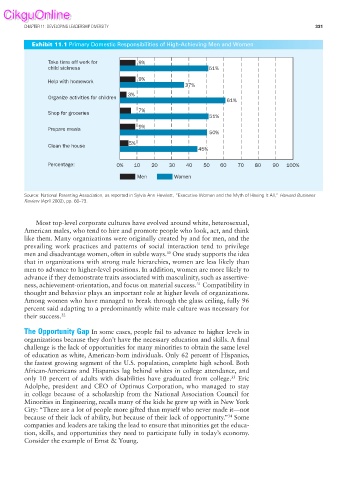
                  Exhibit 11.1 Primary Domestic Responsibilities of High-Achieving Men and Women

                       Take time off work for      9%
                       child sickness                                   51%
                                                   9%
                       Help with homework
                                                                 37%
                                               3%
                       Organize activities for children
                                                                              61%
                                                   7%
                       Shop for groceries
                                                                         51%
                                                   9%
                       Prepare meals
                                                                         50%
                                                5%
                       Clean the house
                                                                     45%
                       Percentage:          0%   10    20   30   40    50   60   70    80   90  100%
                                                  Men         Women


               Source: National Parenting Association, as reported in Sylvia Ann Hewlett, “Executive Women and the Myth of Having It All,” Harvard Business
               Review (April 2002), pp. 66–73.


                   Most top-level corporate cultures have evolved around white, heterosexual,
               American males, who tend to hire and promote people who look, act, and think
               like them. Many organizations were originally created by and for men, and the
               prevailing work practices and patterns of social interaction tend to privilege
               men and disadvantage women, often in subtle ways.  One study supports the idea
                                                           30
               that in organizations with strong male hierarchies, women are less likely than
               men to advance to higher-level positions. In addition, women are more likely to
               advance if they demonstrate traits associated with masculinity, such as assertive-
               ness, achievement-orientation, and focus on material success.  Compatibility in
                                                                     31
               thought and behavior plays an important role at higher levels of organizations.
               Among women who have managed to break through the glass ceiling, fully 96
               percent said adapting to a predominantly white male culture was necessary for
               their success. 32

               The Opportunity Gap In some cases, people fail to advance to higher levels in
               organizations because they don’t have the necessary education and skills. A fi nal
               challenge is the lack of opportunities for many minorities to obtain the same level
               of education as white, American-born individuals. Only 62 percent of Hispanics,
               the fastest growing segment of the U.S. population, complete high school. Both
               African-Americans and Hispanics lag behind whites in college attendance, and
               only 10 percent of adults with disabilities have graduated from college.  Eric
                                                                               33
               Adolphe, president and CEO of Optimus Corporation, who managed to stay
               in college because of a scholarship from the National Association Council for
                 Minorities in Engineering, recalls many of the kids he grew up with in New York
               City: “There are a lot of people more gifted than myself who never made it—not
                                                                              34
               because of their lack of ability, but because of their lack of opportunity.”  Some
               companies and leaders are taking the lead to ensure that minorities get the educa-
               tion, skills, and opportunities they need to participate fully in today’s economy.
               Consider the example of Ernst & Young.

