


Page 12 - PPE GUIDELINE
P. 12
Guidelines on the Use of PPE Against Chemical Hazards
3.2. Selection, Use and Maintenance of Approved Personal Protective
Equipment
Personal protective equipment for protection against chemical hazards can be
categorised according to the risk and parts of the body to be protected:
3.2.1. Head protection;
3.2.2. Eyes and face protection;
3.2.3. Respiratory protection;
3.2.4. Hands and arm protection;
3.2.5. Body protection;
3.2.6. Feet and leg protection.
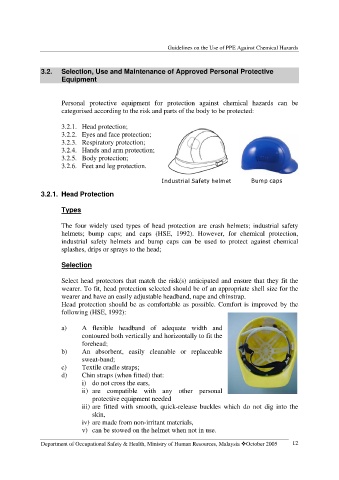
Industrial Safety helmet Bump caps
3.2.1. Head Protection
Types
The four widely used types of head protection are crash helmets; industrial safety
helmets; bump caps; and caps (HSE, 1992). However, for chemical protection,
industrial safety helmets and bump caps can be used to protect against chemical
splashes, drips or sprays to the head;
Selection
Select head protectors that match the risk(s) anticipated and ensure that they fit the
wearer. To fit, head protection selected should be of an appropriate shell size for the
wearer and have an easily adjustable headband, nape and chinstrap.
Head protection should be as comfortable as possible. Comfort is improved by the
following (HSE, 1992):
a) A flexible headband of adequate width and
contoured both vertically and horizontally to fit the
forehead;
b) An absorbent, easily cleanable or replaceable
sweat-band;
c) Textile cradle straps;
d) Chin straps (when fitted) that:
i) do not cross the ears,
ii) are compatible with any other personal
protective equipment needed
iii) are fitted with smooth, quick-release buckles which do not dig into the
skin,
iv) are made from non-irritant materials,
v) can be stowed on the helmet when not in use.
Department of Occupational Safety & Health, Ministry of Human Resources, Malaysia October 2005 12

