


Page 207 - Advanced Course
P. 207
KNX ADVANCED COURSE

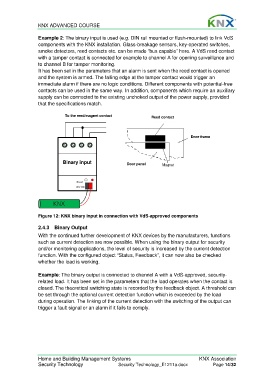
                  Example 2: The binary input is used (e.g. DIN rail mounted or flush-mounted) to link VdS
                  components with the KNX installation. Glass-breakage sensors, key-operated switches,
                  smoke detectors, reed contacts etc. can be made “bus capable” here. A VdS reed contact
                  with a tamper contact is connected for example to channel A for opening surveillance and
                  to channel B for tamper monitoring.
                  It has been set in the parameters that an alarm is sent when the reed contact is opened
                  and the system is armed. The falling edge at the tamper contact would trigger an
                  immediate alarm if there are no logic conditions. Different components with potential-free
                  contacts can be used in the same way. In addition, components which require an auxiliary
                  supply can be connected to the existing unchoked output of the power supply, provided
                  that the specifications match.

                              To the reed/magnet contact            Reed contact


                                                                                      Door frame


                             Binary input                Door panel


                  Figure 12: KNX binary input in connection with VdS-approved components

                  2.4.3  Binary Output
                  With the continued further development of KNX devices by the manufacturers, functions
                  such as current detection are now possible. When using the binary output for security
                  and/or monitoring applications, the level of security is increased by the current detection
                  function. With the configured object “Status, Feedback”, it can now also be checked
                  whether the load is working.

                  Example: The binary output is connected to channel A with a VdS-approved, security-
                  related load. It has been set in the parameters that the load operates when the contact is
                  closed. The theoretical switching state is recorded by the feedback object. A threshold can
                  be set through the optional current detection function which is exceeded by the load
                  during operation. The linking of the current detection with the switching of the output can
                  trigger a fault signal or an alarm if it fails to comply.


                  Home and Building Management Systems                                    KNX Association
                  Security Technology                 Security Technology_E1211a.docx           Page 14/32

