


Page 91 - spectroscopic-atlas-5_0-english_Neat
P. 91
Spectroscopic Atlas for Amateur Astronomers                                          91

allows even the formation of further diatomic molecules like vanadium oxide (VO) and mo-
lecular hydrogen H2.

The wavelengths of the absorption bands are defined by the ”most distinct edges” the so
called band heads of the profile. As a result of this characteristic, saw tooth-shaped curve,
these edges are much more diffuse than discrete absorption lines, which show in theory
approximately a Gaussian bell shape. The wavelength values for the individual bands can
sometimes vary, depending on the source, up to 2 Å! These absorption bands are therefore
totally inappropriate for a precise calibration of the spectrum, based on known lines. Only
the calibration with the lamp can meet here reasonable standards.

The intensity maximum of the real continuum is shifted here into the infrared range of the
spectrum. Therefore the telluric H2O and O2 absorptions in the red range of the spectrum
are almost completely overprinted by the stellar molecular bands. The graph shows the
theoretical continuum for a synthetic M5 III star (Vspec/Tools/Library). Due to the specific
radiation characteristics, influenced by the massive gaps in the continuum, the M class
stars are considerably far away from an ideal black body radiator.

19.4 Commented Spectra

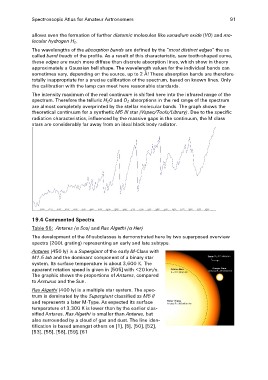
Table 56: Antares (α Sco) and Ras Algethi (α Her)

The development of the M-subclasses is demonstrated here by two superposed overview
spectra (200L grating) representing an early and late subtype.

Antares (450 ly) is a Supergiant of the early M-Class with
M1.5 lab and the dominant component of a binary star
system. Its surface temperature is about 3,600 K. The
apparent rotation speed is given in [505] with <20 km/s.
The graphic shows the proportions of Antares, compared
to Arcturus and the Sun.

Ras Algethi (400 ly) is a multiple star system. The spec-
trum is dominated by the Supergiant classified as M5 II
and represents a later M-Type. As expected its surface
temperature of 3,300 K is lower than by the earlier clas-
sified Antares. Ras Algethi is smaller than Antares, but
also surrounded by a cloud of gas and dust. The line iden-
tification is based amongst others on [1], [5], [50], [52],
[53], [55], [58], [59], [61

