


Page 180 - Super Earth Encyclopedia
P. 180
BIG BANG


                     MOUNT PINATUBO


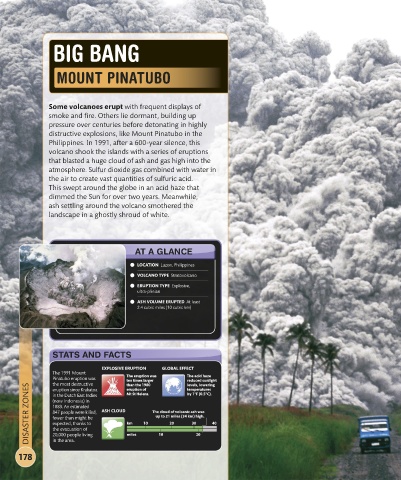
                  Some volcanoes erupt with frequent displays of
                  smoke and fire. Others lie dormant, building up
                  pressure over centuries before detonating in highly
                  distructive explosions, like Mount Pinatubo in the
                  Philippines. In 1991, after a 600-year silence, this
                  volcano shook the islands with a series of eruptions
                  that blasted a huge cloud of ash and gas high into the
                  atmosphere. Sulfur dioxide gas combined with water in
                  the air to create vast quantities of sulfuric acid.
                  This swept around the globe in an acid haze that
                  dimmed the Sun for over two years. Meanwhile,
                  ash settling around the volcano smothered the
                  landscape in a ghostly shroud of white.


                                                 AT A GLANCE
                                               •  LOCATION  Luzon, Philippines

                                               •  VOLCANO TYPE  Stratovolcano
                                               •  ERUPTION TYPE  Explosive,
                                                  ultra-plinian
                                               •  ASH VOLUME ERUPTED  At least
                                                  2.4 cubic miles (10 cubic km)


                    STATS AND FACTS

                                     EXPLOSIVE ERUPTION    GLOBAL EFFECT
                    The 1991 Mount
                    Pinatubo eruption was     The eruption was      The acid haze
                                              ten times larger
                                                                    reduced sunlight
                    the most destructive
                                                                    levels, lowering
                                              than the 1980
           DISASTER ZONES  (now Indonesia) in   ASH CLOUD  km  10  The cloud of volcanic ash was    40
                                              eruption of
                                                                    temperatures
                    eruption since Krakatoa
                                                                    by 1°F (0.5°C).
                                              Mt St Helens.
                    in the Dutch East Indies
                    1883. An estimated
                    847 people were killed,
                                                        up to 21 miles (34 km) high.
                    fewer than might be
                                                                     30
                                                             20
                    expected, thanks to
                    the evacuation of
                                                          10
                                                                       20
                    20,000 people living
                                              miles
        178         in the area.
   US_178-179_Mount_Pinatubo.indd   178                                                                                              01/03/17   4:25 pm

