


Page 85 - 100 Events That Made History
P. 85
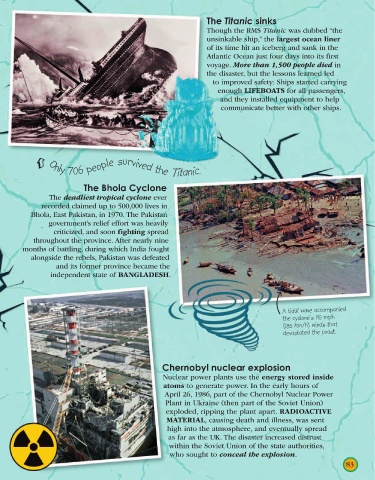
The Titanic sinks
                                                                     Though the RMS Titanic was dubbed “the
                                                                     unsinkable ship,” the largest ocean liner
                                                                     of its time hit an iceberg and sank in the
                                                                     Atlantic Ocean just four days into its first
                                                                     voyage. More than 1,500 people died in
                                                                     the disaster, but the lessons learned led
                                                                       to improved safety: Ships started carrying
                                                                        enough LIFEBOATS for all passengers,
                                                                         and they installed equipment to help
                                                                         communicate better with other ships.


                 Only 706 people survived the Titanic.


                            The Bhola Cyclone
                 The deadliest tropical cyclone ever
               recorded claimed up to 500,000 lives in
           Bhola, East Pakistan, in 1970. The Pakistan
                 government’s relief effort was heavily
                   criticized, and soon fighting spread
            throughout the province. After nearly nine
        months of battling, during which India fought
           alongside the rebels, Pakistan was defeated
                   and its former province became the
                 independent state of BANGLADESH.


                                                                                             A tidal wave accompanied
                                                                                             the cyclone’s 115 mph
                                                                                             (185 km/h) winds that
                                                                                             devastated the coast.


                                                      Chernobyl nuclear explosion
                                                      Nuclear power plants use the energy stored inside
                                                      atoms to generate power. In the early hours of
                                                       April 26, 1986, part of the Chernobyl Nuclear Power
                                                       Plant in Ukraine (then part of the Soviet Union)
                                                       exploded, ripping the plant apart. RADIOACTIVE
                                                       MATERIAL, causing death and illness, was sent
                                                        high into the atmosphere, and eventually spread
                                                        as far as the UK. The disaster increased distrust
                                                        within the Soviet Union of the state authorities,
                                                        who sought to conceal the explosion.
                                                                                                                  83

