


Page 29 - Course Directory booklet test
P. 29
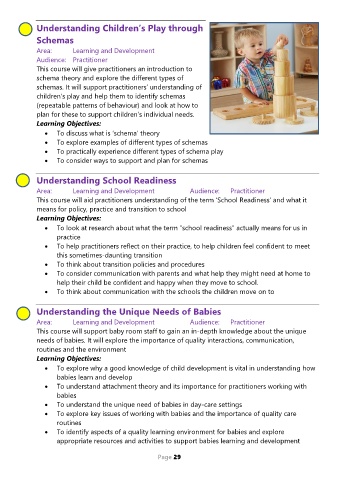
Understanding Children’s Play through
              Schemas

              Area:        Learning and Development
              Audience:  Practitioner
              This course will give practitioners an introduction to
              schema theory and explore the different types of
              schemas. It will support practitioners’ understanding of
              children’s play and help them to identify schemas
              (repeatable patterns of behaviour) and look at how to
              plan for these to support children’s individual needs.
              Learning Objectives:
                 •   To discuss what is ‘schema’ theory
                 •   To explore examples of different types of schemas
                 •   To practically experience different types of schema play
                 •   To consider ways to support and plan for schemas

              Understanding School Readiness

              Area:        Learning and Development                 Audience:     Practitioner
              This course will aid practitioners understanding of the term ‘School Readiness’ and what it
              means for policy, practice and transition to school
              Learning Objectives:
                 •   To look at research about what the term “school readiness” actually means for us in
                     practice
                 •   To help practitioners reflect on their practice, to help children feel confident to meet
                     this sometimes-daunting transition
                 •   To think about transition policies and procedures
                 •   To consider communication with parents and what help they might need at home to
                     help their child be confident and happy when they move to school.
                 •   To think about communication with the schools the children move on to

              Understanding the Unique Needs of Babies

              Area:        Learning and Development                 Audience:     Practitioner
              This course will support baby room staff to gain an in-depth knowledge about the unique
              needs of babies. It will explore the importance of quality interactions, communication,
              routines and the environment
              Learning Objectives:
                 •   To explore why a good knowledge of child development is vital in understanding how
                     babies learn and develop
                 •   To understand attachment theory and its importance for practitioners working with
                     babies
                 •   To understand the unique need of babies in day-care settings
                 •   To explore key issues of working with babies and the importance of quality care
                     routines
                 •   To identify aspects of a quality learning environment for babies and explore
                     appropriate resources and activities to support babies learning and development

                                                         Page 29

