


Page 18 - All About History - Issue 186-19
P. 18
BEER

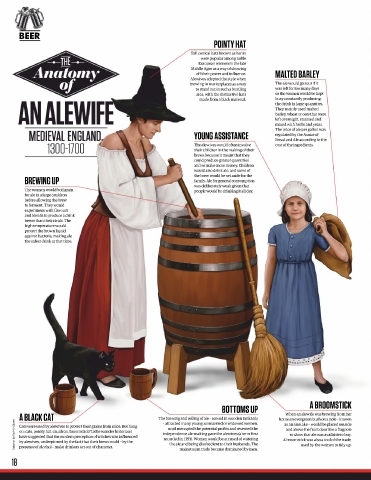
                                                                                                        POINTYHAT

                                                                                             Tall conical hats known as henin
                              THE                                                               European women in the late
                                                                                                 were popular among noble

                                                                                             Middle Ages as a way of showing
                                                                                               off their power and influence.        MALTEDBARLEY
                                                                                            Alewives adopted the style when
                                                                                            brewing in marketplaces as a way         The ale would go sour if it
                                                                                               to stand out in such a bustling       was left for too many days
                                                                                               area, with the distinctive hats       so the women would be kept
                                                                                                 made from a black material.         busy constantly producing
                                                                                                                                     the drink in large quantities.
                                                                                                                                     They mainly used malted
                                                                                                                                     barley, wheat or oats that were
                                                                                                                                     left overnight, strained and
                                                                                                                                     mixed with herbs and yeast.
                                                                                                                                     The price of ale per gallon was
                                                                                              YOUNGASSISTANCE                        regulated by the Assize of
                                                                                                                                     Bread and Ale according to the
                                                                                              The alewives would often involve       cost of the ingredients.
                                                                                              their children in the making of their
                                                                                              brews because it meant that they
                                                                                              could produce greater quantities
                                                                                              and so make more money. Children
                                                                                              would also drink ale, and some of
             BREWINGUP                                                                        the brew would be set aside for the
                                                                                              family. Ale for general consumption
                                                                                              was deliberately weak given that
             The women would boil grain                                                       people would be drinking it all day.
             for ale in a large cauldron
             before allowing the brew
             to ferment. They would
             experiment with flavours
             and blends to produce a drink
             better than their rivals. The
             high temperature would
             protect the brown liquid
             against bacteria, making ale
             the safest drink at that time.


                                                                                                           BOTTOMSUP                                 ABROOMSTICK
          ABLACKCAT                                                          The brewing and selling of ale – served in wooden tankards   home an evergreen bush on a pole – known
                                                                                                                                          When an alewife was brewing from her
        Illustration by: Kevin McGivern  Cats were used by alewives to protect their grains from mice. But hang   independence ale-making gave the alewives (a term first   A broomstick was also a tool of the trade,
                                                                               – attracted many young, unmarried or widowed women,
                                                                                                                                         as an alestake – would be placed outside
                                                                                  until men spied the potential profits and resented the
                                                                                                                                          and above the front door like a flagpole
          on: cats, pointy hat, cauldron, broomstick? Little wonder historians
                                                                                                                                            to show that ale was available to buy.
          have suggested that the modern perception of witches was influenced
                                                                                recorded in 1393). Women would be accused of watering
          by alewives, underpinned by the fact that their brews could – by the
                                                                                  the ale and being disobedient to their husbands. The
                                                                                                                                                 used by the women to tidy up.
          presence of alcohol – make drinkers act out of character.
       18                                                                              mainstream trade became dominated by men.

