


Page 78 - All About History - Issue 16-14
P. 78
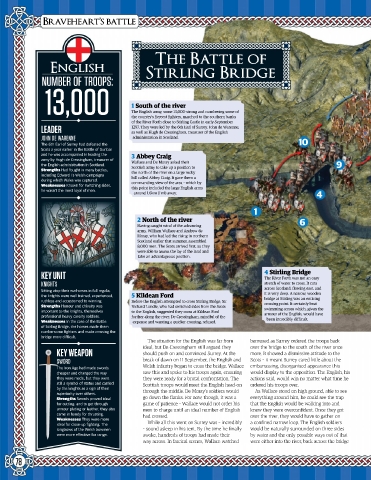
Braveheart’s battle


                                                        The Battle of
                   English                          Stirling Bridge
                NUMBER OF TROOPS:
                 13,000                        1 South of the river


                                               The English army, some 13,000-strong and numbering some of
                                               the country’s fiercest fighters, marched to the southern banks
                                               of the River Forth close to Stirling Castle in early-September
                LEADER                         1297. They were led by the 6th Earl of Surrey, John de Warenne,
                                               as well as Hugh de Cressingham, treasurer of the English
                JOHN DE WARENNE                 administration in Scotland.
                The 6th Earl of Surrey had defeated the                                                   10
                Scots a year earlier in the Battle of Dunbar
                and he was accompanied in leading the   3 Abbey Craig
                army by Hugh de Cressingham, treasurer of
                                               Wallace and De Moray asked their
                the English administration in Scotland.                                                                9
                                               Scottish army to take up a position to
                Strengths Had fought in many battles,
                                               the north of the river on a large rocky
                including Edward I’s Welsh campaigns
                                               hill called Abbey Craig. It gave them a
                during which Wales was captured.
                                               commanding view of the area – which by
                Weaknesses Known for switching sides,
                                               this point included the large English army
                he wasn’t the most loyal of men.
                                                around 1.6km (1mi) away.                                        4
                                                                                          1
                                                 2 North of the river                                     6
                                                 Having caught wind of the advancing
                                                 army, William Wallace and Andrew de
                                                 Moray, who had led the rising in northern
                                                 Scotland earlier that summer, assembled
                                                 8,000 men. The Scots arrived first, so they
                                                 were able to assess the lay of the land and
                                                  take an advantageous position.
                KEY UNIT                                                                      4 Stirling Bridge
                                                                                              The River Forth was not an easy
                KNIGHTS                                                                       stretch of water to cross. It cuts
                                                                                              across Scotland, flowing east, and
                Sitting atop their warhorses in full regalia,
                the knights were well trained, experienced,   5 Kildean Ford                  it is very deep. A narrow, wooden
                ruthless and accustomed to winning.  Before the English attempted to cross Stirling Bridge, Sir   bridge at Stirling was an enticing
                Strengths Honour and chivalry was   Richard Lundie, who had switched sides from the Scots   crossing point. It certainly beat
                important to the knights, themselves   to the English, suggested they cross at Kildean Ford   swimming across which, given the
                professional heavy cavalry soldiers.  further along the river. De Cressingham, mindful of the   armour of the English, would have
                Weaknesses In the case of the Battle   expense and wanting a quicker crossing, refused.  been incredibly difficult.
                of Stirling Bridge, the horses made them
                cumbersome fighters and made crossing the
                bridge more difficult.
                                                     The situation for the English was far from   bemused as Surrey ordered the troops back
                                                   ideal, but De Cressingham still argued they   over the bridge to the south of the river once
                     KEY WEAPON                    should push on and convinced Surrey. At the   more. It showed a dismissive attitude to the
                     SWORD                         break of dawn on 11 September, the English and   Scots – it meant Surrey cared little about the
                     The Iron Age had made swords   Welsh infantry began to cross the bridge. Wallace   embarrassing, disorganised appearance this
                     cheaper and changed the way   saw this and spoke to his troops again, ensuring   would display to the opposition. The English, his
                     they were made, but they were   they were ready for a brutal confrontation. The   actions said, would win no matter what time he
                     still a symbol of status and carried   Scottish troops would meet the English head-on   ordered his troops over.
                     by the knights as a sign of their
                     superiority over others.      through the middle. De Moray’s soldiers would   As Wallace stood on high ground, able to see
                     Strengths Swords proved ideal   go down the flanks. For now, though, it was a   everything around him, he could see the trap
                     for cutting, and to get through   game of patience – Wallace would not order his   that the English would be walking into and
                     armour plating or leather, they also   men to charge until an ideal number of English   knew they were overconfident. Once they got
                     came in handy for thrusting.  had crossed.                          over the river, they would have to gather on
                     Weaknesses They were more
                     ideal for close-up fighting. The   While all this went on Surrey was – incredibly   a confined narrow loop. The English soldiers
                     longbows of the Welsh bowmen   – sound asleep in his tent. By the time he finally   would be naturally surrounded on three sides
                     were more effective for range.  awoke, hundreds of troops had made their   by water and the only possible ways out of that
                                                   way across. In farcical scenes, Wallace watched   were either into the river, back across the bridge


       78

