


Page 308 - The Complete Dog Breed Book Choose the Perfect Dog for You, New Edition (DK)
P. 308
308      C ARE AND TR AINING


                                                                         PLAY-BITING
                                                                         If your puppy is a persistent play-biter, keep a
                                                                         soft toy nearby to grab quickly whenever you
                                                                         spend time playing with him. Use a big toy so
                                                                         that you can hold onto it without needing to
                                                                         put your hands too close to your dog’s teeth.


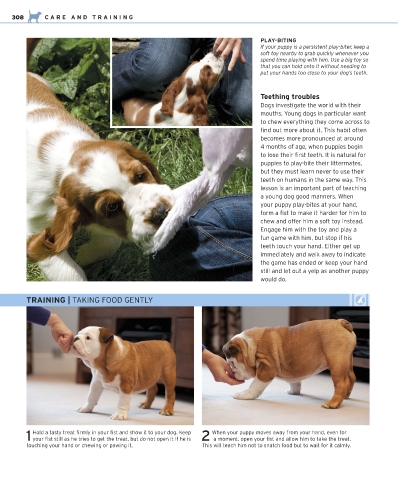
                                                                         Teething troubles
                                                                         Dogs investigate the world with their
                                                                         mouths. Young dogs in particular want
                                                                         to chew everything they come across to
                                                                         find out more about it. This habit often
                                                                         becomes more pronounced at around
                                                                         4 months of age, when puppies begin
                                                                         to lose their first teeth. It is natural for
                                                                         puppies to play-bite their littermates,
                                                                         but they must learn never to use their
                                                                         teeth on humans in the same way. This
                                                                         lesson is an important part of teaching
                                                                         a young dog good manners. When
                                                                         your puppy play-bites at your hand,
                                                                         form a fist to make it harder for him to
                                                                         chew and offer him a soft toy instead.
                                                                         Engage him with the toy and play a
                                                                         fun game with him, but stop if his
                                                                         teeth touch your hand. Either get up
                                                                         immediately and walk away to indicate
                                                                         the game has ended or keep your hand
                                                                         still and let out a yelp as another puppy
                                                                         would do.

        TRAINING | TAKING FOOD GENTLY


          Hold a tasty treat firmly in your fist and show it to your dog. Keep   When your puppy moves away from your hand, even for
        1     t still as he tries to get the treat, but do not open it if he is  2      a moment, open your fist and allow him to take the treat.
           our fis
          y
        touching your hand or chewing or pawing it.      This will teach him not to snatch food but to wait for it calmly.


   US_308-309_Good_Behaviour2.indd   308                                                             10/09/19   3:42 PM

