


Page 310 - The Complete Dog Breed Book Choose the Perfect Dog for You, New Edition (DK)
P. 310
310     C ARE AND TR AINING


                                                         Playtime
                                                         As highly social animals, dogs need interaction with both
                                                         other dogs and people as much as they need physical and
                                                         mental exercise. Play can offer this interaction and helps
                                                         dogs to mature properly, so it is essential that they have as
                                                         much of it as they need. However, it is during playtime that
                                                         your dog is most likely to become overexcited and start
                                                         misbehaving. Teach your puppy the rules of play, both with
                                                         you and with other dogs. He must also learn to stop playing
                                                         when you tell him to.
                                                           Use toys to help your dog learn that play with people is
                                                         different from play-fighting with other dogs. Playtime should
                                                         begin and end with a display of good manners, such as a sit.
                                                         If your puppy gets overexcited, call a halt to the fun until he
                                                         calms down. Don’t restrain him with your hands during play
                                                         because he will probably try to mouth you or jump up. It may be
                                                         useful to keep a puppy on a light, long leash during playtime.
                                                         This allows you to calm him down without offering the
                                                         temptation of your hands. If this does not work, walk away
                                                         from your puppy, making it clear that the game is over.
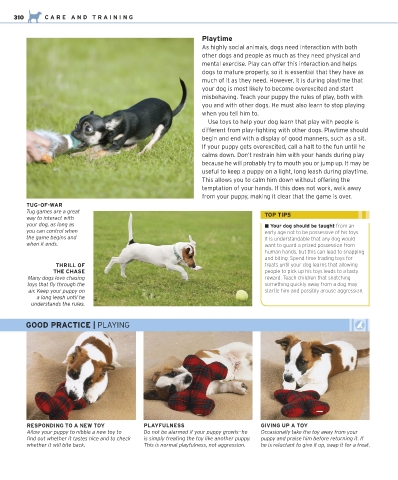
        TUG-OF-WAR
        Tug games are a great                                              TOP TIPS
        way to interact with
        your dog, as long as                                               ■ Your dog should be taught from an
        you can control when                                               early age not to be possessive of his toys.
        the game begins and                                                It is understandable that any dog would
        when it ends.                                                      want to guard a prized possession from
                                                                           human hands, but this can lead to snapping
                                                                           and biting. Spend time trading toys for
                 THRILL OF                                                 treats until your dog learns that allowing
                THE CHASE                                                  people to pick up his toys leads to a tasty
         Many dogs love chasing                                            reward. Teach children that snatching
         toys that fly through the                                         something quickly away from a dog may
         air. Keep your puppy on                                           startle him and possibly arouse aggression.
           a long leash until he
          understands the rules.


        GOOD PRACTICE | PLAYING


        RESPONDING TO A NEW TOY          PLAYFULNESS                     GIVING UP A TOY
        Allow your puppy to nibble a new toy to    Do not be alarmed if your puppy growls—he   Occasionally take the toy away from your
        find out whether it tastes nice and to check   is simply treating the toy like another puppy.   puppy and praise him before returning it. If
        whether it will bite back.       This is normal playfulness, not aggression.  he is reluctant to give it up, swap it for a treat.


   US_310-311_Good_Behaviour3.indd   310                                                             10/09/19   3:42 PM

