


Page 321 - The Complete Dog Breed Book Choose the Perfect Dog for You, New Edition (DK)
P. 321
TR AINING Y OUR DOG          321


         Reading a dog’s body language
         Being able to interpret your dog’s body language means you
         will have a clearer idea of what he is feeling. You cannot
         train a dog effectively until you have learned to read the
         signs that tell you when he is happy or when he is scared.
         When dogs are stressed, it is impossible for them to
         concentrate on learning. If your dog is not responding well to
         training, it is important to stop the session right away and
         try to analyze what is wrong.
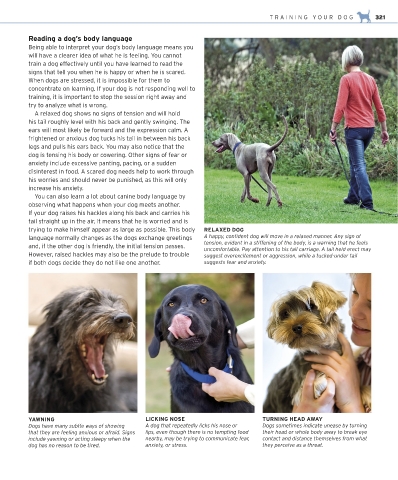
           A relaxed dog shows no signs of tension and will hold
         his tail roughly level with his back and gently swinging. The
         ears will most likely be forward and the expression calm. A
         frightened or anxious dog tucks his tail in between his back
         legs and pulls his ears back. You may also notice that the
         dog is tensing his body or cowering. Other signs of fear or
         anxiety include excessive panting, pacing, or a sudden
         disinterest in food. A scared dog needs help to work through
         his worries and should never be punished, as this will only
         increase his anxiety.
           You can also learn a lot about canine body language by
         observing what happens when your dog meets another.
         If your dog raises his hackles along his back and carries his
         tail straight up in the air, it means that he is worried and is
         trying to make himself appear as large as possible. This body   RELAXED DOG
         language normally changes as the dogs exchange greetings   A happy, confident dog will move in a relaxed manner. Any sign of
         and, if the other dog is friendly, the initial tension passes.   tension, evident in a stiffening of the body, is a warning that he feels
                                                          uncomfortable. Pay attention to his tail carriage. A tail held erect may
         However, raised hackles may also be the prelude to trouble    suggest overexcitement or aggression, while a tucked-under tail
         if both dogs decide they do not like one another.   suggests fear and anxiety.


         YAWNING                         LICKING NOSE                     TURNING HEAD AWAY
         Dogs have many subtle ways of showing    A dog that repeatedly licks his nose or    Dogs sometimes indicate unease by turning
         that they are feeling anxious or afraid. Signs   lips, even though there is no tempting food   their head or whole body away to break eye
         include yawning or acting sleepy when the   nearby, may be trying to communicate fear,   contact and distance themselves from what
         dog has no reason to be tired.  anxiety, or stress.              they perceive as a threat.


   US_320-321_178795_Training_Your_dog.indd   321                                                   10/09/19   11:48 AM

