


Page 44 - History of War - Issue 18-15
P. 44
GREAT BATTLES


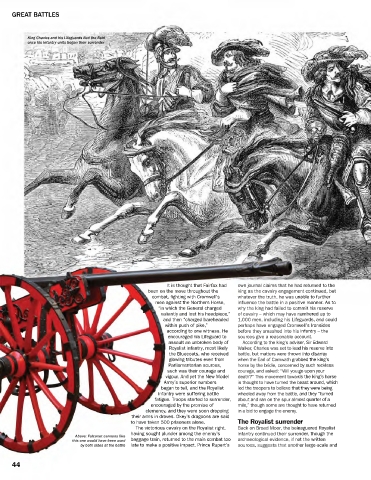
           King Charles and his Lifeguards fled the field
           once his infantry units began their surrender


                                                            It is thought that Fairfax had                d returned to the
                                                     been on the move throughout the                      ent continued, but
                                                      combat, fi ghting with Cromwell’s                   nable to further
                                                        men against the Northern Horse,                   ive manner. As to
                                                         “in which the General charged                    mmit his reserve
                                                          valiantly and lost his headpiece,”              umbered up to
                                                          and then “charged bareheaded                    guards, and could
                                                           within push of pike,”                          well’s Ironsides
                                                            according to one witness. He                   infantry – the
                                                            encouraged his Lifeguard to                   count.
                                                            assault an unbroken body of                   ser, Sir Edward
                                                            Royalist infantry, most likely                d his reserve into
                                                            the Bluecoats, who received                   ninto disarray
                                                            glowing tributes even from                    bbed the king’s
                                                            Parliamentarian sources,                      by such reckless
                                                            such was their courage and                    go upon your
                                                           vigour. And yet the New Model                  ds the king’s horse
                                                           Army’s superior numbers                        east around, which
                                                          began to tell, and the Royalist                 t they were being
                                                         infantry were suffering battle                   and they “turned
                                                       fatigue. Troops started to surrender,              ost quarter of a
                                                      encouraged by the promise of                        ht to have returned
                                                    clemency, and they were soon dropping
                                               their arms in droves. Okey’s dragoons are said
                                               to have taken 500 prisoners alone.                        er
                                                 The victorious cavalry on the Royalist right,            eaguered Royalist
                                               having sought plunder among the enemy’s                    nder, though the
                                               baggage train, returned to the main combat too             ot the written
                                               late to make a positive impact. Prince Rupert’s            er large-scale and


     44

