


Page 48 - History of War - Issue 18-15
P. 48
THE BOW THAT BUILT BRITAIN

          ANATOMYOFTHEBRITISH
        LONGBOW


          TRADITIONAL BOW-MAKER WILL SHERMAN EXPLAINS THE KEY
          FEATURESOFTHEBOW,ASWELLASWHEREITSDEADLYPOWERLIES


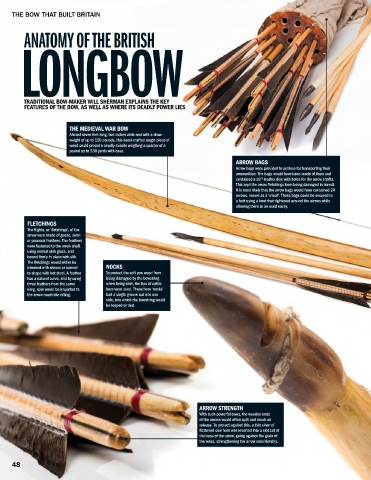
                         THE MEDIEVAL WAR BOW
                         Almost seven feet long, two inches wide and with a draw-
                         weight of up to 150 pounds, this hand-crafted single piece of
                         wood could propel a deadly missile weighing a quarter of a
                         pound up to 230 yards with ease.
                                                                                    ARROW BAGS
                                                                                    Arrow bags were provided to archers for transporting their
                                                                                    ammunition. The bags would have been made of linen and
                                                                                    contained a stiff leather disc with holes for the arrow shafts.
                                                                                    This kept the arrow fl etchings from being damaged in transit.
                                                                                    It is most likely that the arrow bags would have contained 24
                                                                                    arrows, known as a ‘sheaf’. These bags could be secured to
                                                                                    a belt using a knot that tightened around the arrows while
                                                                                    allowing them to be used easily.


           FLETCHINGS
           The flights, or ‘fletchings’, of the
           arrowweremadeofgoose,swan
           or peacock feathers. The feathers
           were fastened to the arrow shaft
           using animal skin glues, and
           boundfirmlyinplacewithsilk.
           Thefletchingswouldeitherbe
           trimmedwithshearsorburned  NOCKS
           toshapewithhotsteel.Afeather  To protect the soft yew wood from
           hasanaturalcurve,andbyusing  beingdamagedbythebowstring
           threefeathersfromthesame   whenbeingshot,thetipsofcattle
           wing, spin would be imparted to  horn were used. These horn ‘nocks’
           the arrow much like rifling.  hadasinglegroovecutintoone
                                      side,intowhichthebowstringwould
                                      be looped or tied.


                                                                       ARROW STRENGTH
                                                                       With such powerful bows, the wooden ends
                                                                       of the arrows would often split and break on
                                                                       release. To protect against this, a thin sliver of
                                                                       fl attened cow horn was inserted into a slot cut at
                                                                       the base of the arrow, going against the grain of
                                                                       the wood, strengthening the arrow considerably.


     48

